

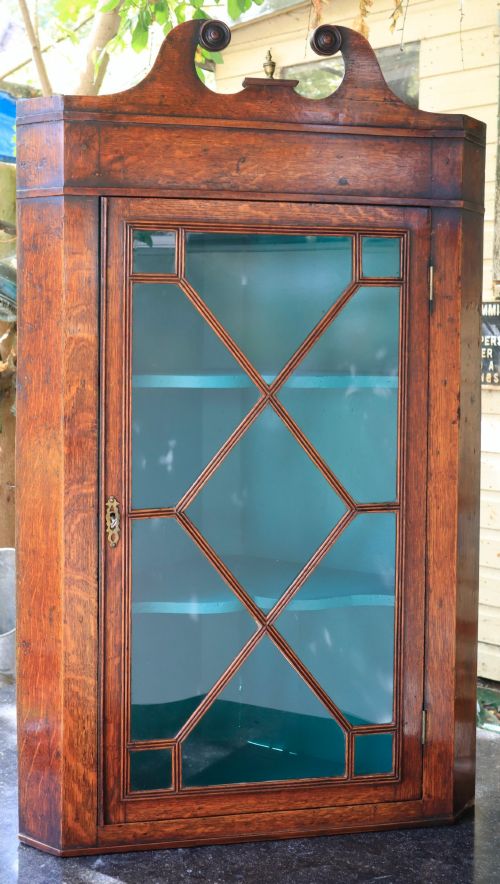
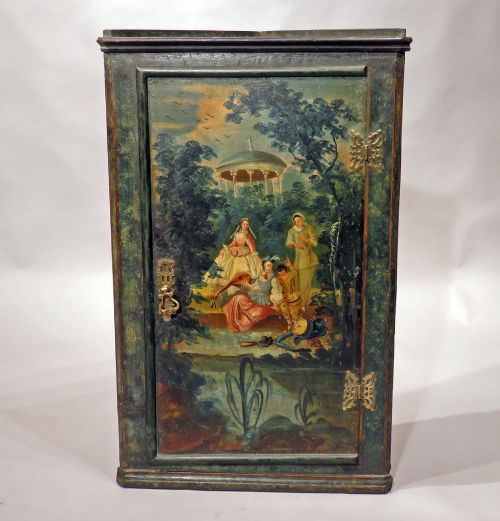

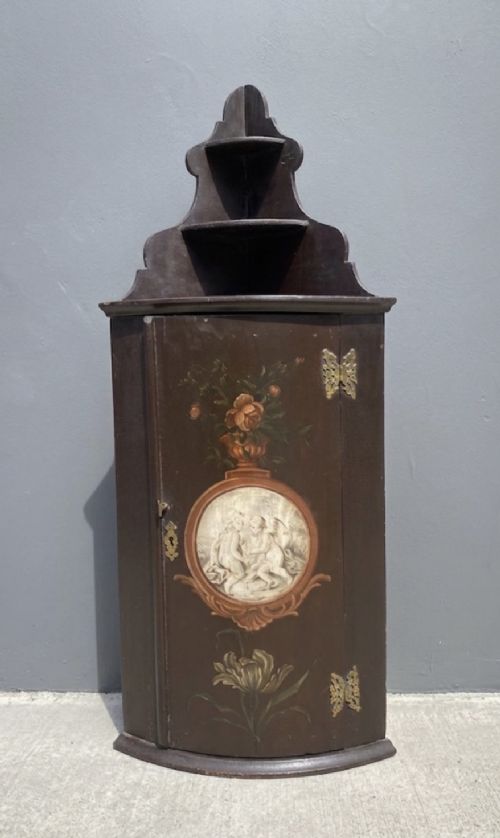
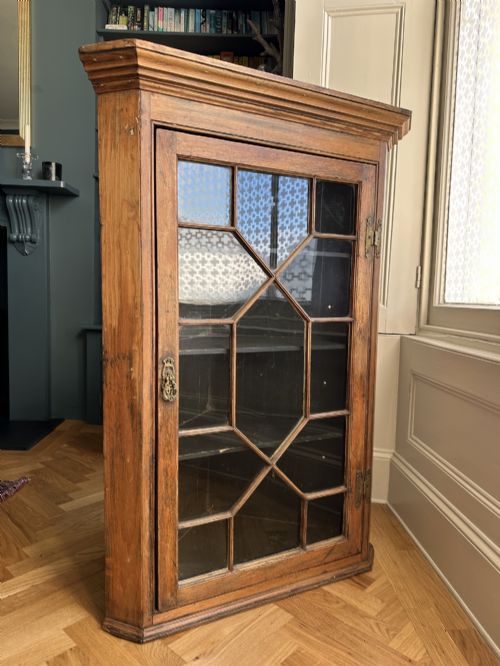


Painted Hanging Corner Cupboard
A painted hanging corner cupboard solves an awkward room layout while bringing historic colour and surface decoration to plain walls.
Painted Hanging Corner Cupboard
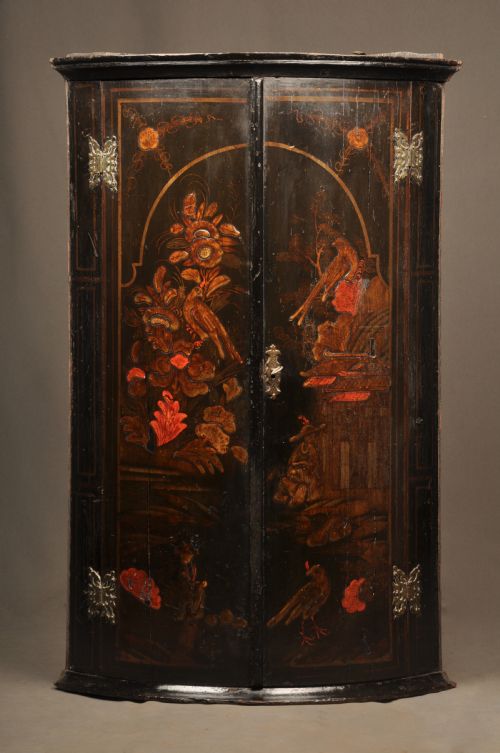
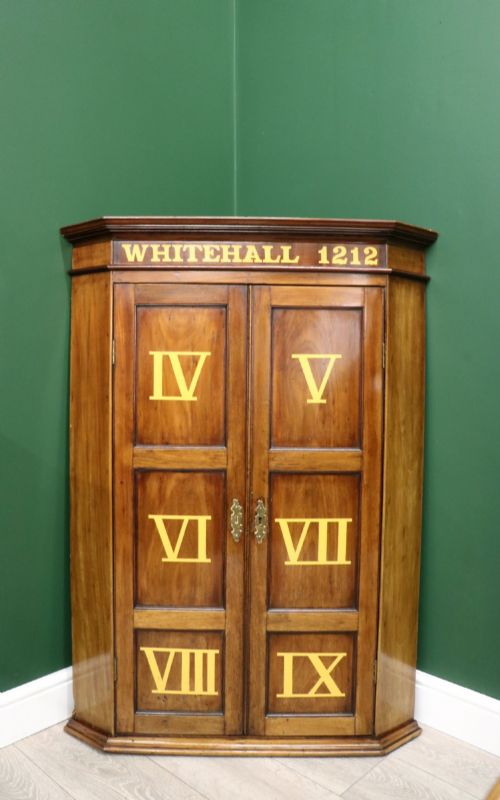
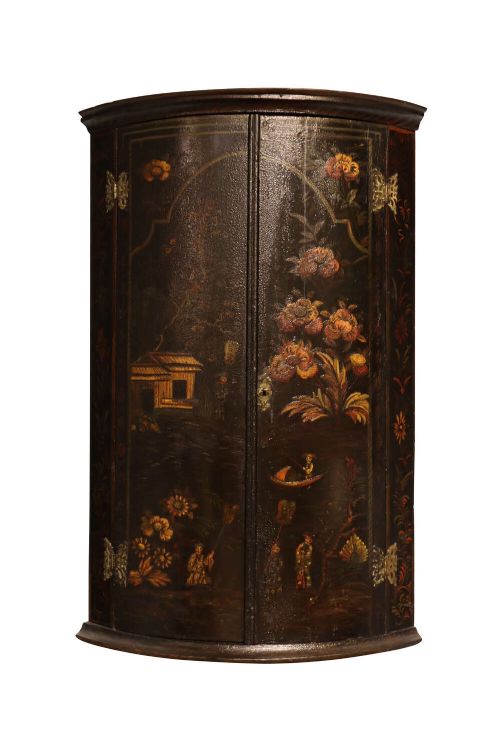
When you search for a painted hanging corner cupboard, you encounter timber cabinets designed to mount directly onto wall angles, saving valuable floor space. The form relies on flat sides meeting at a right angle to fit snugly into room corners, while the front presents either a single flat door or a curved bow front.
You are most likely to meet 18th-century and 19th-century examples on this page, often showing Georgian proportions, Chinoiserie decoration, or rustic farmhouse character. These wall-mounted pieces frequently feature internal shelving to display or store small items out of the main traffic of the room.
The materials and finishes vary from early pine and oak foundations to elaborate lacquer surfaces. Some pieces retain original painted interiors or hand-painted exterior details, ranging from European folk art styles to dark lacquer panels.
How they were made
Joiners built these cabinets using timber such as pine and oak to form the rigid carcase and corner framing. Brass hardware, including hinges and escutcheons, secured the doors and added functional detail to the facade.
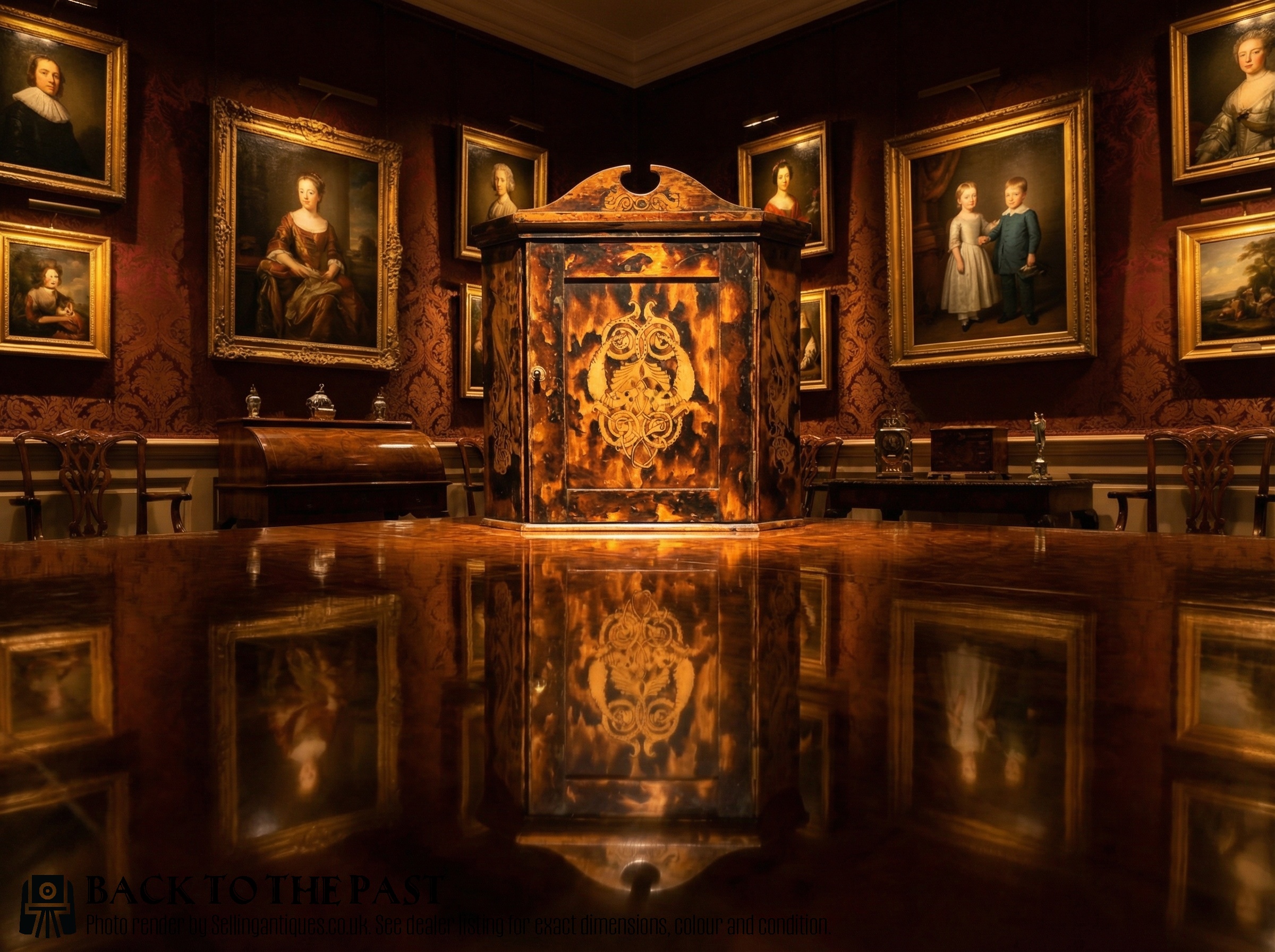
Surface decoration involved layers of paint, lacquer, and occasionally gilt work to achieve Chinoiserie scenes or faux finishes like tortoiseshell. Craftsmen applied these finishes over wood substrates, sometimes reserving the paint for the interior whilst stripping the exterior to bare timber.
Painted Hanging Corner Cupboard Retail Price Guide 2026
Typical asking prices for painted hanging corner cupboard among the pieces listed under this phrase on Sellingantiques today, from the lower quarter to the upper quarter. They describe what is for sale here now, not the wider market.
Current listings feature pieces spanning from the early 18th century through to the 1920s, constructed in pine, oak, and lacquer.
What varies in quality
The sophistication of the surface decoration largely determines the standing of a piece, moving from simple folk art paint applications to intricate Chinoiserie lacquer work with gilt details. Surviving original painted surfaces command greater interest than stripped pine or later overpainting.
Construction details also separate standard examples from finer ones, particularly the choice of timber and the execution of bow fronts or glazed doors. The survival of original brass fittings and untouched internal paint adds historical integrity to the object.
The Painted Hanging Corner Cupboard Glossary
- Bow front
- A convex, curved front facade that projects outward. This shape softens the hard angles typical of standard corner cabinets.
- Chinoiserie
- European artistic interpretation of Chinese and East Asian motifs. It typically appears as painted or lacquered scenes featuring figures, pagodas, and landscapes.
- Japannan
- European imitation of Japanese and East Asian lacquerwork. Craftsmen built up layers of dark varnish and paint, often decorated with raised or gilt motifs.
- Hanging cabinet
- A storage piece built to be mounted directly onto a wall rather than resting on the floor. These items utilise wall space in smaller rooms.
- Faux tortoiseshell
- A painted or treated surface finish that mimics the mottled, translucent pattern of natural tortoiseshell. Artisans used specialised glazing techniques to achieve the effect.
Painted Hanging Corner Cupboard: Frequently Asked Questions
Where should I hang a corner cupboard?
These cabinets fit directly into the ninety-degree angle of two joining walls, making them ideal for dead space in dining rooms, hallways, or kitchens.
Because they mount above floor level, ensure the wall construction can support the weight of the timber and its contents before installation.
How do I date a painted corner cupboard?
Dating relies on examining the construction methods, timber types, and the style of the painted surface decoration.
Earlier 18th-century pieces often display hand-cut joinery and authentic lacquer or folk art, while 19th-century examples may show softer pine structures or later decorative layers.
Were these always painted?
Not every cupboard started life with a painted exterior, as many were originally constructed from oak or mahogany.
Over the centuries, owners frequently applied paint or Chinoiserie lacquer to update older furniture, while other pieces survive with stripped pine exteriors and painted interiors.
Can these cabinets hold heavy items?
They suit the display of lighter ceramics, glassware, or books rather than heavy household provisions.
The internal fixed shelving is designed for decorative display and everyday small storage within the limits of a wall-mounted carcase.