
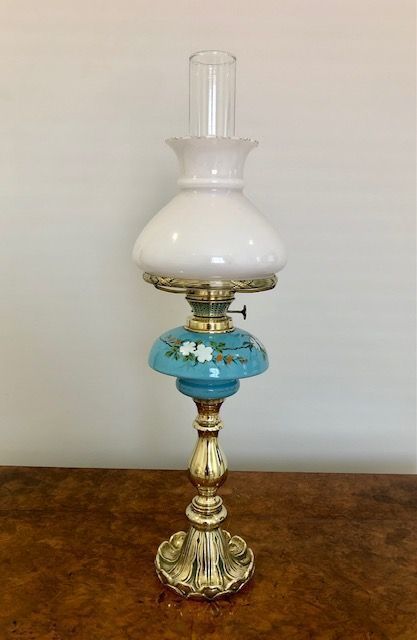
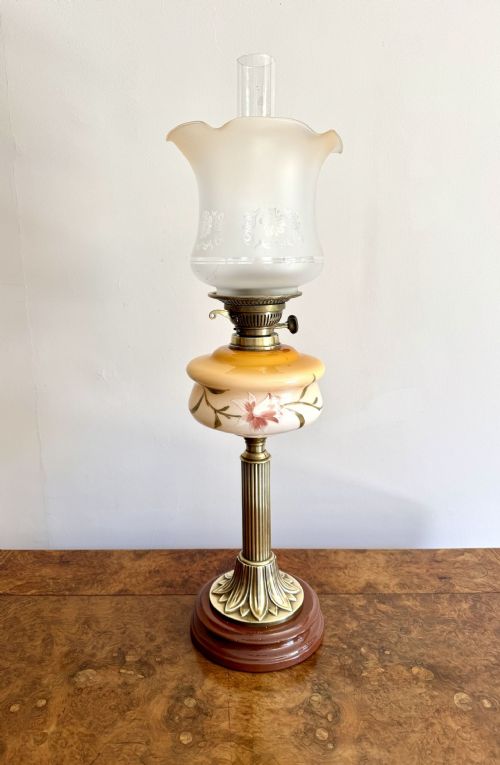
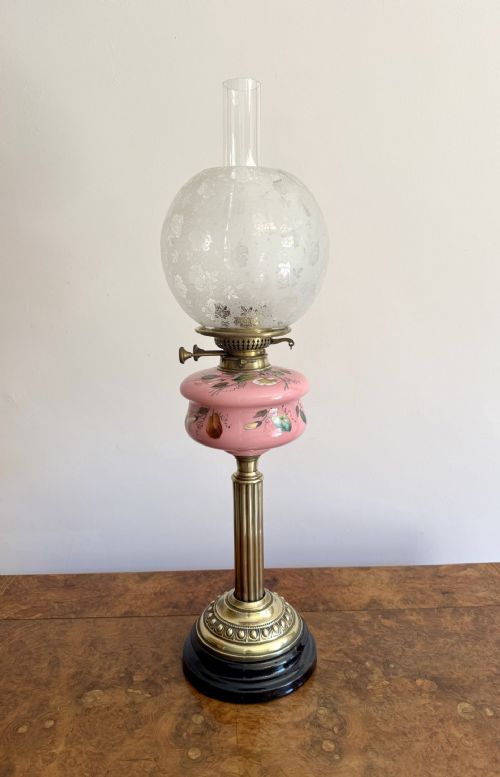
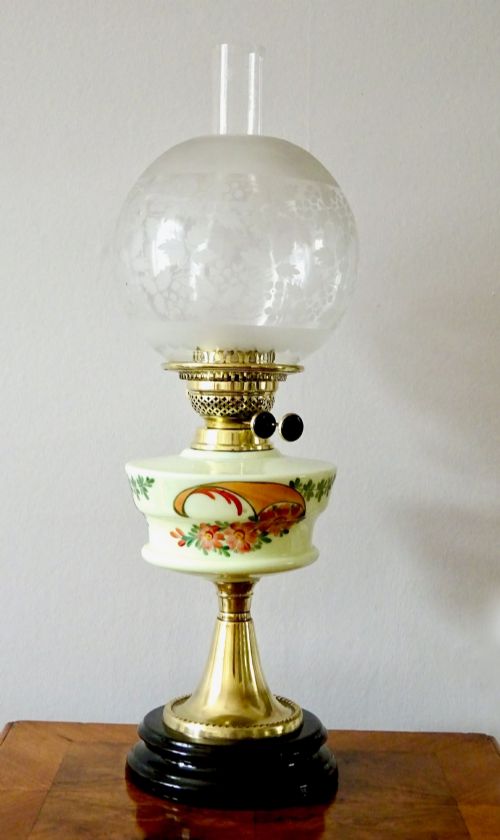


Painted Glass Shade
These painted glass shade pieces bring colour and character to period lighting, offering a practical way to replace or restore vintage fixtures.
Painted Glass Shade
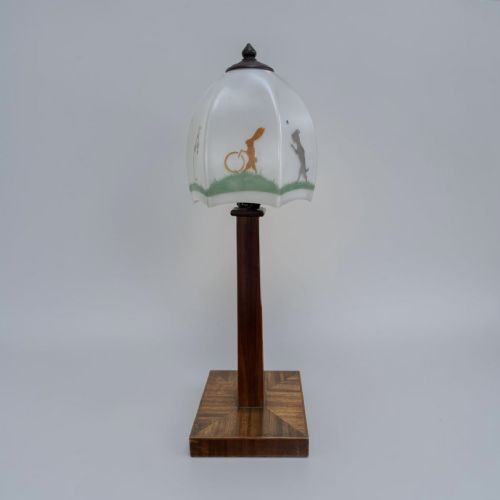
A painted glass shade sits at the top of oil lamps, table lamps, ceiling lights, and pendant fixtures, diffusing light through decorated surfaces. When you search for this phrase, you encounter pieces designed for interior illumination from the Victorian, Edwardian, and Art Deco periods.
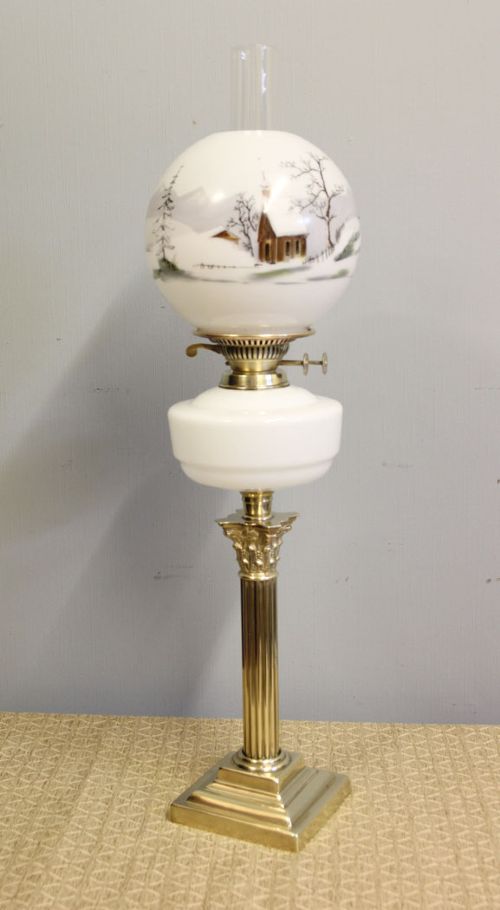
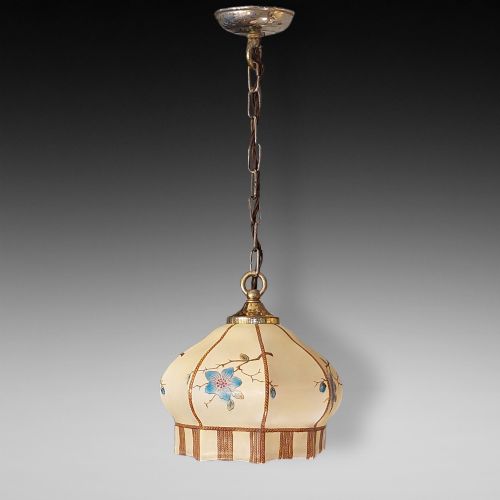
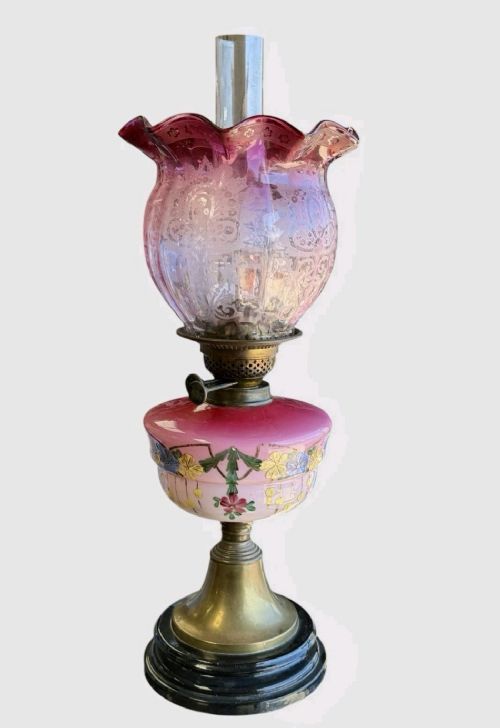
You are most likely to meet Victorian and early twentieth-century examples on this page, often formed as part of oil lamps or ceiling light suspensions. These components range from ball-shaped font shades to larger plafonnier ceiling light shades intended for domestic rooms.
The selections span various decorative movements, including Art Nouveau, Neoclassical, and French Rococo Revival styles. They appear alongside brass, ceramic, and ormolu mountings or as standalone glass elements meant for central light suspensions.
How they were made
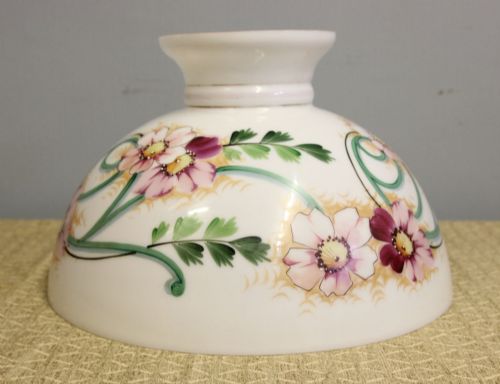
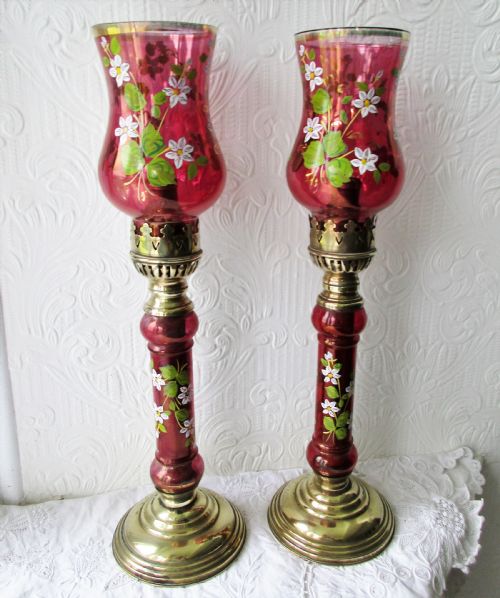
Glassmakers utilised techniques involving frosted glass, opaline glass, and cranberry glass to create the base vessel. Artisans then applied enamel or hand-painted details directly onto the surface, frequently depicting winter scenes or floral motifs.
Mountings and structural elements incorporate brass and metal fittings to support the glass components securely. These metal parts often feature cast details that complement the painted decoration of the shade.
Listings feature items spanning the 1860s through the 1930s, encompassing Victorian, Edwardian, and Art Deco design movements.
What varies in quality
The refinement of the hand-painted decoration determines the visual appeal of a piece, separating simple utilitarian items from finely rendered artistic works. Subtle shading and careful brushwork on floral subjects or winter scenes indicate a higher standard of manufacture.
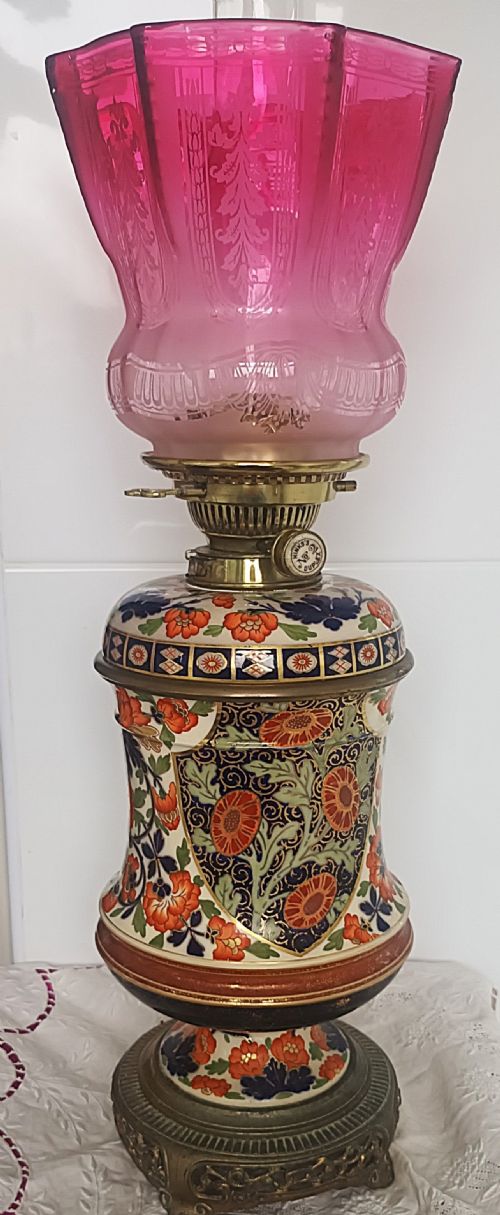
The depth and consistency of the glass colour, whether rich cranberry or solid opaline, contribute significantly to the overall presence of the object. Heavier glass casting and well-integrated metal collars also distinguish superior examples from standard production items.
The Painted Glass Shade Glossary
- Opaline glass
- Opaque or semi-translucent glass, often white or pale pink, used widely for Victorian and Edwardian lamp shades. It provides a soft, even diffusion of light.
- Cranberry glass
- Transparent red glass coloured with gold chloride during production, typical of nineteenth-century decorative lighting. It yields a rich pink or deep red hue when lit.
- Plafonnier
- A bowl-shaped ceiling light shade suspended flat against or close to the ceiling, frequently encountered in Art Deco and Neoclassical designs. It directs light downward into the room.
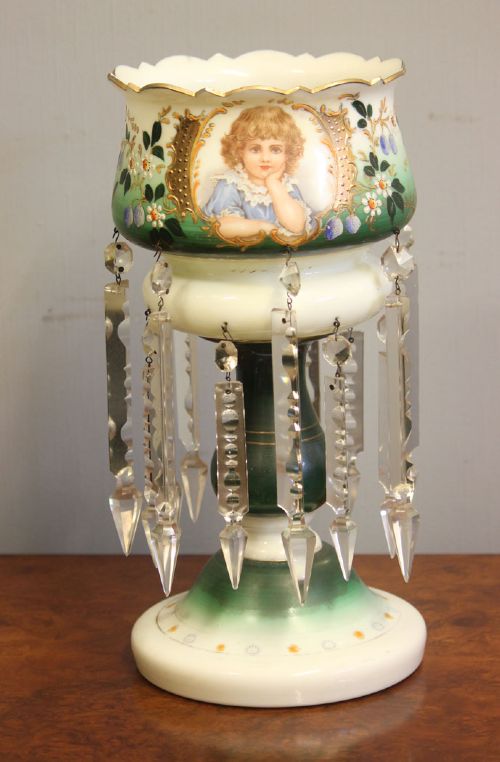
- Mantel lustre
- A decorative glass or ceramic vase-hanging ornament often paired with prisms, sharing aesthetic ties with period lighting items. They sat on mantelpieces to catch the flicker of room light.
Painted Glass Shade: Frequently Asked Questions
How do I fit a vintage shade?
Most period shades rest within a brass gallery ring, secured by three or four thumbscrews that grip the fitter rim at the base.
Take care not to overtighten these screws, as vintage glass can crack under uneven pressure from metal fittings.
Were these shades used for oil or electricity?
The majority of these pieces were originally designed for oil or paraffin burning lamps during the nineteenth and early twentieth centuries.
Many have since been adapted for modern electric table lamps or ceiling suspensions while retaining their original glass components.
How do I date a painted glass shade?
Dating relies on the style of the painted decoration, the type of glass used, and the shape of the fitter rim.
Victorian pieces often feature floral motifs on cranberry or opaline glass, whereas 1920s and 1930s examples display geometric Art Deco patterns or plafonnier forms.
Can I clean hand-painted glass safely?
Clean painted glass gently using lukewarm water and a mild detergent, avoiding harsh abrasives or soaking the painted areas.
Enamel and hand-painted surfaces can degrade over time if scrubbed or exposed to strong chemical solvents.