

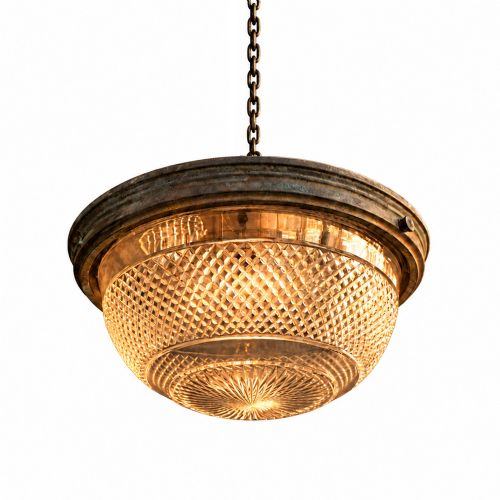
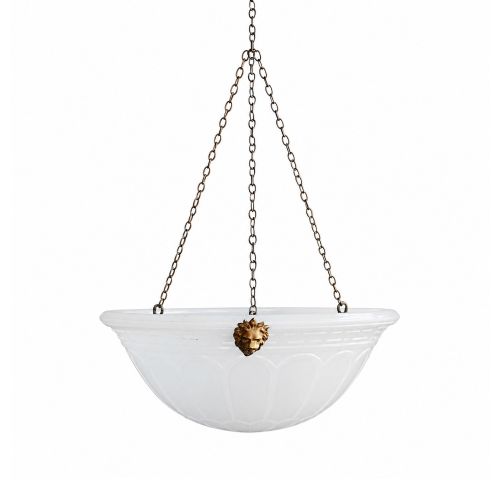
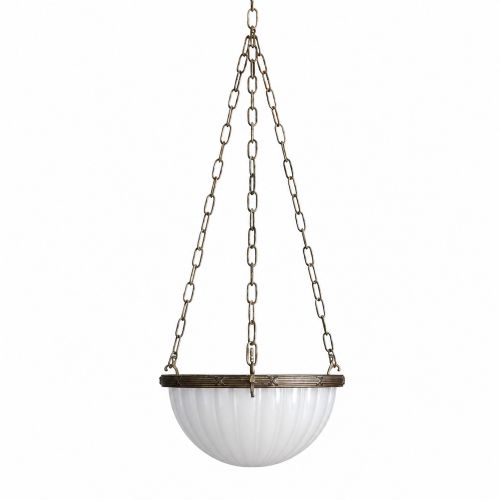


Edwardian Glass Bowl Shade
An edwardian glass bowl shade brings a warm, diffused light to a room, cast through moonstone, frosted, or cut glass suspended from brass and bronze.
Edwardian Glass Bowl Shade
When you search for an edwardian glass bowl shade, you are looking at ceiling suspensions, pendants, and plafonniers designed to light rooms from above. These fixtures distribute illumination evenly across a space while acting as a decorative architectural feature.
You are most likely to meet pieces from the Edwardian period alongside examples from the early twentieth century, Victorian era, and nineteenth century. The forms range from simple dish lights to elaborate chandeliers and oil lamps fitted with decorative bowls.
English origins predominate among the listings, though you will also encounter French influences through neoclassical and art nouveau styles. The glass bowls themselves pair with metal suspensions fashioned from brass, bronze, silver plating, and simple ironwork.
How they were made
Makers shaped the bowls using glassblowing and moulding techniques, producing opalescent, moonstone, and frosted surfaces designed to soften glare. Artisans then added cut glass patterns, enamel work, or painted neoclassical motifs directly onto the surface.
The glass bowls are suspended by metal fitments of brass, bronze, and silver plating, often arranged as plafonniers or multi-tiered chandeliers. These hanging systems rely on chains, ceiling suspensions, and metal frames that secure the heavy glass safely overhead.
Edwardian Glass Bowl Shade Retail Price Guide 2026
Typical asking prices for edwardian glass bowl shade among the pieces listed under this phrase on Sellingantiques today, from the lower quarter to the upper quarter. They describe what is for sale here now, not the wider market.
Listings feature glass bowls in moonstone, opalescent, and cut crystal varieties, paired with brass, bronze, and silver-plated metalwork.
What varies in quality
The weight and clarity of the glass set the standard for quality, with heavy cut crystal and deep moonstone surfaces showing superior craftsmanship. Thin, plain glass sits at the other end, lacking the optical depth found in better examples.
Metalwork quality depends on the gauge of the brass or bronze and the refinement of the casting and plating. Solid, well-finished suspension chains and mounts elevate a piece above simpler, lighter hardware.
Verrerie Des Vosges·Jefferson Light
The Edwardian Glass Bowl Shade Glossary
- Plafonnier
- A ceiling light fixture where the bowl sits flush or close to the ceiling suspension. This form directs light downward while concealing the bulb.
- Moonstone glass
- An opaque, milky glass that diffuses light with a soft, lunar glow. It was widely utilised across early twentieth-century lighting.
- Opalescent glass
- Glass that displays milky, milky-blue, or iridescent tones when lit from within. It creates a gentle, shifting play of colour.
- Cut glass
- Glass decorated by grinding facets and patterns into the surface using a wheel. This technique increases sparkle and light refraction.
Edwardian Glass Bowl Shade: Frequently Asked Questions
How do I hang an edwardian glass bowl shade?
These shades require sturdy ceiling suspensions connected to proper electrical junction boxes to support the weight of the glass and metal fittings.
Professional installation is recommended to ensure the chains and wiring securely bear the load of heavier cut crystal or bronze assemblies.
What rooms suit an edwardian glass bowl shade?
Pendant lights and plafonniers work well in hallways, dining rooms, and bedrooms where soft, downward illumination creates a welcoming atmosphere.
Lower ceiling heights benefit from flush bowl designs, while rooms with more clearance can accommodate suspended chandeliers and pendant lamps.
How do I clean an edwardian glass bowl shade?
Remove the glass bowl from its metal suspension whenever possible and wash it gently in warm, soapy water using a soft cloth.
Avoid harsh abrasives on painted surfaces, enamelling, or silver plating to preserve the original finish and delicate decorative details.
Are these shades compatible with modern bulbs?
Most antique fixtures accept standard modern LED or incandescent bulbs provided the wattage matches the capacity of the original wiring.
Consult an electrician to inspect the vintage brass and bronze fittings and update internal wiring if it shows signs of age.