
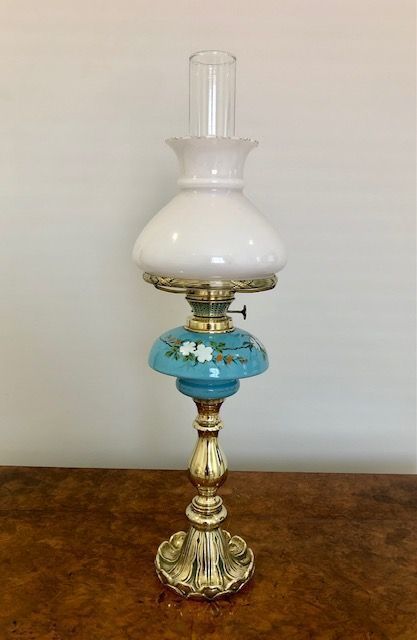
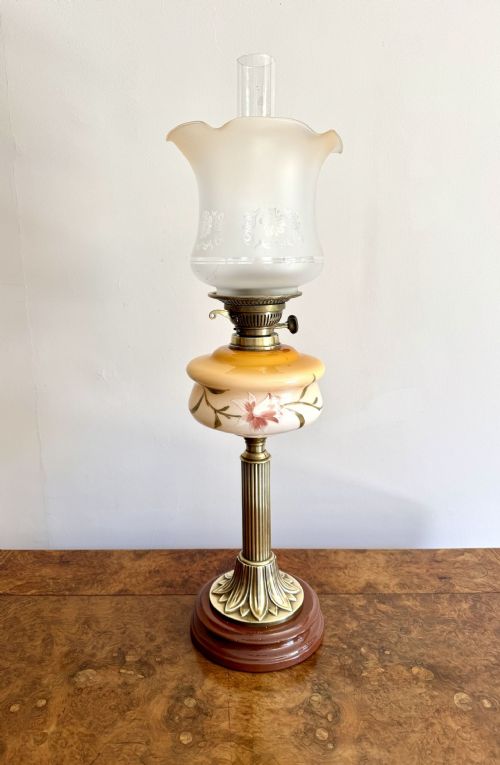
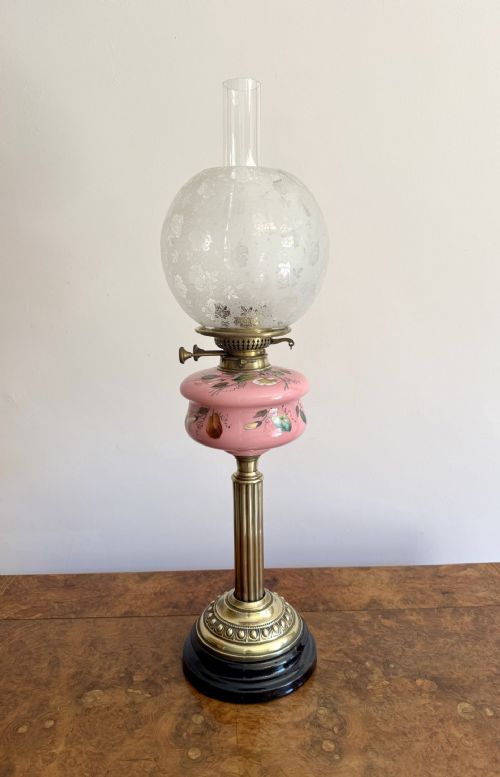
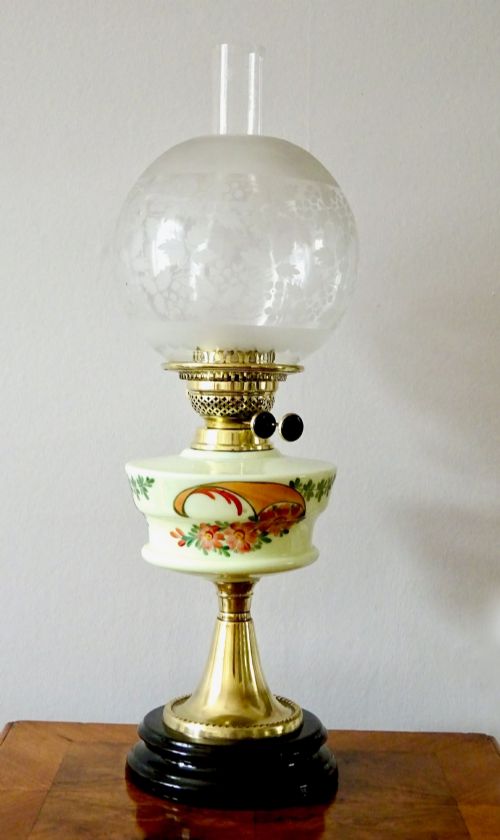


Painted Glass Paraffin Lamp
These painted glass paraffin lamp examples bring Victorian warmth and hand-finished colour to a room.
Painted Glass Paraffin Lamp
A painted glass paraffin lamp combines domestic utility with decorative illumination from the Victorian and Edwardian eras. Buyers search for these pieces to introduce period character and colourful hand-finished details into an interior.
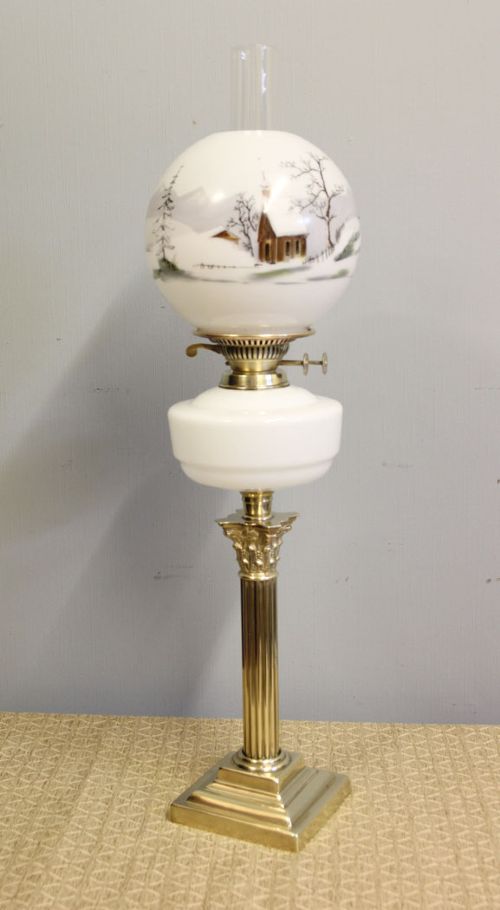
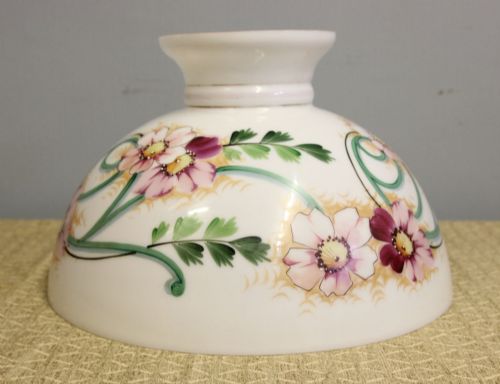
The versions most commonly met on this page feature glass fonts or shades paired with brass, ceramic or cast iron bases. These table lights and hanging shades span from the 1860s through to the early decades of the twentieth century, often displaying floral motifs or winter scenes.
The selection includes forms influenced by French Rococo Revival, Napoleon III, and Art Nouveau styles. Collectors encounter everything from tall Corinthian column designs to modest cottage table lights.
How they were made
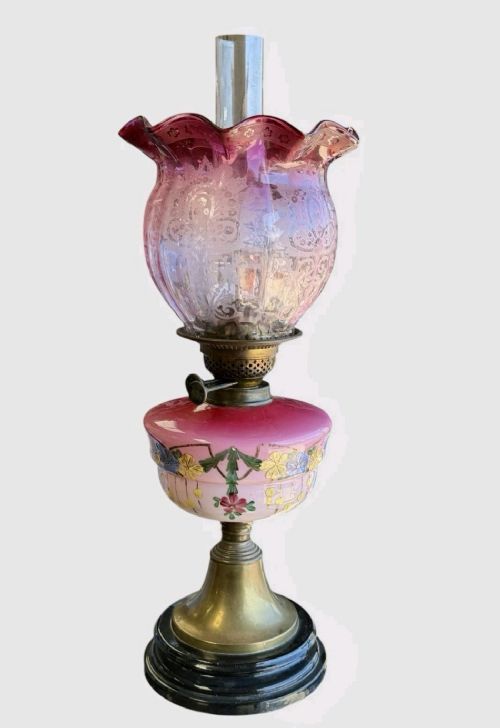
Makers utilised moulded and blown glass, including opaline, milk glass and cranberry glass, to form the bowls and shades. Artisans applied enamel paints and gilt decoration directly onto the glass surfaces by hand.
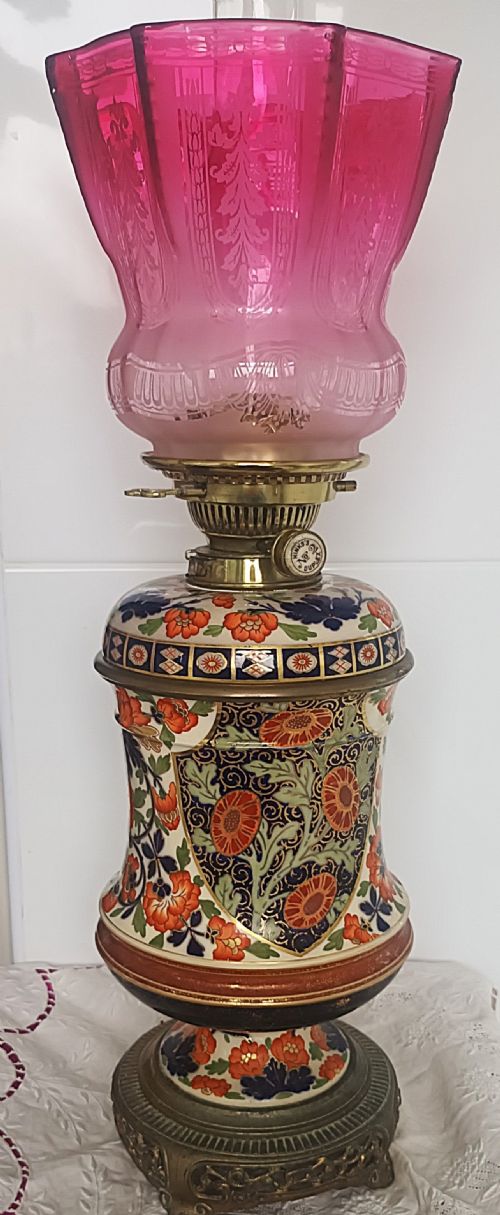
Metal components relied on cast brass and cast iron, sometimes shaped into architectural columns or ornate bases. Ceramic and faience bodies provided alternative foundations for the oil reservoirs.
Listings span the nineteenth century up to nineteen-thirty, combining brass, cranberry glass, ceramic and enamel materials.
What varies in quality
The standard of hand-painted decoration separates standard production from finer examples. Crisp brushwork and well-preserved gilding elevate the visual impact of the glass font or shade.
The integration of materials determines the overall substance of the piece. Combining heavy brass columns, cast bases and rich cranberry or pink glass creates a more substantial object than simpler earthenware bodies.
Hinks·Taylor Tunnicliff
The Painted Glass Paraffin Lamp Glossary
- Font
- The oil reservoir of the lamp, frequently made of coloured glass or ceramic. This sits atop the base and holds the liquid fuel.
- Duplex
- A type of double-wick burner system designed to provide a brighter flame. These mechanisms appear frequently on nineteenth-century domestic lighting.
- Opaline glass
- An opaque, pale glass often tinted in shades of pink or white. It serves as a popular canvas for hand-painted floral decoration.
- Faience
- Tin-glazed earthenware used for the decorative bodies of certain continental lamps. This material allows for detailed pictorial scenes on the base.
Painted Glass Paraffin Lamp: Frequently Asked Questions
How do I clean a painted glass font?
Use a soft, dry cloth to remove dust from the glass and painted surfaces without moisture.
Avoid abrasive cleaners or submerging decorated sections in water to protect the hand-painted details.
Were these lamps converted to electricity?
Many surviving examples have undergone conversion to electricity for safe modern domestic use.
Retaining the original burner parts alongside modern wiring represents a common approach for preservation.
What fuel did these lamps burn?
These lamps utilised paraffin, also known as kerosene, to feed the cotton wick inside the burner.
Fuel was poured directly into the glass or ceramic font through the collar.
How can I tell Victorian from Edwardian pieces?
Victorian examples frequently display heavier brass work, Corinthian columns, or rich cranberry glass.
Edwardian and later pieces often lean towards softer enamel colours and simpler silhouettes dating towards nineteen-thirty.