




Painted Gilt Sofa
A painted gilt sofa brings together carved timber, pigmented paint and shining gold leaf to create a seat that transforms a reception room.
Painted Gilt Sofa
A painted gilt sofa combines a carved timber frame finished with applied colour and metallic leaf with upholstered or caned seating surfaces. When you search for a painted gilt sofa, you encounter seating designed primarily for grand salons and formal drawing rooms rather than casual daily lounging.
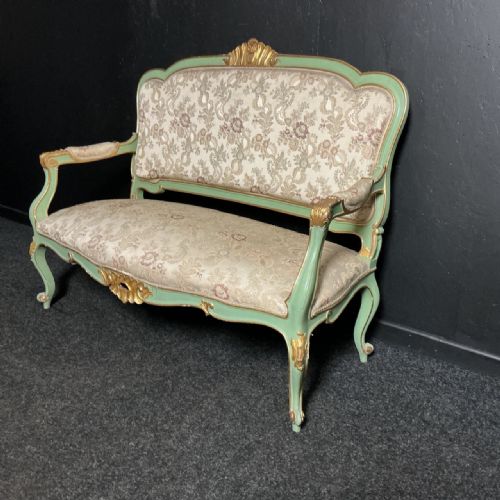
The majority of pieces met on this page date from the nineteenth century, alongside eighteenth-century examples and twentieth-century revivals. French and Italian workshops predominate, producing settees and canapés that reflect Louis styles, Regency designs and Neoclassical tastes.
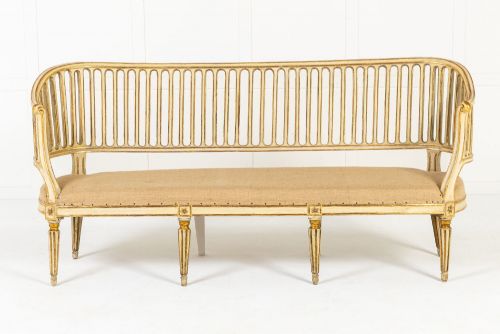
Forms range from intimate two-seat settees to longer couches, incorporating exposed wooden frames with intricate carving. Many examples feature cane panels or upholstered cushions covered in fabric or tapestry.
How they were made
Wood serves as the structural foundation, shaped into curved rails and cabriole or tapered legs through traditional joinery. Artisans then apply a base coat of paint, often in light tones, black, or cream, which provides the ground for subsequent decoration.
Gold leaf or parcel-gilt highlights are meticulously laid over specific carved details to catch the light. Canework or upholstery is then fitted to the seat and back, completing the synthesis of cabinetmaking, finishing and textile work.
Materials recorded across the inventory include wood, paint, gold leaf, cane, fabric and giltwood.
What varies in quality
The precision and depth of the wood carving dictate the initial distinction between standard workshop production and master craftsmanship. Crisp acanthus leaves, refined fluting and fluid cabriole legs show a carver's confident hand.
The harmony between the painted surface and the gilt detailing separates superior pieces from heavier-handed later refurbishments. Original preparation layers and subtle ageing of the gold leaf impart a depth that mechanical or modern repainting cannot replicate.
The Painted Gilt Sofa Glossary
- Giltwood
- Wood that has been coated with a thin layer of gold leaf over a prepared ground. This technique provides a luminous metallic finish that defines the highlights of the carved frame.
- Cane
- Woven rattan material used to form light, supportive panels for the backrests and seats of chairs and settees. It brings a textural contrast to the solid painted frame.
- Canapé
- A French term for an ornamental sofa or settee designed for multiple people. These pieces typically feature exposed carved wooden frames and upholstered cushions.
- Louis XVI Style
- A neoclassical design movement characterised by straight lines, symmetry and classical motifs such as fluted columns and ribbon twists. Frames from this period depart from the curving exuberance of the earlier Louis XV aesthetic.
- Parcel-Gilt
- A method where only specific portions of a painted or stained wooden object are gilded. This selective application creates contrast between the painted ground and the shining gold details.
Painted Gilt Sofa: Frequently Asked Questions
Where were painted gilt sofas used?
These seating pieces were designed for formal reception rooms, drawing rooms and private boudoirs in grand houses. They served as both functional seating and prominent decorative focal points.
Their ornate finishes meant they were placed where light could catch the gold leaf and complement the surrounding architectural interior decoration.
How do I care for a painted gilt sofa?
Protect the fragile painted and gilded surfaces by keeping the sofa away from direct sunlight and fluctuating heat sources. Dust the carved wooden frames gently with a soft, dry cloth.
Avoid liquid cleaners or abrasive materials that can strip away the delicate gold leaf and historical paint layers.
How can I tell a Louis XV style sofa from Louis XVI?
Louis XV style pieces feature asymmetrical curves, flowing cabriole legs and organic rococo motifs without straight lines. The overall silhouette is undulating and soft.
Louis XVI pieces introduce geometric discipline, straight tapered legs, fluting and strict symmetry inspired by classical architecture.
What is the difference between a settee and a canapé?
A settee is a broad term used primarily in English-speaking regions for a wide seat with a back and arms designed for multiple people. It covers a diverse range of domestic furniture forms.
A canapé is specifically a French-origin term for an upholstered sofa, often featuring an exposed decorative wooden frame and closely tied to courtly interior styles.