



Painted Fruit Urn
These painted fruit urn pieces combine botanical naturalism with classic ceramic forms, offering rich hand-painted orchard displays that brighten any traditional mantelpiece.
Painted Fruit Urn
A painted fruit urn brings together classical vessel shapes and detailed botanical illustration. When you search for painted fruit urn, you encounter items predominantly created in porcelain, bone china, and glazed earthenware across periods spanning from the eighteenth century to the mid-twentieth century.
The dominant form on this page is the decorative vase and pot pourri container, alongside ewers and wall reliefs. These pieces frequently draw upon traditional English and neoclassical design idioms, reflecting a sustained interest in lush horticultural subjects.
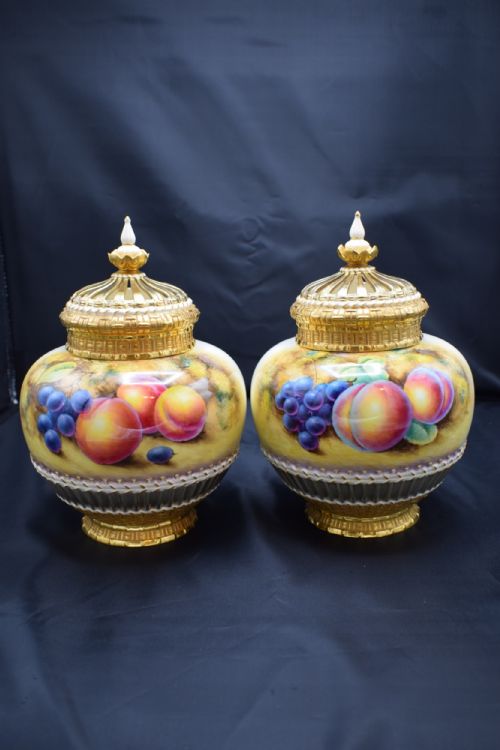
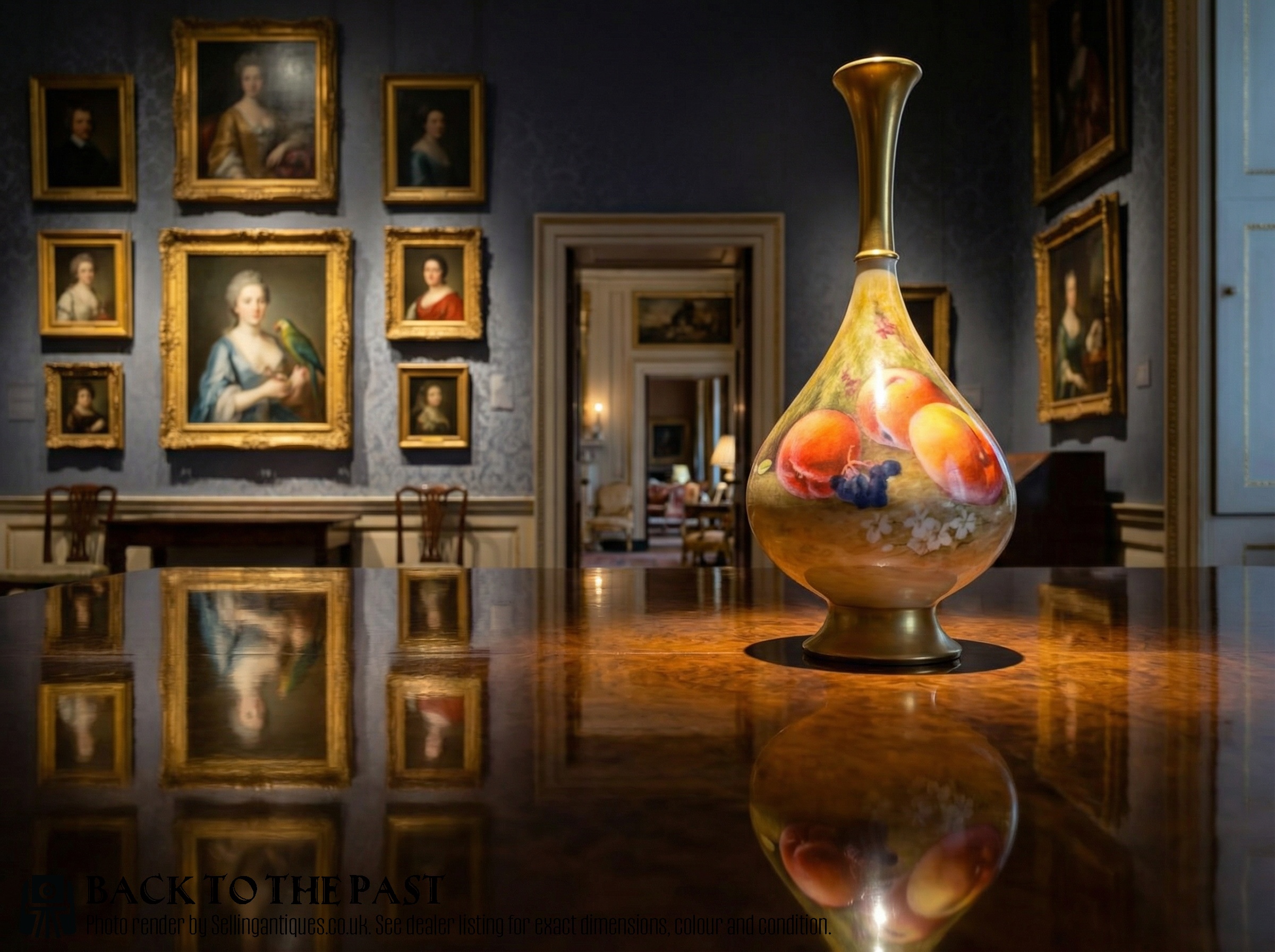
Makers and decorators utilised various forms such as ginger jars, ice pails, and covered vessels to showcase complex renderings of apples, peaches, grapes, and berries. Each item presents a miniature orchard scene rendered directly onto the glazed ceramic body.
Materials and construction methods
Potters shaped fine porcelain, bone china, and earthenware bodies on the wheel or in moulds before firing them to create a smooth, durable base. Artisans then applied white or tinted grounds suited for detailed miniature painting.
Painters executed orchard compositions using specialised ceramic pigments that withstood high kiln temperatures. They often accented these scenes with gold leaf, gilding, and gilt highlights along the rims, handles, and covers.
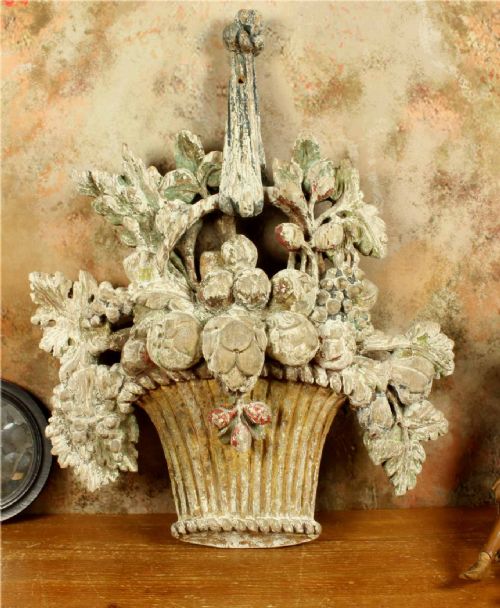
Carved wood appears in specific wall reliefs and related decorative items, offering an alternative medium for floral and fruit motifs. Glazed earthenware and enamel complete the material range seen across these listings.
Listings span from the 18th Century through the 1960s, featuring materials such as porcelain, bone china, enamel, gold leaf, and carved wood.
Distinctions in quality and execution
The distinction between standard production and exceptional work rests upon the skill of the hand painting and the prestige of the decorator. Pieces bearing signatures from recognised artists demonstrate superior brushwork and more nuanced colour blending within the fruit clusters.
Form complexity and gilding execution also separate tiers of quality. Elaborate vessels featuring pierced covers, moulded handles, and heavy gilding require advanced ceramic engineering and careful finishing compared to plain baluster shapes.
Royal Worcester·Flight, Barr and Barr·Coalport·William Moorcroft·Charlotte Rhead
The Painted Fruit Urn Glossary
- Pot Pourri Vase
- A vessel designed with a pierced or perforated cover to allow scented dried petals and spices to fragrance a room. These often feature hand-painted fruit decoration across the main body.
- Ewer
- A large jug with a wide spout and elaborate handle, historically used for water but produced in ceramic as a purely decorative object. They frequently appear in pairs alongside matching urns.
- Gilding
- The application of gold leaf or gold dust to ceramic surfaces, particularly around rims, handles, and foot rings. This technique enhances the formal appearance of neoclassical and traditional English vessels.
- Bone China
- A type of soft-paste porcelain incorporating bone ash, known for its high strength, chip resistance, and translucent white body. It provides an ideal smooth ground for detailed botanical painting.
- Glazed Earthenware
- Porous pottery fired at lower temperatures and coated with a vitreous glaze to ensure impermeability. It forms the structural base for various traditional and art deco vessels.
Painted Fruit Urn: Frequently Asked Questions
What are painted fruit urn pieces?
These items are ceramic vessels, including vases, pot pourri jars, and ewers, decorated with hand-painted arrangements of orchard fruits such as apples, peaches, and berries.
They combine classical pottery shapes with detailed botanical artistry, mostly originating from English porcelain manufacturers during the nineteenth and twentieth centuries.
How were painted fruit urn items used?
They served primarily as interior ornamentation on mantelpieces, side tables, and cabinets within formal rooms. Covered vessels like pot pourri jars also held scented dried botanicals to freshen the air.
While some functioned as ewers or ice pails, most were created strictly for display to demonstrate wealth and refined taste through art.
How do I care for my painted fruit urn?
Dust these items gently with a soft, dry brush or cloth to protect the delicate hand-painted enamel and gilded surfaces. Avoid using liquid cleaners or abrasive materials.
Keep them away from direct sunlight to prevent any fading of the pigments within the fruit compositions over time.
How can I tell different periods apart?
Examine the base marks, stylistic influences, and manufacturing materials to determine the era of a piece. Earlier examples from the eighteenth and early nineteenth centuries often feature soft-paste bodies and neoclassical forms.
Later twentieth-century items, particularly from the mid-century decades, display brighter enamel palettes and specific artist signatures typical of established porcelain works.