


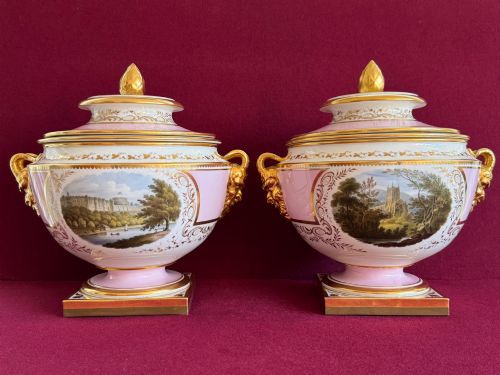


Painted Fruit Ceramic Urn
These painted fruit ceramic urn pieces bring together rich botanical studies and fine porcelain bodies, offering a striking centrepiece for any traditional room.
Painted Fruit Ceramic Urn
A painted fruit ceramic urn encompasses various decorative vessels such as pot pourri vases, ginger jars, and ewers that display hand-painted studies of apples, pears, and berries. Buyers seeking these items encounter numerous examples originating from the Victorian period through to the mid-twentieth century.
The selection ranges from Regency-era ice pails and early nineteenth century porcelain to twentieth-century decorative pieces in diverse styles like Art Deco and French Rococo Revival. Most examples found on this page display the refined ornamentation typical of English porcelain traditions from these eras.
Factors determining the quality of each piece
The distinction between standard items and superior examples lies in the precision and naturalism of the fruit painting, where individual brushwork defines the texture of peaches, grapes, and foliage. Signed pieces by recognised artists demonstrate a higher tier of craftsmanship compared to unsigned production wares.
The richness of the gilding and the delicacy of the porcelain body also separate the finer vessels from simpler earthenware forms. Furthermore, complete sets featuring matching covers or paired ewers retain greater integrity than isolated components.
Painted Fruit Ceramic Urn Retail Price Guide 2026
Typical asking prices for painted fruit ceramic urn among the pieces listed under this phrase on Sellingantiques today, from the lower quarter to the upper quarter. They describe what is for sale here now, not the wider market.
Object types span pot pourri vases, ginger jars, ice pails, and decorative ewers dating from the Regency era to the twentieth century.
Royal Worcester·Flight Barr And Barr·William Moorcroft·Charlotte Rhead
The Painted Fruit Ceramic Urn Glossary
- Pot pourri vase
- A vessel featuring a pierced cover designed to diffuse scent from dried flowers and spices placed within the body. These often showcase elaborate hand-painted fruit scenes.
- Ewer
- A large jug with a wide spout and looped handle, historically used for water but collected as a decorative ornamental piece. Many examples include gilt detailing and painted panels.
- Ginger jar
- A ceramic storage vessel with a domed cover, adapted in later periods primarily for decorative display. They provide a broad curved surface well suited to botanical painting.
- Gilding
- The application of gold leaf or gold powder to ceramic surfaces to accentuate rims, handles, and borders. This technique enhances the visual contrast against painted fruit motifs.
- Bone china
- A type of soft-paste porcelain containing animal bone ash, resulting in a strong, milky-white body. It forms the foundation for many finely painted nineteenth and twentieth century pieces.
Painted Fruit Ceramic Urn: Frequently Asked Questions
How are painted fruit urns cleaned?
Dust these porcelain vessels gently with a soft dry brush to protect the delicate surface pigments and gilt highlights. Avoid using water or chemical cleaners, which can damage the hand-painted details and gold leaf.
Keeping them away from direct sunlight also prevents the colours from fading over time, ensuring the fruit studies remain vivid.
Where were these ceramic urns made?
Most of the pieces listed originate from English potteries, with a strong representation from Worcester factories operating across the nineteenth and twentieth centuries. Other examples reflect wider European porcelain traditions.
These workshops employed specialist artists to hand-paint botanical subjects onto fine bone china and porcelain bodies.
How do I identify the period of a piece?
Look at the base for factory backstamps, registration numbers, and artist signatures that date the manufacture of the porcelain. Stylistic clues such as Art Deco shapes or Regency forms also indicate the era of production.
Comparing the style of the fruit painting and the type of gilding provides further evidence of when the item was made.