


Painted Frame Mantel Mirror
A painted frame mantel mirror brings architectural presence and reflected light to a room, offering the charm of period craftsmanship.
Painted Frame Mantel Mirror
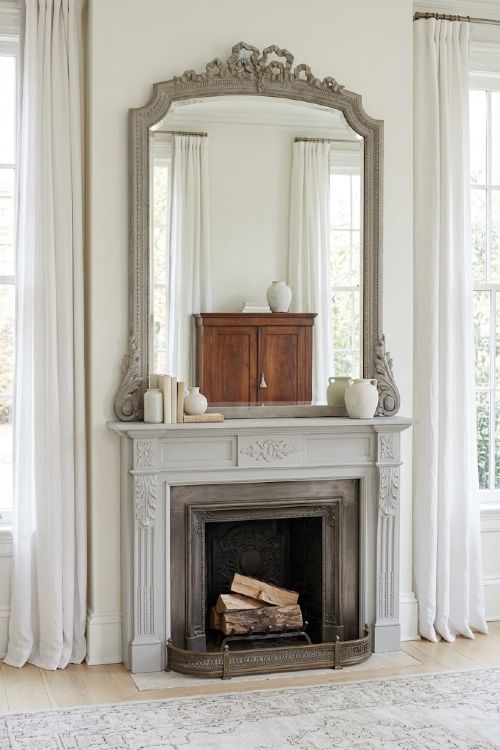
A painted frame mantel mirror serves as a grand focal point above a fireplace or along a principal wall. These substantial pieces originate primarily from the nineteenth century, encompassing Victorian and continental European examples designed to dominate a room's proportions.
The selection centres heavily on overmantel mirrors and trumeau mirrors featuring generous dimensions and architectural framing. Many pieces incorporate arched tops, shaped crests, or decorative relief panels depicting classical motifs.
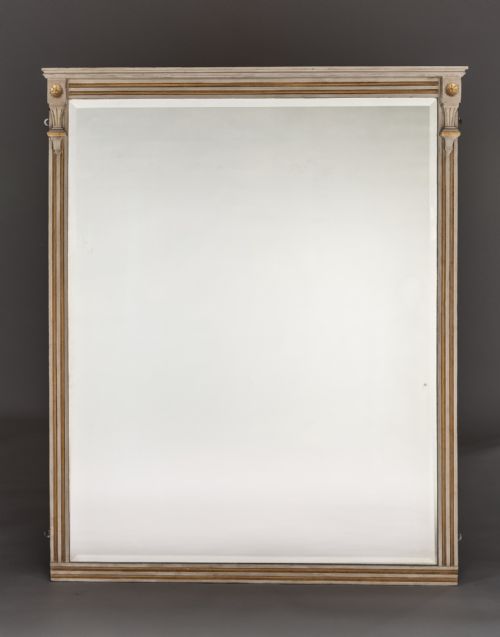
Originating largely from English and French workshops, these items blend structural woodwork with painted finishes, often highlighted by parcel gilt or ebonised accents. Buyers encounter formats ranging from simple painted surrounds to ornate rococo revival designs.
Materials and construction methods
Craftsmen built the underlying structures using carved wood, frequently applying layers of gesso to create smooth surfaces or intricate low-relief mouldings. This composite foundation allowed artisans to achieve crisp architectural details and elaborate decorative frames.
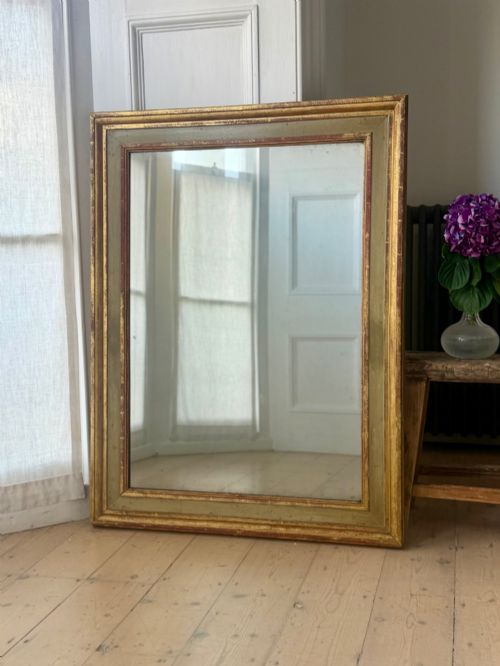
Surface decoration relies upon traditional paint finishes, sometimes combined with gold leaf, silvered elements, or contrasting ebonised details. Original glazing often consists of heavy mirror glass or mercury glass secured within the finished timber framework.
Bacchus and cherubs occasionally peer out from the carved wooden reliefs of early nineteenth-century French panels.
Distinctions in craftsmanship and preservation
Quality rests in the crispness of the carved wood and gesso ornamentation, where deeply defined relief work distinguishes superior artisan output from simpler commercial production. The harmony between the original paint layers and any parcel gilding dictates the visual depth of the piece.
The integrity of the frame structure and the retention of original glass contribute significantly to the character of each mirror. Surface wear, including authentic distressing on the painted finish, influences the historic authenticity of the object.
The Painted Frame Mantel Mirror Glossary
- Overmantel mirror
- A large mirror specifically proportioned to hang on the wall directly above a fireplace mantel. These pieces often feature horizontal or vertical grandeur designed to fill chimney breast spaces.
- Trumeau mirror
- A decorative wall mirror incorporating a painted or carved panel either above or within the glass framework. Originating largely from French interior design, these pieces combine woodwork and art.
- Gesso
- A plaster-like material applied to carved wood frames to create a smooth surface for painting or gilding. Skilled artisans moulded this substance into elaborate floral and architectural reliefs.
- Parcel gilt
- A decorative technique where specific raised portions of a frame receive a thin application of gold leaf while the remaining surface is painted. This creates contrast against the primary painted finish.
- Mercury glass
- An early type of double-walled glass blown with a silvering mixture introduced between the layers. It frequently displays characteristic dark speckling and mottled reflection across the mirror plate.
Painted Frame Mantel Mirror: Frequently Asked Questions
Where should a mantel mirror hang?
These mirrors traditionally anchor the space directly above a fireplace mantel, where their proportions reflect light and balance the hearth below.
They also function effectively on principal living room walls as standalone decorative art pieces.
How do I identify a Victorian mirror?
Victorian examples often display heavy carved wood and gesso frames with arched tops or ornate architectural detailing.
Makers from this period frequently utilised distinct styles such as the Aesthetic Movement or Rococo Revival.
What is mercury glass?
Mercury glass is an early reflective material made by pouring a silvering solution between double walls of blown glass.
It produces a characteristic mottled appearance and soft reflection rather than a modern mirror's clinical clarity.
Can these mirrors stand on a mantel?
While many overmantel mirrors are substantial enough to rest safely on the mantel shelf itself, wall-mounting hardware remains essential for stability.
Their heavy timber and gesso construction requires secure installation into wall studs.