

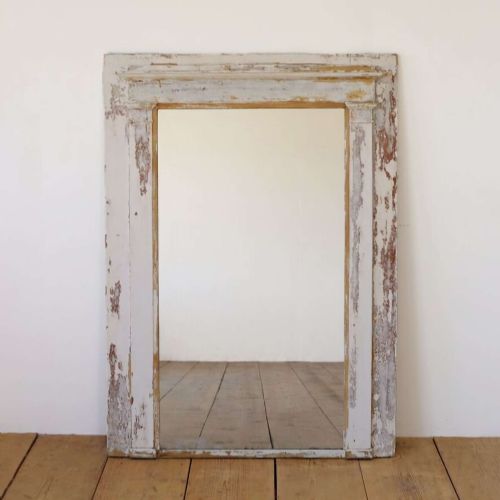
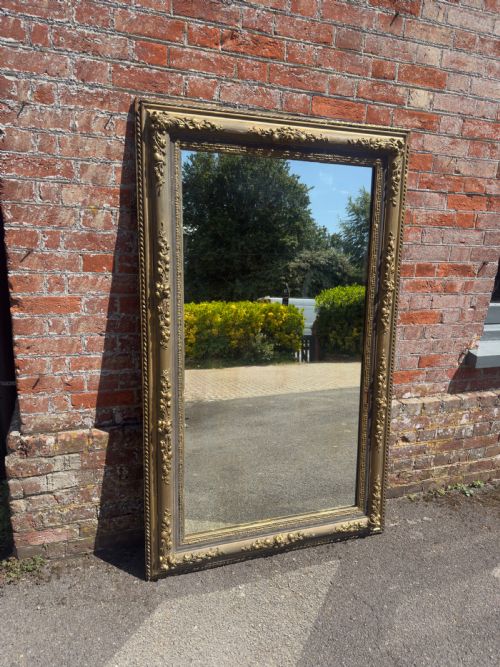


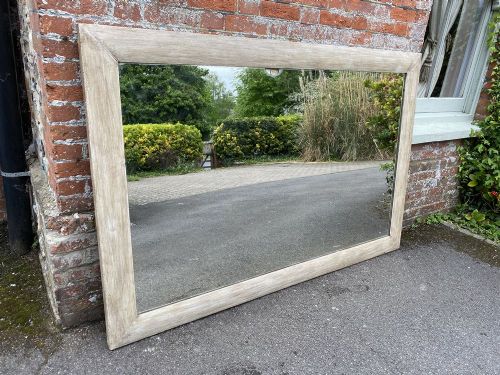

Painted Frame Floor Mirror
These painted frame floor mirror pieces bring height and light to a room, drawing the eye with their tall proportions and aged finishes.
Painted Frame Floor Mirror
When you search for a painted frame floor mirror, you are looking at substantial tall glass plates housed within timber surrounds decorated with pigment, gesso, or gold leaf. These substantial items serve to bounce natural light around a room while anchoring large wall spaces.
The versions most likely to meet you on this page date from the nineteenth century, spanning decades such as eighteen fifty, eighteen sixty, eighteen seventy, and eighteen ninety. They frequently arrive in French and English country, provincial, chateau, neoclassical, and Victorian styles.
Many examples incorporate arched tops, plain borders, ribbed mouldings, or vitruvian scroll motifs. They appear in formats designed to stand upon the floor or rest heavily upon a mantelpiece.
How they were made
Makers constructed the structural framework primarily from wood, shaping timber into substantial upright borders that could support heavy glass plates. Craftsmen often applied layers of gesso over the wood substrate to build up decorative reliefs and smooth surfaces before adding pigment.
Finishes combined paint and gold leaf, creating weathered surfaces through the application of multiple colour layers. Carved wooden ornaments were pinned or glued to the main frame before the final painting process.
Painted Frame Floor Mirror Retail Price Guide 2026
Typical asking prices for painted frame floor mirror among the pieces listed under this phrase on Sellingantiques today, from the lower quarter to the upper quarter. They describe what is for sale here now, not the wider market.
Listings feature items from the nineteenth century exclusively, utilising wood, gesso, glass, paint, and gold leaf across French and English styles.
What varies in quality
The depth and crispness of the carved wood and gesso ornamentation separate standard examples from finer pieces. Hand-tooled details display sharper relief and greater intricacy than mass-produced moulding.
The integrity of the original paint and gilt surfaces determines the visual weight of the object. Surviving historic finishes that show natural wear without modern intervention hold greater character than stripped or heavily repainted surfaces.
The Painted Frame Floor Mirror Glossary
- Gesso
- A plaster-like mixture applied to wood frames to create a smooth surface for painting or gilding. This material allows artisans to carve intricate relief details before applying colour.
- Overmantle mirror
- A long mirror specifically designed to sit above a fireplace mantel. These pieces share stylistic traits with tall mirrors intended for lower wall placement.
- Vitruvian scroll
- A classical repeating scroll ornament resembling a wave pattern. It appears carved into the wooden frames of nineteenth-century decorative pieces.
- Louis Philippe
- A mid-nineteenth-century French style characterised by restrained curves and simple arched tops. This aesthetic avoids excessive ornamentation in favour of balanced proportions.
Painted Frame Floor Mirror: Frequently Asked Questions
How do I place a tall mirror?
Position the piece securely against a solid wall, ensuring the weight distributes evenly onto the floor. Heavy items require wall anchors for safety.
Place the frame opposite a window to maximise the reflection of natural light into darker corners of the interior.
Can these mirrors stand alone?
Many large nineteenth-century examples rest directly on the floor while leaning against a vertical surface. Their substantial weight helps keep them stable in domestic settings.
Check the base construction to ensure the frame sits level without wobbling on uneven floorboards.
How do I clean painted wood?
Dust the carved frame gently with a dry, soft cloth to prevent dirt accumulation in the gesso crevices. Avoid harsh chemical cleaners that strip aged finishes.
Use standard glass cleaner applied to a cloth rather than the mirror surface directly to protect the surrounding wooden border.
Are these frames original?
Nineteenth-century pieces often display wear consistent with age across the painted surfaces and gesso mouldings. Examining the layers helps determine the history of the finish.
Minor touch-ups to the paintwork occur frequently on items dating from eighteen fifty to eighteen ninety.