




Painted Folding Screen
A painted folding screen divides a room or shields a hearth while displaying oil paint, lacquer, or tooled leather across multiple hinged panels.
Painted Folding Screen
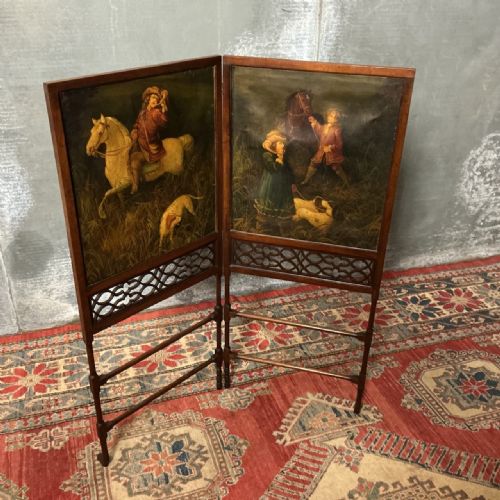
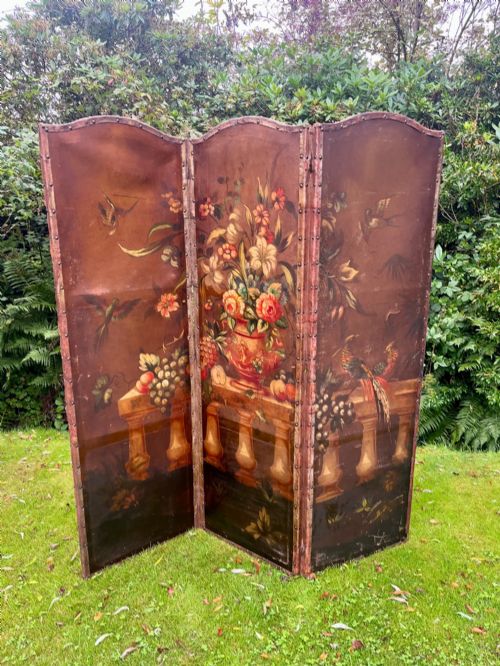
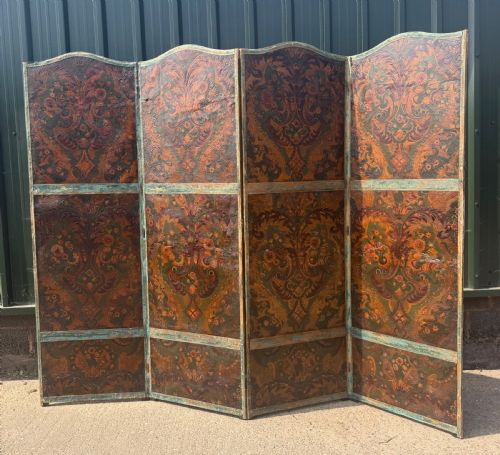
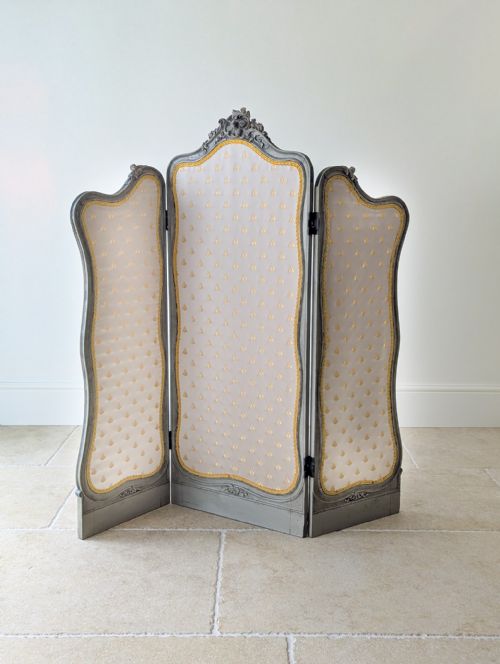
A painted folding screen serves primarily as a movable room divider or privacy panel, utilising multiple hinged leaves to partition interior space. When people search for a painted folding screen, they encounter pieces ranging from tall four-fold room dividers to smaller three-fold screens designed for domestic quarters.
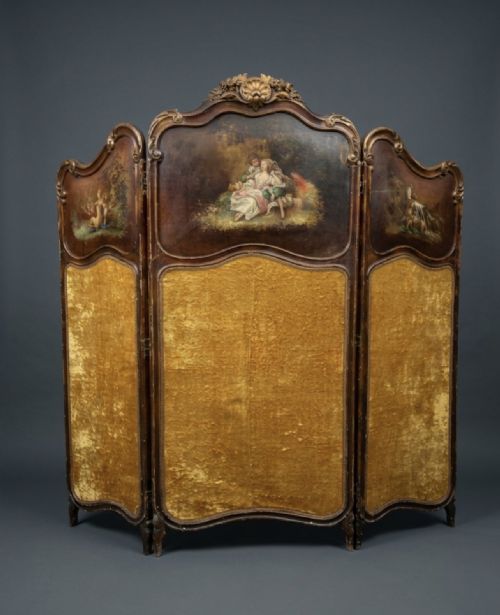
The selections available span several centuries and diverse stylistic traditions, including French Rococo Revival, Chinoiserie, and Continental Baroque. Domestic examples frequently adopt formats such as modesty screens or fire screens, fulfilling specific functional roles within Victorian and Edwardian rooms.
Origin points vary widely across Europe and Asia, bringing together English, French, Dutch, Chinese, and Japanese workmanship. Many pieces employ traditional motifs like pastoral scenes and chinoiserie decoration executed upon leather, canvas, or wood.
Materials and construction methods
Makers constructed the structural frames from timbers such as mahogany, walnut, and general wood, often incorporating brass hardware for the hinges that join the panels. Many screens feature fretwork or carved detailing alongside the primary structural supports.
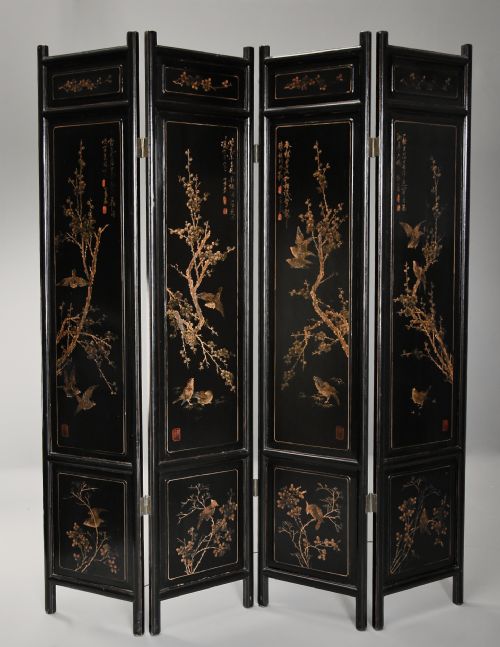
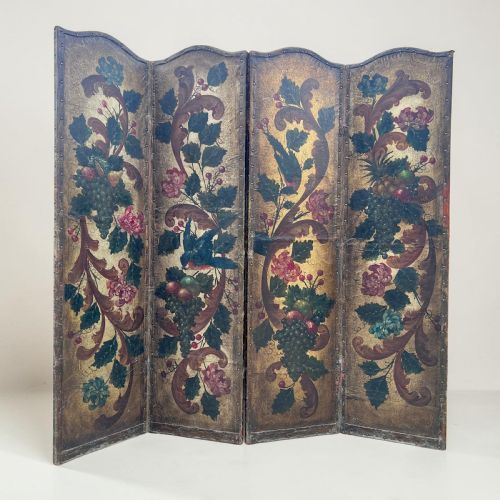
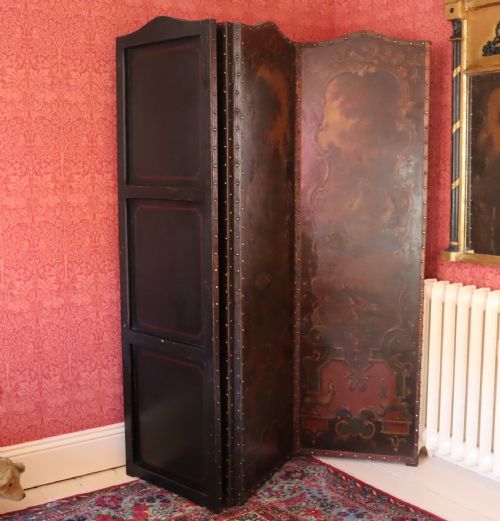
Surface decoration relies heavily on oil paint applied to canvas, wood, or leather, alongside black and decorated lacquer techniques. Elaborate pieces incorporate gilt embossing, hardstone mounting, or tooled leather reminiscent of eighteenth-century Dutch workshops.
Recorded styles include French Rococo Revival, Chinoiserie, Continental Baroque, and Napoleon III alongside Arts and Crafts variants.
Assessing quality in folding screens
Quality rests upon the execution of the hand-painted artwork and the structural integrity of the folding frame. Superior examples demonstrate refined draftsmanship in pastoral scenes or chinoiserie motifs, whereas lesser pieces display repetitive or mechanical decoration.
The choice of base material significantly influences the character of a screen, with Cordoban leather, gilt embossing, and hardstone mounts marking out more ambitious commissions. Original hinges, stable joining between panels, and preserved surface patination distinguish pieces that retain their decorative power.
Paul Sormani
The Painted Folding Screen Glossary
- Chinoiserie
- European artistic style reflecting Chinese decorative motifs, frequently found on lacquer and painted leather screens. It employs imaginary landscapes and figures.
- Cordoban leather
- Heavily embossed, painted, and gilt leather produced originally in the Spanish city of Cordoba, prized for rich wall hangings and screens. Eighteenth-century examples remain particularly sought after.
- Modesty screen
- A small low screen used in domestic interiors to block draughts around the legs or to provide localized privacy. Nineteenth-century French rooms often utilised these.
- Fire screen
- A single-panel screen placed before an unlit fireplace to decorative effect or to shield occupants from residual heat. Some variants incorporate gilt frames and painted canvas.
- Lacquer
- A durable resin finish applied in multiple layers to wood surfaces, often associated with East Asian folding screens. Black lacquer grounds typically support painted or hardstone-mounted designs.
Painted Folding Screen: Frequently Asked Questions
How were folding screens used historically?
Historically, folding screens partitioned large draughty rooms into intimate spaces and provided privacy for dressing or dining. They also acted as fire screens to deflect heat from hearths.
Domestic interiors employed them flexibly, moving them between rooms as seasonal habits and social requirements changed.
What materials appear most often on these screens?
Wood forms the primary structural frame, utilising timber such as mahogany and walnut alongside brass hinges. Surfaces commonly feature painted leather, canvas, or lacquer.
Some Asian and European examples incorporate gilt embossing, oil paint, and hardstone mounts to enrich the panels.
How do I distinguish between different periods?
Victorian and nineteenth-century pieces often favour heavy painted leather and French Rococo Revival or Continental Baroque influences. Edwardian and later twentieth-century screens frequently display Chinoiserie lacquer or simpler wood frames.
Examining the underlying materials, paint techniques, and hardware helps align a piece with its era of manufacture.
How do I care for a painted leather screen?
Keep painted leather and canvas screens away from direct sunlight and extreme humidity fluctuations to prevent the surface paint from cracking. Dust them gently with a dry, soft cloth without applying harsh chemical cleaners.
Ensure the folding hinges remain properly aligned so that individual panels do not strain the connecting joints during movement.