


Vintage Four Fold Screen
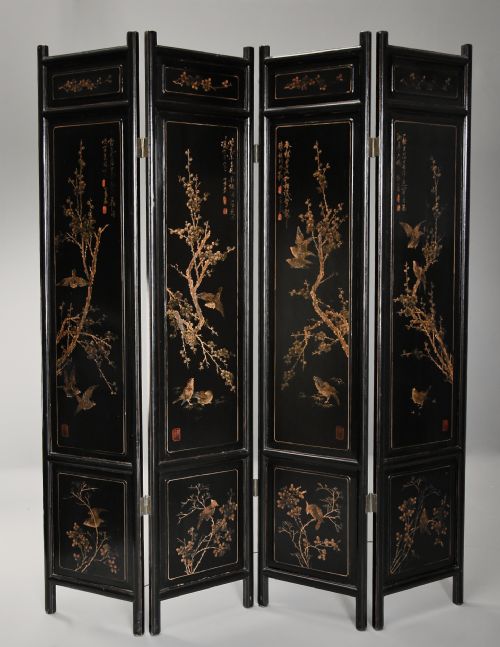
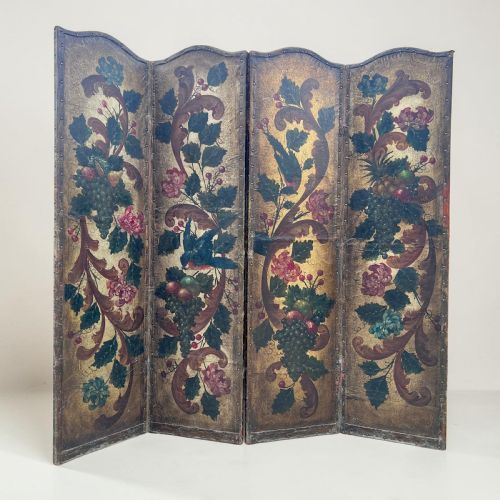
These vintage four fold screen pieces divide a room with panels of lacquer, leather, and wood.
Vintage Four Fold Screen
A vintage four fold screen provides division and privacy within a room using four hinged panels. The selection spans periods from the eighteenth century through the Victorian era and into the early twentieth century.
Most examples function as room dividers or dressing screens, utilising styles such as Chinoiserie, Arts and Crafts, and French Chateau. Forms range from tall privacy panels to smaller dressing screens.
Origins vary widely across the inventory, taking in English, French, Dutch, Chinese, and Japanese traditions. Makers and workshops from different centuries utilised distinct regional motifs and construction methods.
Materials and construction methods
Wood serves as the primary structural frame for many pieces, appearing in forms like mahogany, oak, and ebonised timber. Carved detailing, fretwork, and brass hardware frequently support the hinged panels.
Surface decoration relies heavily on leather, canvas, and fabric applied across the frame. Artisans applied hand painting, gilding, lacquer, needlepoint, and hardstone mounts to enrich the panels.
Materials across the listings include wood, brass, lacquer, leather, canvas, mahogany, fabric, and paint.
Factors determining quality
Quality rests in the depth of hand craftsmanship, seen in intricate wood carving, delicate fretwork, and precise joinery of the four sections. Finer execution appears in hand painted details and applied ornamentation.
The choice of materials dictates the standard of the piece, with solid timbers, genuine leather, and layered lacquer standing apart from simpler fabric or painted canvas versions. Intricate surface decoration elevates the overall execution.
The Vintage Four Fold Screen Glossary
- Chinoiserie
- European decorative style reflecting Chinese artistic traditions, often featuring figures, landscapes, and gilt motifs on lacquer. It appears frequently on eighteenth and early twentieth century panels.
- Fretwork
- Ornamental perforated or cut-out woodwork patterns, utilised within panel frames to create open decorative sections. This technique adds textural relief to the structure.
- Lacquer
- Durable resin finish applied in multiple layers and polished, frequently decorated with painted or gilt scenes. Black lacquer finishes form a distinct group within the available items.
- Needlepoint
- Embroidery stitched on canvas canvas to form pictorial or geometric designs. It provides a textured surface for specific privacy screens.
- Toile
- Cotton or linen fabric featuring printed pastoral or floral scenes in a single colour. It appears on covered dressing screens.
Vintage Four Fold Screen: Frequently Asked Questions
How are these screens used?
These folding sections divide large rooms into smaller zones or create private dressing areas.
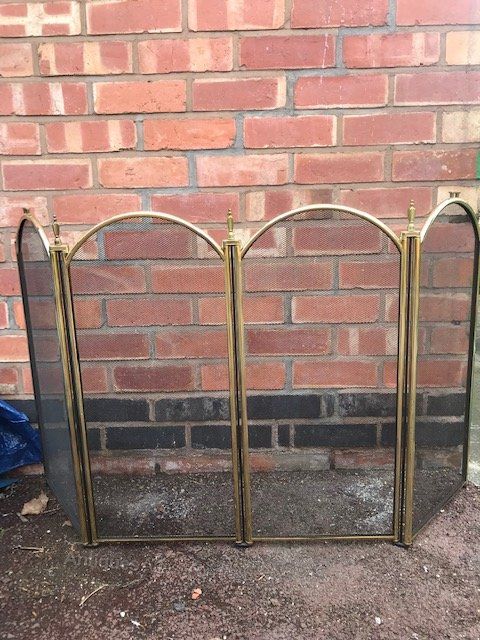
They also stand against walls as decorative backdrops or function as fire screens near hearths.
What periods do they date from?
The selection includes pieces from the eighteenth century, the Victorian era, and the early twentieth century.
Specific dates range from seventeen-fifty through to nineteen-thirty across various global traditions.
How do I identify different styles?
Styles reveal themselves through materials and surface decoration, such as Japanese lacquer or English Arts and Crafts oak.
Regional motifs like Chinese dragons or French painted leather point directly to the origin of the workshop.
Where should I place them?
Position them on stable flooring where the four folding panels can angle safely to support their own weight.
Keep them away from direct heat sources to protect delicate leather, fabric, and lacquer surfaces.