


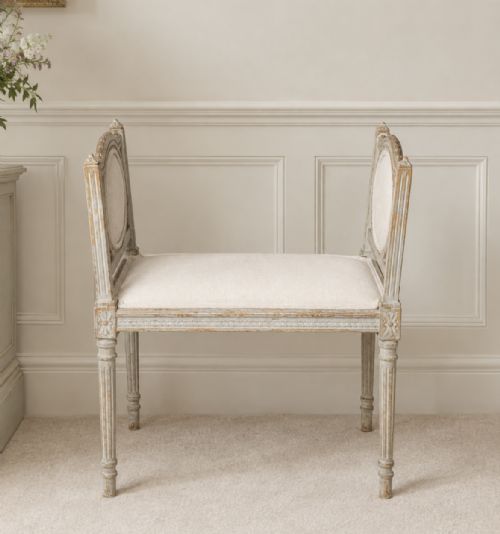

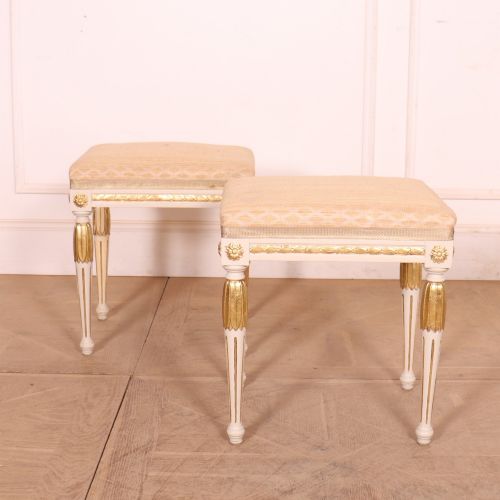


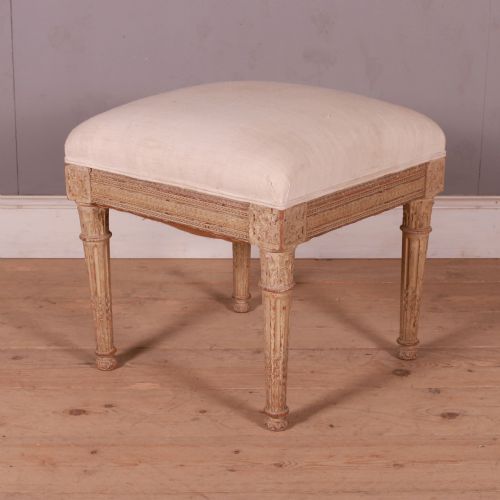
Painted Dressing Stool
A painted dressing stool brings delicate colour and period charm to a bedroom, offering a practical seat with decorative flair.
Painted Dressing Stool
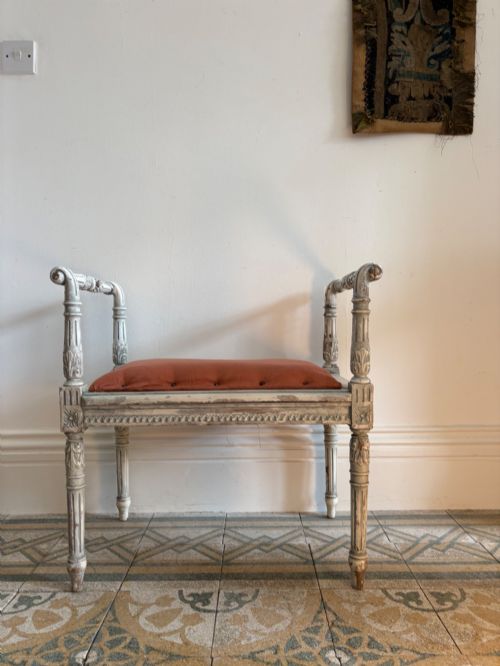
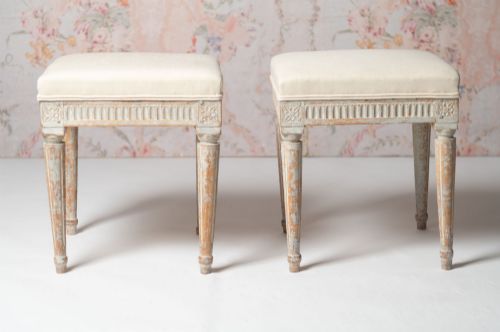
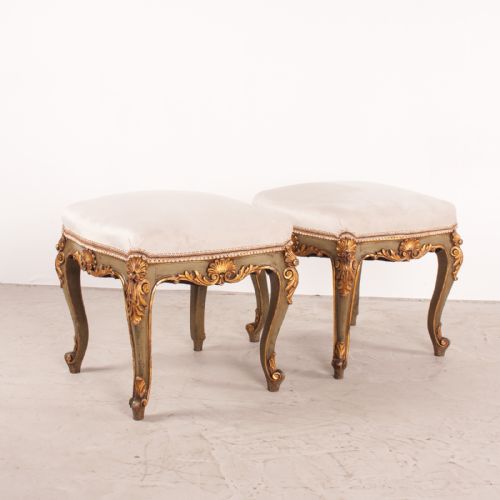
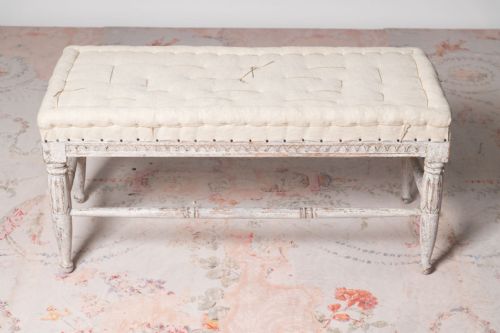
A painted dressing stool is a compact seating piece designed for use at a dressing table or in a boudoir. When searching for a painted dressing stool, buyers encounter diverse continental and British regional styles ranging from the eighteenth century to the twentieth century.
Pieces span multiple decades including the Victorian era, the 1880s, 1890s, 1900, 1920, and 1930. Buyers find both single items and matched pairs finished in white, gilt, or decorated surfaces.
Materials and construction methods
Construction relies primarily on wood finished with paint and occasional gold leaf or brass details. Carved frames support upholstered surfaces featuring fabric, linen, silk, or velvet.
Maker execution includes hand-carving techniques on wooden frames combined with applied paint layers. Specialised upholstery methods secure the textile seats, ranging from simple squabs to needlework.
Painted Dressing Stool Retail Price Guide 2026
Typical asking prices for painted dressing stool among the pieces listed under this phrase on Sellingantiques today, from the lower quarter to the upper quarter. They describe what is for sale here now, not the wider market.
The inventory incorporates painted wood, fabric, linen, gold leaf, brass, and velvet across pieces dating from the eighteenth to the twentieth century.
Distinguishing quality in period seating
Quality reveals itself in the crispness of the wood carving and the integrity of the original painted surface. Finer examples display balanced proportions and refined detailing rather than heavy or plain execution.
The sophistication of the upholstery finish and the choice of covering fabric contribute significantly to the distinction between standard examples and exceptional pieces. Maker attribution also elevates the standing of specific items.
Miles & Edwards·Whytock and Reid·Rowley Gallery
The Painted Dressing Stool Glossary
- Gustavian
- The Swedish interpretation of neoclassical design, characterised by restrained lines and pale painted finishes. It emerged during the late eighteenth century and influenced Scandinavian seating for generations.
- Rococo Revival
- A nineteenth-century design movement mimicking the ornate scrolls and asymmetry of the mid-eighteenth century. Pieces in this style often incorporate elaborate carved woodwork.
- Curule
- An ancient Roman chair shape featuring intersecting curved legs forming an X-frame. This classical form reappears in Regency and nineteenth-century revival seating.
- Boudoir stool
- A small, decorative seat intended for a private dressing room or bedroom. These pieces frequently employ upholstered circular or square tops on painted frames.
- Chinoiserie
- European decorative style employing imagined Chinese motifs and painted lacquer techniques. It appears on select twentieth-century furnishings.
Painted Dressing Stool: Frequently Asked Questions
How do I date a painted dressing stool?
Dating relies on stylistic clues, construction methods, and the type of paint finish applied to the wood. Examining the framing techniques and upholstery support helps narrow down the period of manufacture.
Swedish Gustavian examples often point towards the late eighteenth or nineteenth centuries, while pieces bearing specific revival styles align with Victorian or early twentieth-century production dates.
Where should I place a dressing stool?
These compact seats fit naturally beside a dressing table, in a bedroom corner, or beneath a console. Their decorative frames make them suitable as accent pieces in living spaces as well.
Pairs can flank a fireplace or sit at the foot of a bed, while single stools serve well in smaller dressing areas.
Are these stools suitable for daily use?
Period stools function well for regular sitting provided the wooden frame remains stable and the internal upholstery is secure. Lighter pieces benefit from placement where they experience moderate traffic.
Checking the rigidity of the leg joints ensures the frame safely supports everyday weight without strain.
What is the difference between Gustavian and French styles?
Gustavian pieces display a restrained Swedish neoclassical aesthetic with pale paint and modest carving. French styles tend towards more elaborate curves, gilt highlights, and exuberant Rococo or Louis XVI ornamentation.
Both approaches offer painted wooden frames but express very different regional interpretations of classical design.