


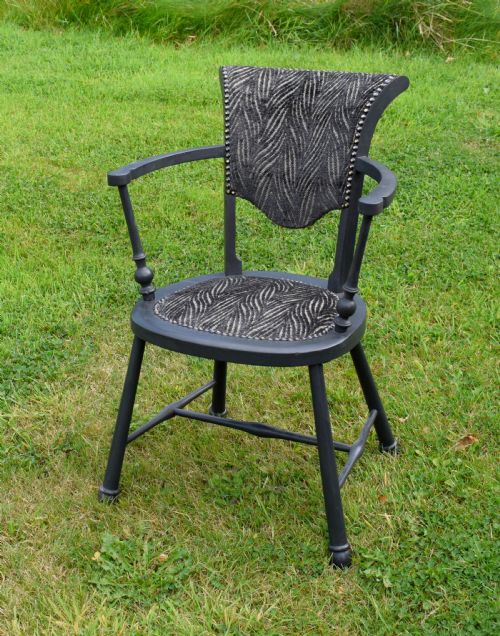
Painted Desk Chair
A painted desk chair brings together the utility of a workspace seat and the decorative finish of a period painted surface.
Painted Desk Chair
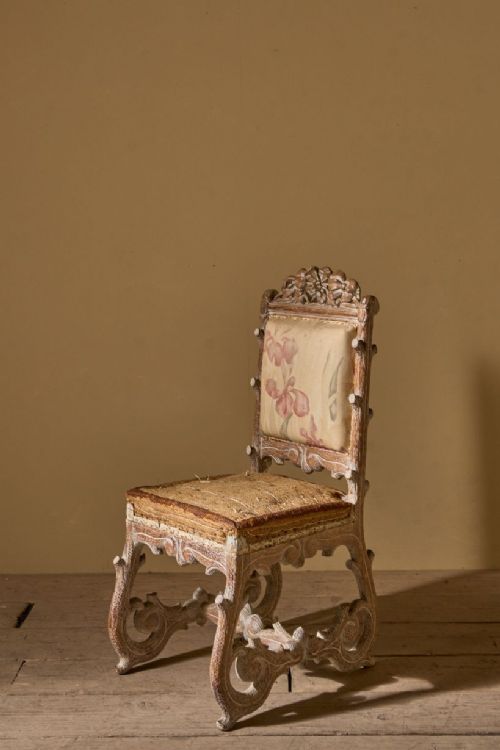
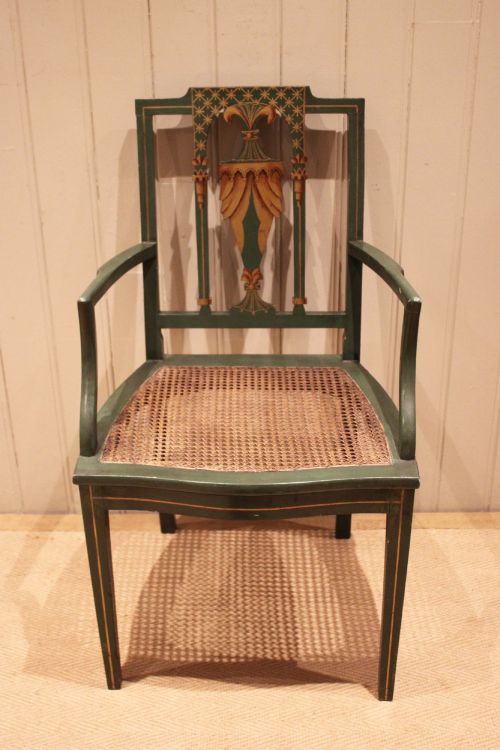
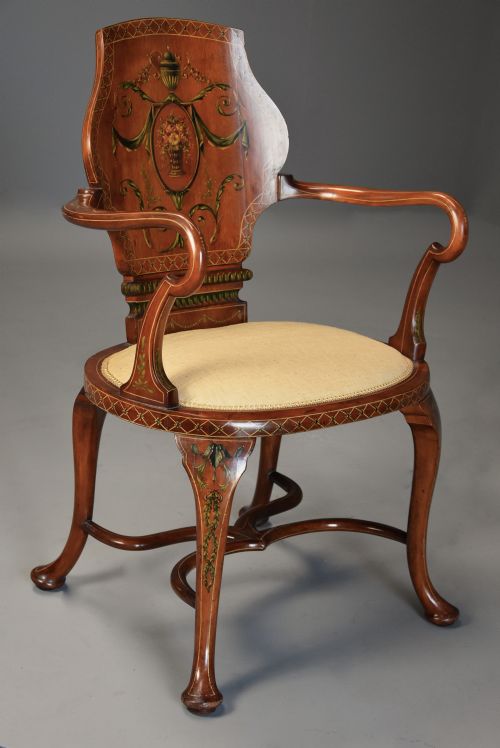
A painted desk chair provides a designated seat for writing or study, constructed from woods like mahogany, walnut, elm, and satinwood. These seating options emerge across the Georgian, Regency, Victorian, and Edwardian periods, often taking the form of armchairs, elbow chairs, or side chairs.
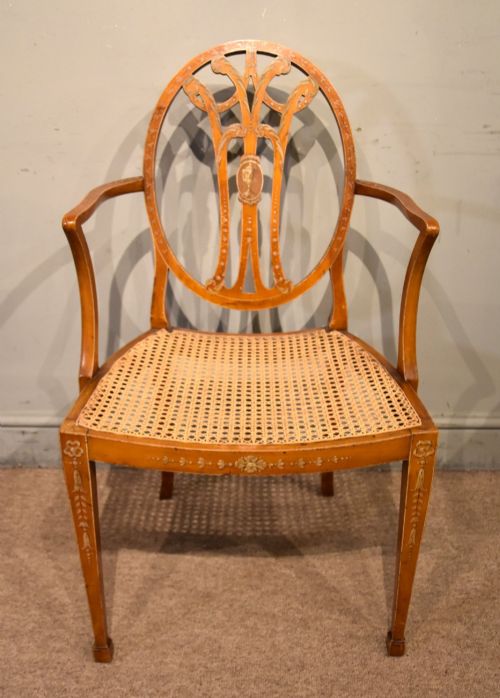
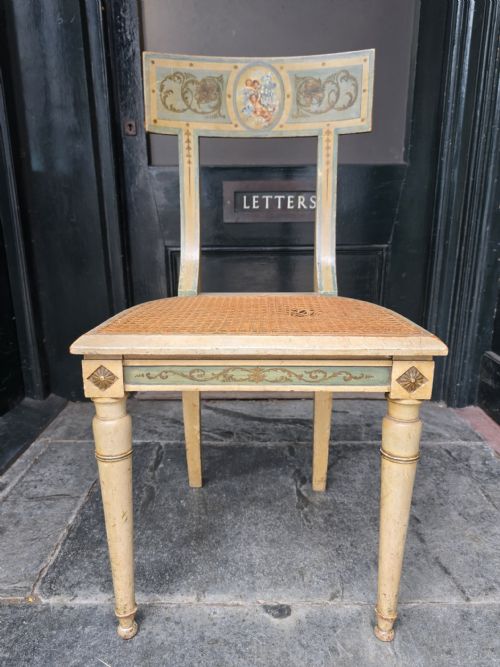
The versions most commonly met in these listings include satinwood examples from the Edwardian era alongside Georgian and Regency designs featuring painted decoration. Makers of past centuries utilised surface finishes to elevate standard seating forms into ornamental items suited to libraries and dressing rooms.
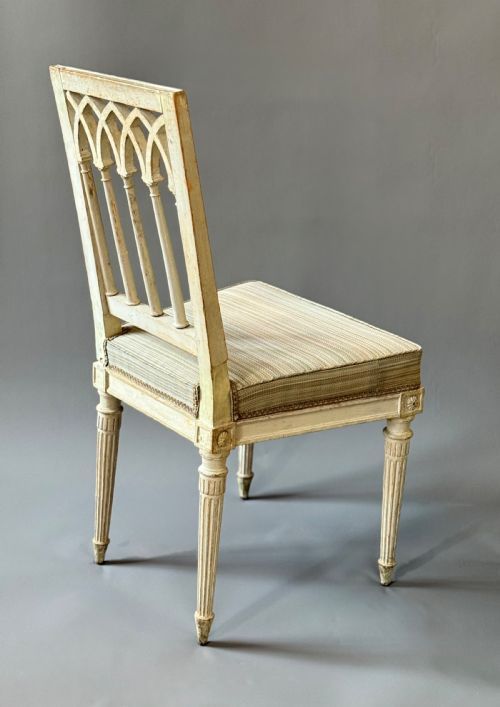
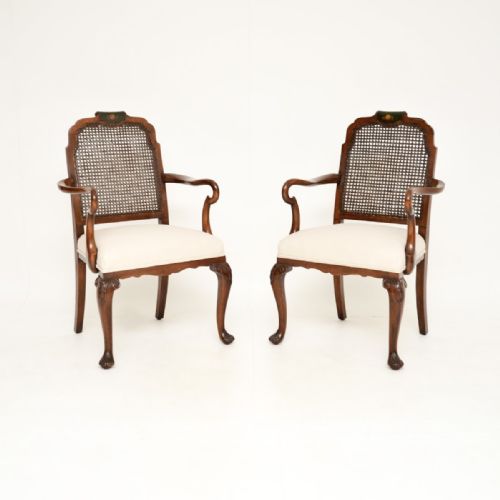
Object types span simple wooden frames with cane seats to more elaborate upholstered armchairs. They connect historical seating styles, such as Hepplewhite and Louis XVI, with hand-painted or lacquered surface treatments.
How they were made
Craftsmen built the underlying frames using solid timbers including mahogany, walnut, elm, and satinwood, shaping components through traditional joinery and turning. Cane or fabric upholstery was integrated into seats and backs depending on the specific period and intended comfort.
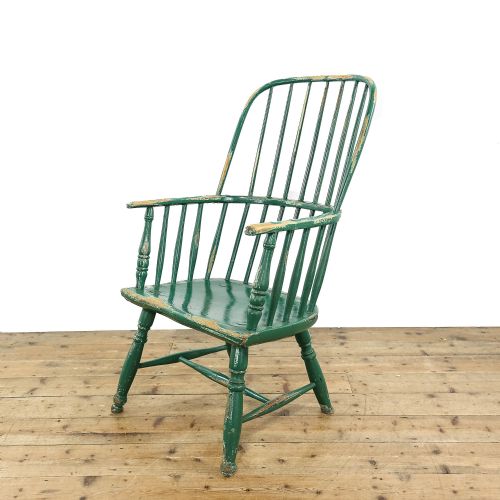
Surface preparation involved applying layers of paint, often over a primed wooden base, followed by hand-painted or decorated motifs. Artisans utilised ebonising, parcel gilding, or faux bois techniques to achieve particular aesthetic effects on the finished chair.
Listings feature painted desk chairs spanning the Georgian, Regency, Victorian, and Edwardian periods, utilising mahogany, satinwood, walnut, and elm.
What varies in quality
The integrity of the underlying wooden frame and the survival of the original painted surface separate standard examples from finer pieces. Chairs retaining their untouched period decoration show greater depth of craft than later re-painted versions.
Refinement in the hand-painted details, floral motifs, or gilded highlights dictates the distinction between everyday utility seating and high-status decorative items. The quality of the timber, such as figured satinwood or dense mahogany, further influences the standing of the chair.
Gillows
The Painted Desk Chair Glossary
- Satinwood
- A durable timber with a golden sheen, frequently used in high-end cabinet making during the Georgian and Edwardian periods. It provides a smooth surface that accepts painted decoration.
- Cane
- Woven rattan or split reed used to form breathable seats and chair backs. It offers lightweight flexibility within a sturdy wooden frame.
- Faux bois
- A decorative painting technique mimicking the grain and texture of natural wood. Artisans applied this method to obscure lesser timbers or to create unified visual schemes.
- Parcel gilt
- The practice of applying thin gold leaf to specific raised portions of a carved or painted surface. This highlights architectural details and ornamentation on the chair frame.
- Shield back
- A chair back shaped in the outline of a heraldic shield, popular in late eighteenth-century furniture design. It frequently incorporates carved splats and painted embellishments.
Painted Desk Chair: Frequently Asked Questions
What defines a painted desk chair?
A painted desk chair is a period seat designed for writing, distinguished by applied paint, lacquer, or decorative motifs on the wooden frame.
These chairs bridge functional study furniture and decorative arts, appearing in various historical styles from the eighteenth century onward.
How do I care for antique painted surfaces?
Protect antique painted finishes by keeping them away from direct sunlight and maintaining stable indoor humidity levels.
Dust gently with a dry, soft cloth and avoid chemical cleaners that can lift or dissolve historic paint layers.
Were these chairs originally used at desks?
Many of these chairs served in libraries, studies, and writing rooms, while others functioned as bedroom or reception seating.
Historical listings show overlap between desk chairs, elbow chairs, and armchairs due to changing domestic habits over the centuries.
How can I tell the period of a chair?
Dating relies on combining the chair's overall style, such as Georgian or Edwardian, with the characteristics of the timber and construction methods.
Examination of the paint layer, joinery, and wear patterns helps determine whether a piece belongs to the eighteenth, nineteenth, or early twentieth century.