




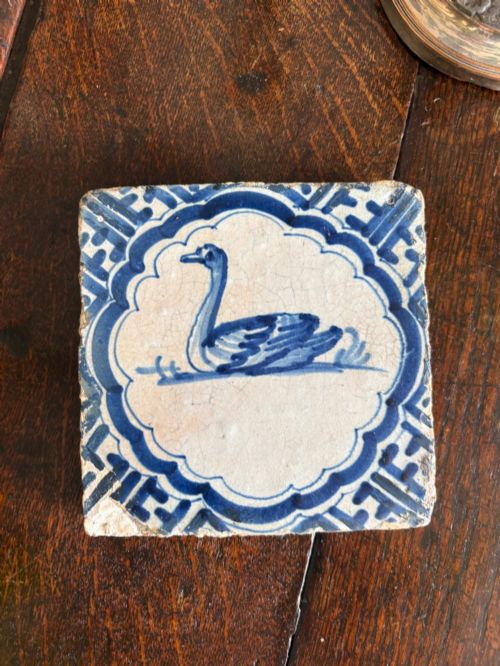
Painted Delft Pottery
These painted delft pottery pieces bring tin-glazed earthenware and cobalt pigment into interiors through chargers, vases, and bowls.
Painted Delft Pottery
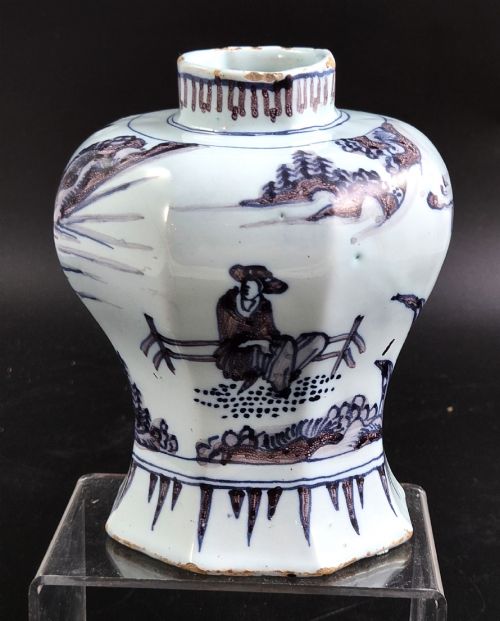
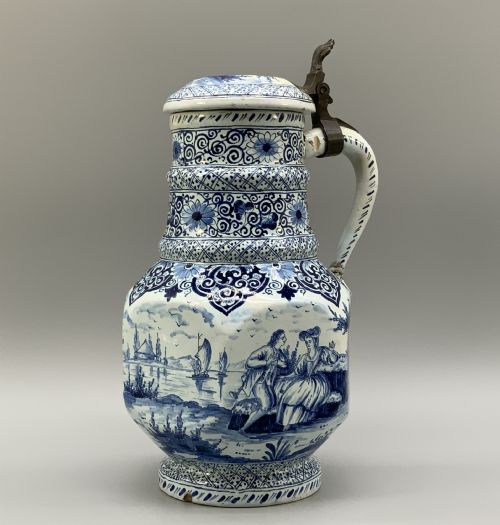
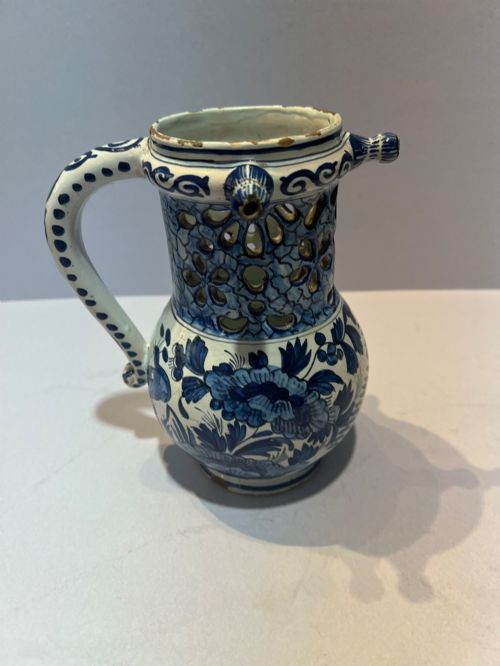
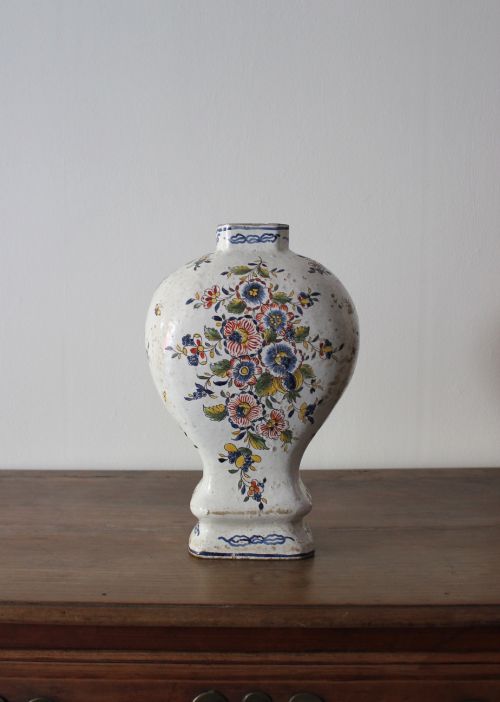
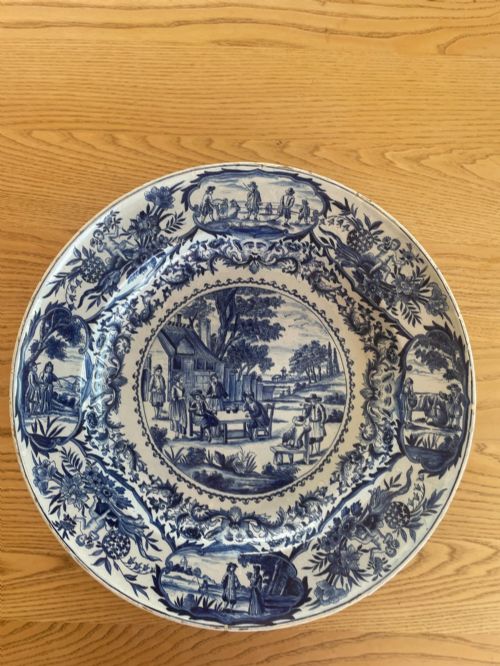
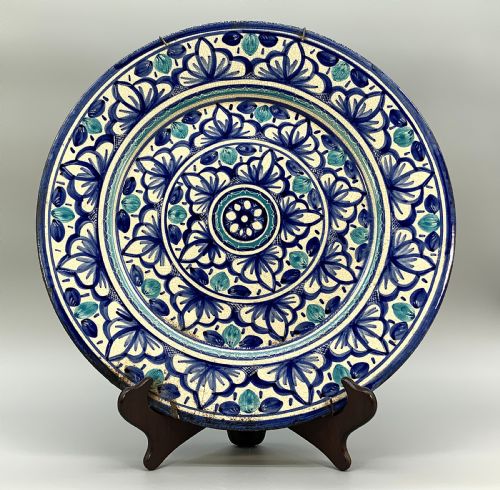
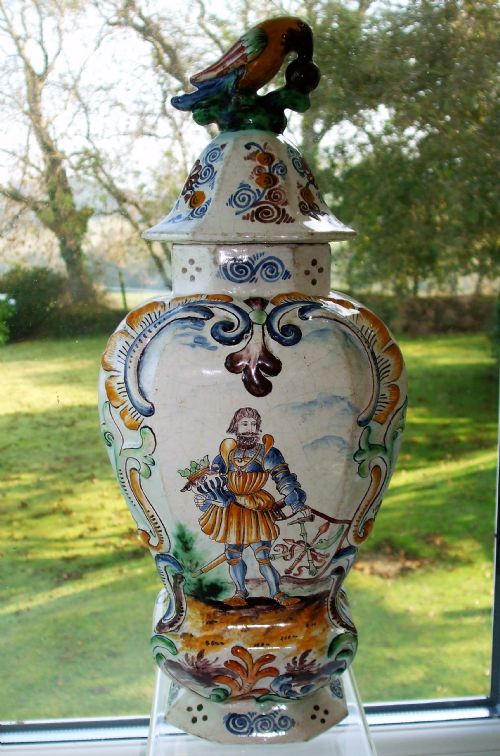
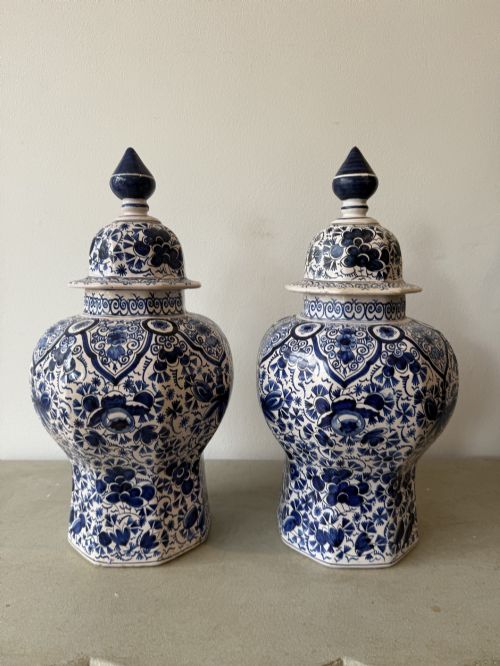
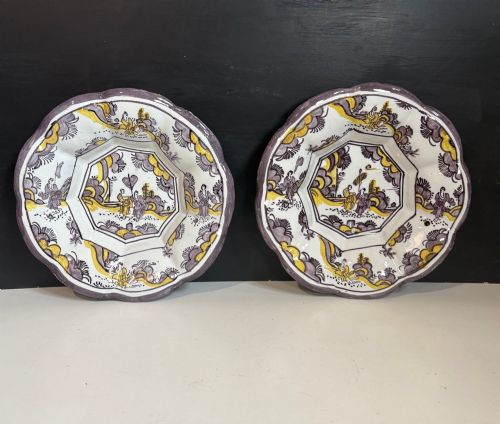
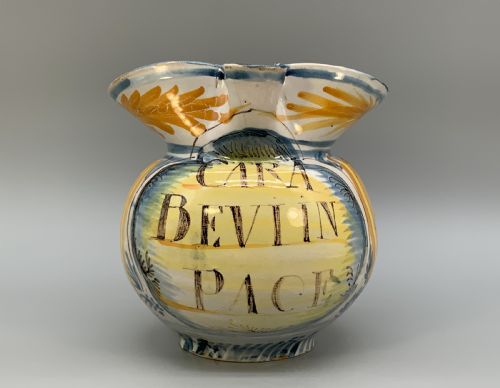
Painted delft pottery covers tin-glazed earthenware objects created across several centuries, with particular emphasis on pieces originating from Dutch workshops. Buyers encounter decorative chargers, large plates, baluster vases, and specialised vessels such as puzzle jugs and barber's bowls.
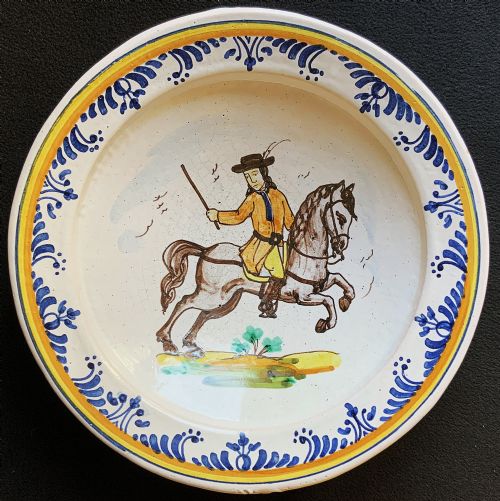
The selection ranges from seventeenth-century items to nineteenth-century revivals and twentieth-century Continental interpretations. Blue and white decoration predominates, alongside polychrome and manganese examples.
Domestic forms like bowls and lidded jars appear frequently alongside wall-hanging chargers and mantel vases. Many survive from the eighteenth century, showing traditional floral and figurative motifs.
Materials and construction
Potters shaped earthenware bodies and coated them with an opaque tin-glaze that provided a white surface for painting. Cobalt pigment and manganese oxide were then applied directly onto the unfired or porous glaze before the final firing.
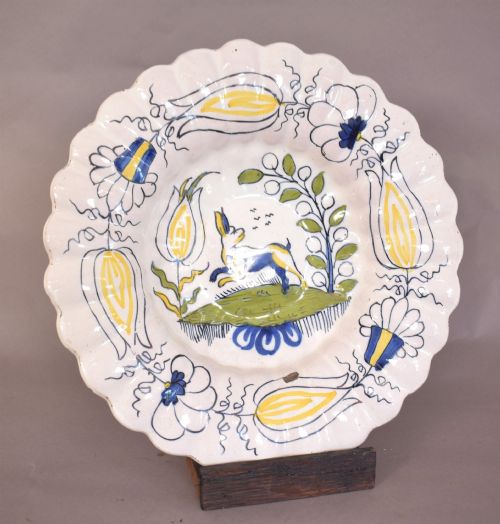
Makers used cobalt oxide to achieve the deep blue tones characteristic of traditional Dutch delftware, while other pieces incorporated polychrome palettes including yellow and green. Some vessels required pewter mounts or lids added after the ceramic body was completed.
Painted Delft Pottery Retail Price Guide 2026
Typical asking prices for painted delft pottery among the pieces listed under this phrase on Sellingantiques today, from the lower quarter to the upper quarter. They describe what is for sale here now, not the wider market.
Listings feature items spanning the seventeenth century through to the twentieth century, incorporating earthenware, tin-glaze, and cobalt pigment.
Distinctions in quality
Quality rests in the precision of the hand-painted brushwork and the clarity of the tin-glaze over the earthenware body. Pieces with detailed motifs, such as Chinese scholar scenes or hand-painted animal subjects, demonstrate superior artistic control.
The depth of the cobalt pigment and the evenness of the glaze application distinguish finer examples from standard production. Intricate forms like tulipieres and lobbed dishes demand higher technical skill during shaping and firing.
The Painted Delft Pottery Glossary
- Tin-Glaze
- An earthenware ceramic glaze containing tin oxide that fires to an opaque white surface. It serves as the canvas for painted decoration.
- Charger
- A large decorative plate intended for display on a wall or sideboard rather than for dining use. These often feature elaborate blue and white or polychrome designs.
- Baluster Vase
- A vertical vessel shape with a rounded lower body that tapers upward, resembling an architectural baluster. This form frequently includes a fitted cover.
- Puzzle Jug
- A drinking vessel with a perforated neck and hollow rim that forces the user to solve a liquid path to drink without spilling. These items test the potter's skill in internal construction.
- Polychrome
- Decoration utilising multiple colours rather than a single pigment such as blue. These palettes often include manganese, yellow, and green pigments.
Painted Delft Pottery: Frequently Asked Questions
What is painted delft pottery?
Painted delft pottery consists of tin-glazed earthenware objects decorated with metallic oxides, predominantly cobalt blue. The category includes chargers, vases, bowls, and jugs made primarily in Dutch and English centres.
Craftsmen applied pigments onto an opaque white glaze before firing, producing durable household and decorative items that range from simple tableware to elaborate display pieces.
How were chargers used?
Chargers served primarily as large decorative plates for display on walls or sideboards in prosperous homes. Their broad surfaces provided ample space for detailed painted scenes.
While occasionally used for serving food in earlier centuries, their size and tin-glazed surfaces made them valuable ornamental objects meant to be seen rather than handled.
How do you date delft pottery?
Dating relies on stylistic shifts in painting, shape, and the composition of the tin-glaze. Early pieces from the seventeenth century often feature looser brushwork and distinct tin-glaze characteristics.
Later nineteenth-century revivals and twentieth-century Continental items display different potting techniques and colour applications that separate them from earlier periods.
How do I care for antique delft?
Antique tin-glazed earthenware requires gentle handling because the ceramic body and glaze can chip or craze. Dusting with a soft dry cloth is usually sufficient for maintenance.
Keep pieces away from moisture and extreme temperature changes to protect the porous earthenware and prevent further stress to the historic glaze.