
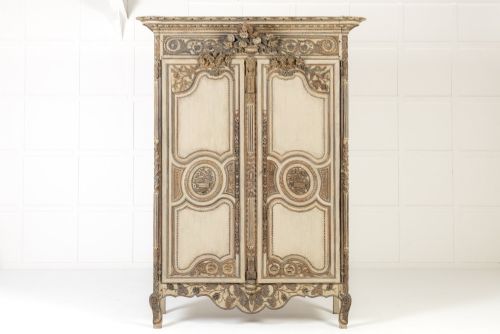
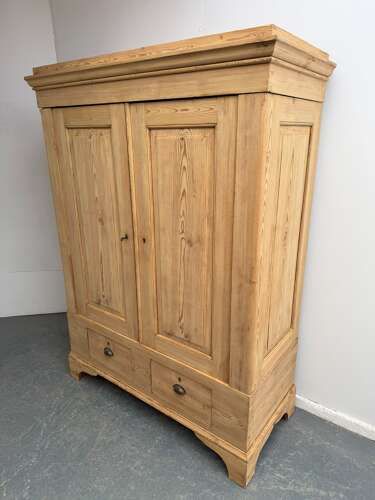
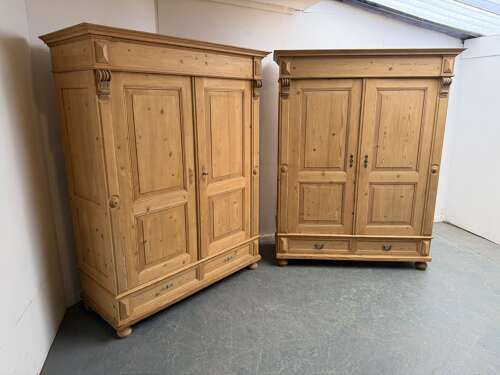
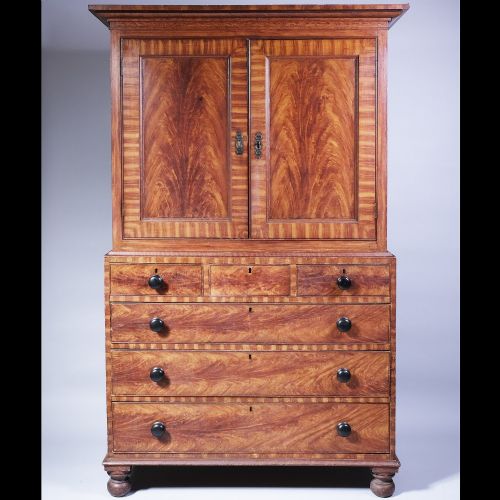
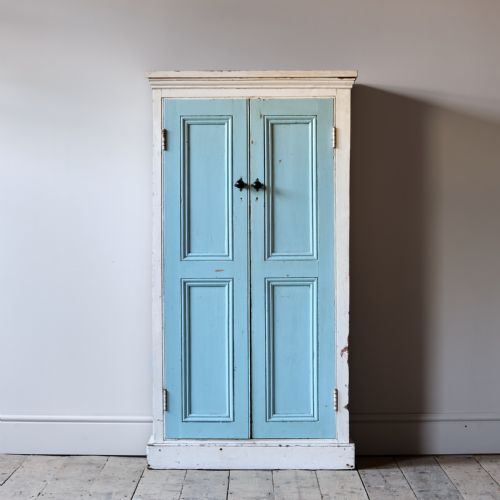
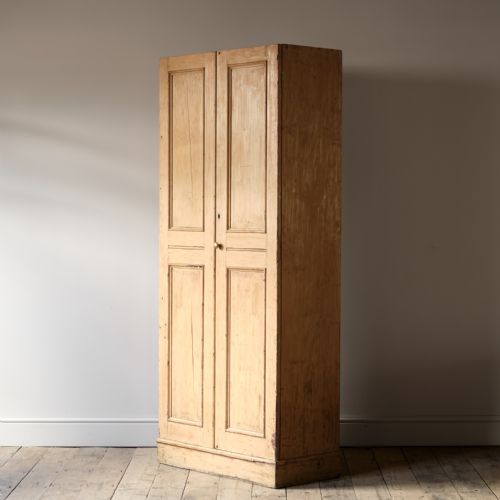
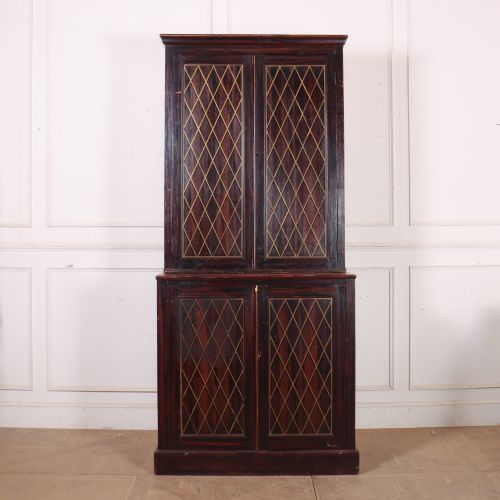
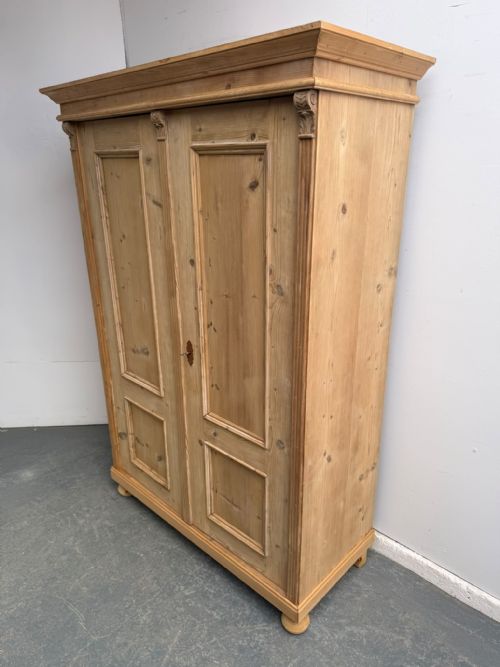
Painted Country Armoire
A painted country armoire brings rural character and practical storage to a room, offering large cupboards built for linen and clothes.
Painted Country Armoire
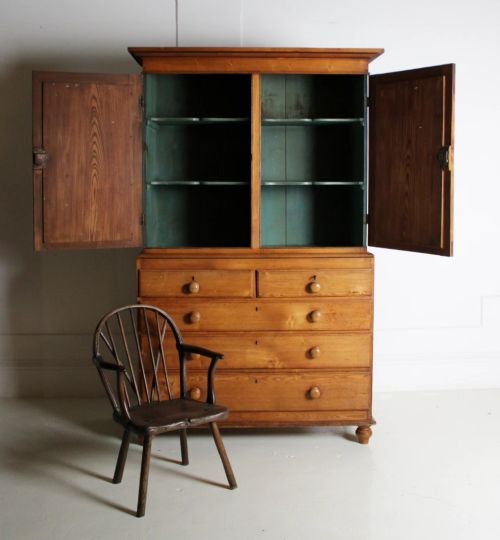
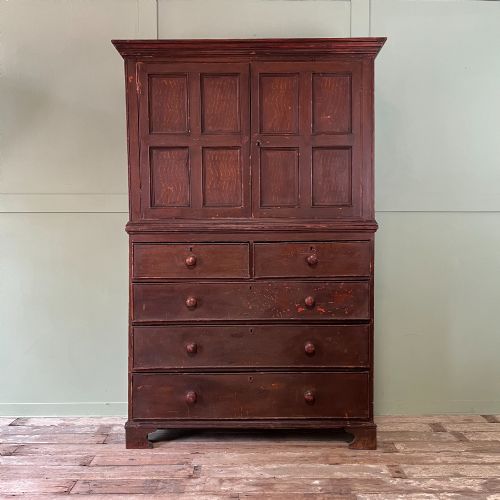
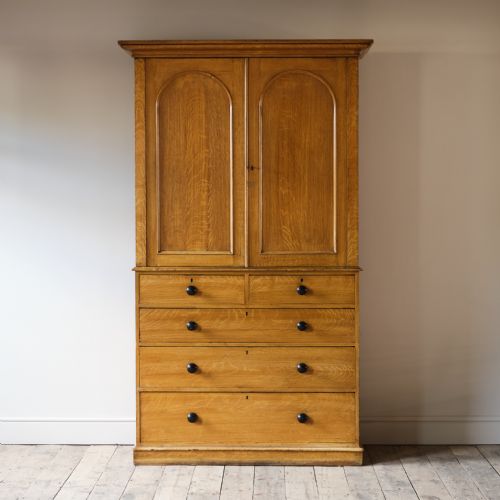
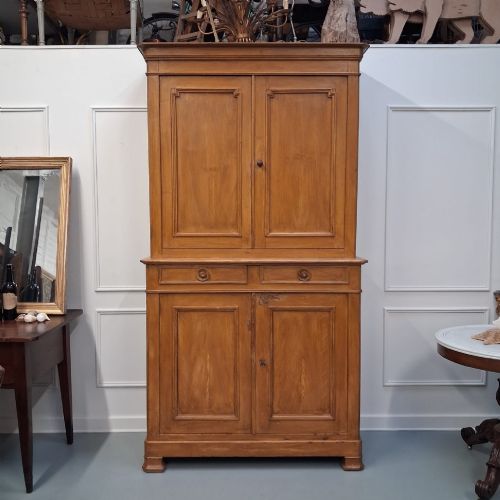
When buyers search for a painted country armoire, they encounter substantial storage furniture originating from rural workshops across Europe and Britain. These pieces include tall wardrobes, housekeeper's cupboards, and linen presses designed to hold household textiles and garments.
The inventory on this page draws heavily from the nineteenth century and the Georgian era, with earlier examples reaching back into the seventeenth century. Formats range from large two-door knockdown wardrobes to compact chapel cupboards and low cottage storage units.
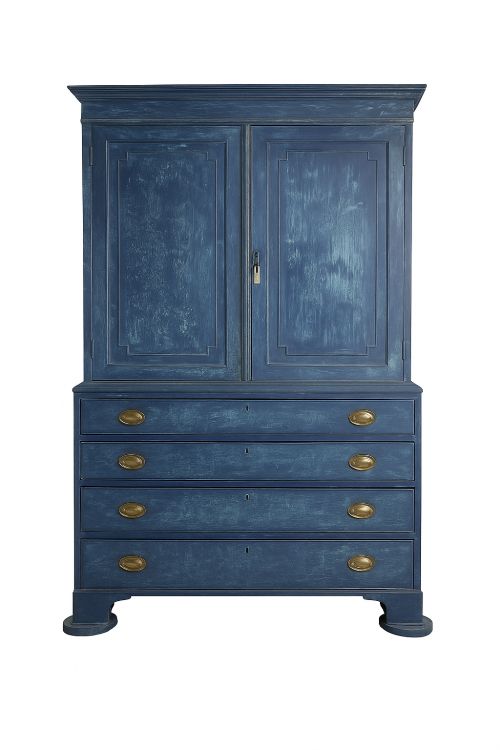
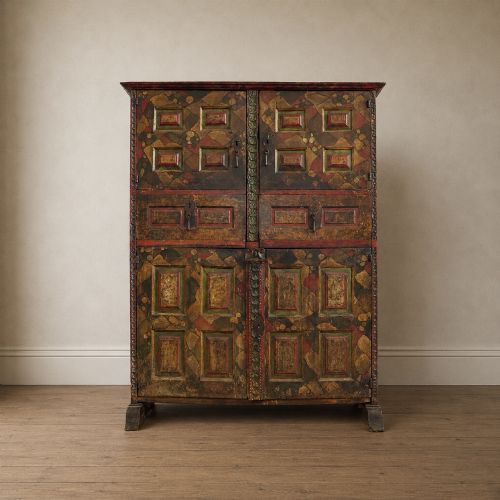
Origins span diverse regional traditions, including French provincial designs, Scandinavian folk art pieces, Spanish polychrome works, and English farmhouse cupboards. Many pieces feature original or later painted surfaces that soften the heavy timber construction.
How They Were Made
Carpenters built these items primarily using solid pine, oak, and ash, selecting sturdy timbers capable of withstanding decades of domestic use. Iron and brass hardware, such as hinges and latches, reinforced the large doors and deep carcasses.
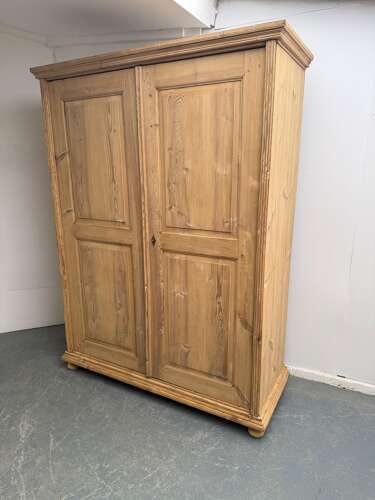
Surface treatments relied on layers of paint, scumble finishes, and polychrome decoration applied directly to the wood. Many nineteenth-century pine wardrobes were constructed as knockdown units so workers could easily transport the large frames between rooms.
Some nineteenth-century wardrobes were built to dismantle entirely so servants could squeeze them up tight farmhouse staircases.
What Varies in Quality
The standard of a painted country armoire depends heavily on the integrity of its original construction and the preservation of its surface finish. Pieces retaining their early or original paint layers command greater interest among collectors than those stripped down or repeatedly repainted.
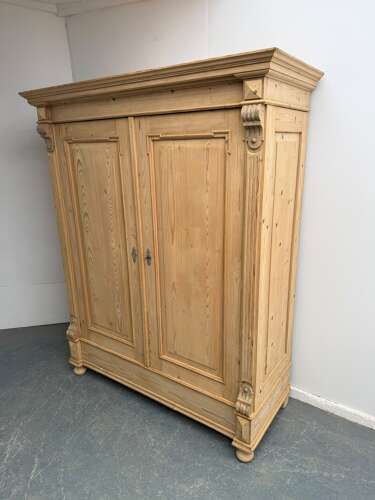
Proportion and joinery separate standard utility cupboards from finer regional examples. Well-balanced cornices, fielded panels, and stable knockdown mechanisms indicate skilled workshop production rather than basic domestic carpentry.
The Painted Country Armoire Glossary
- Armoire
- A tall wardrobe or cupboard used primarily for hanging clothes or storing linens. Traditional versions feature large double doors enclosing deep shelving or hanging space.
- Linen press
- A tall piece of furniture featuring upper cupboards for storing folded textiles and lower drawers for smaller garments. They often include sliding shelves inside the main compartment.
- Knockdown
- A piece of furniture engineered to be easily dismantled into separate panels and sections for transport. This technique was especially common in large nineteenth-century pine wardrobes.
- Polychrome
- Decorated in multiple colours, often seen on folk art pieces and continental cupboards. This technique adds vibrant visual detail to the wooden surface.
- Scumble
- A decorative painting technique where a translucent top glaze is manipulated over a lighter base coat to imitate wood grain or create textured patterns.
Painted Country Armoire: Frequently Asked Questions
What is a painted country armoire used for?
These large cabinets provide substantial storage for clothing, bedding, and household linens in bedrooms and hallways. Their deep interior shelves and hanging spaces conceal everyday clutter while adding rural presence to a room.
Historically, families relied on these tall cupboards to protect textiles from dust and dampness before built-in closets became standard in modern housing.
How do I tell different periods apart?
Georgian and eighteenth-century examples often display restrained proportions, fielded panels, and architectural cornices reflecting classical design rules. Nineteenth-century pieces frequently utilise knockdown construction for easier transport and lean towards simpler farmhouse utility.
Earlier seventeenth-century items show heavier timber framing, intricate polychrome decoration, and robust ironwork characteristic of Spanish or continental workshops.
Are these pieces easy to assemble?
Many nineteenth-century pine wardrobes were built as knockdown units specifically to allow easy dismantling and movement through narrow stairwells. These modular designs slot together using peg joints or simple internal bolts.
Checking the construction method before purchase helps ensure you understand how the panels lock into place within your home.
How do I care for painted wood?
Maintain the painted finish by dusting regularly with a soft, dry cloth and avoiding harsh chemical cleaners that can strip historic pigments. Keeping the furniture away from direct heat sources prevents the underlying timber from warping and the paint from cracking.
Wax finishes benefit from occasional gentle buffing to nourish the wood without building up heavy residues over time.