
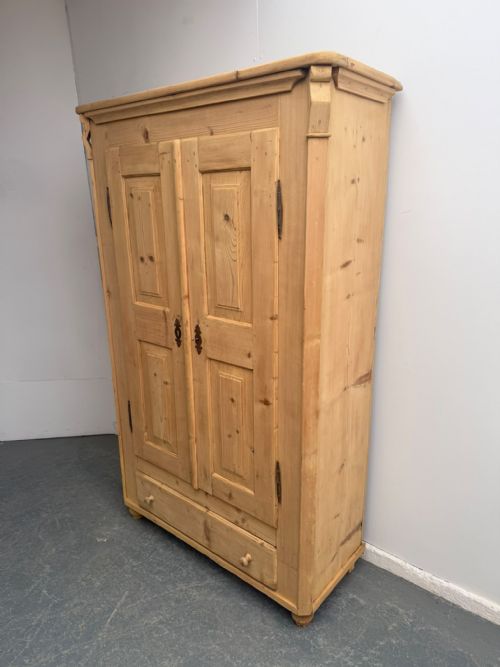
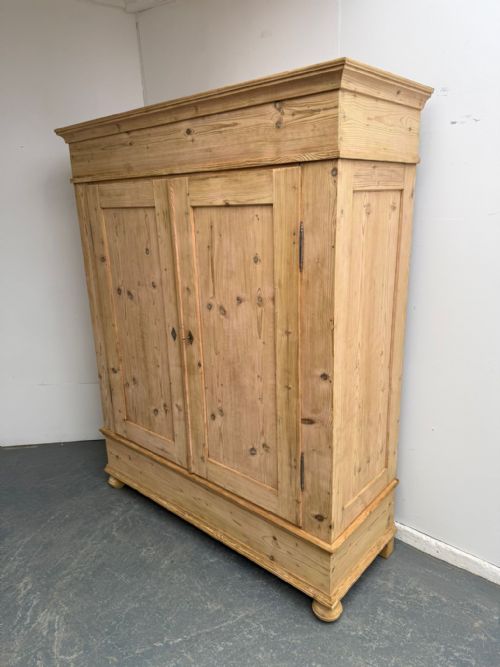

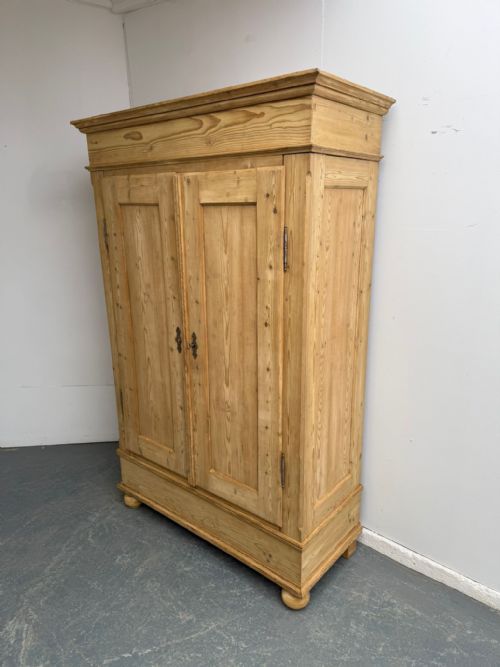


Georgian Painted Wardrobe
A georgian painted wardrobe brings domestic history into a room, offering practical storage disguised in period colour.
Georgian Painted Wardrobe
A georgian painted wardrobe encompasses substantial storage furniture from the eighteenth and nineteenth centuries, including linen presses, housekeeper's cupboards, and knockdown pine wardrobes. These pieces reflect both vernacular country traditions and more formal design influences across England, Wales, and Scandinavia.
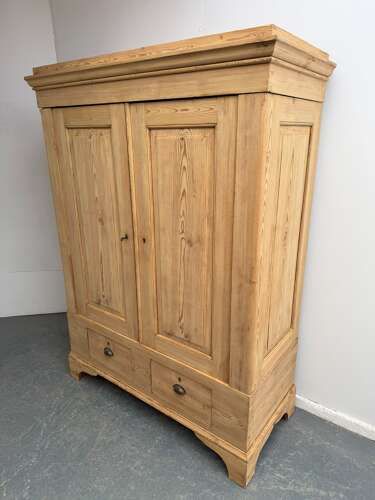
The pieces appearing most frequently take the form of pine storage cupboards and wardrobes, often described as knockdown items designed for transport or fitted with single doors suitable for halls and children's rooms. Examples range from low cottage cupboards to massive structural pieces bearing later painted finishes in green, grey, or white.
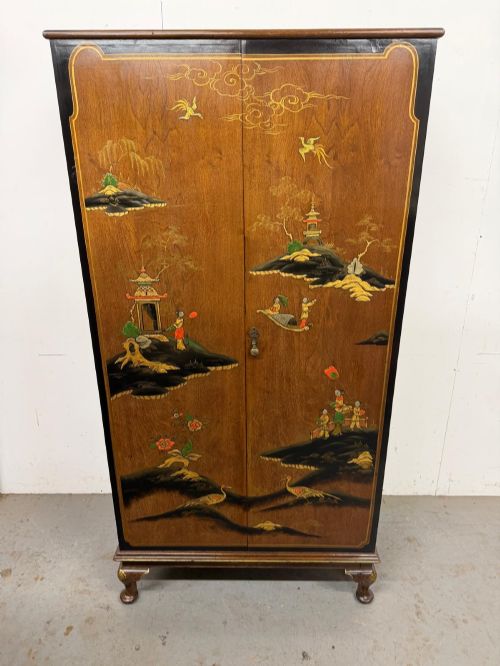
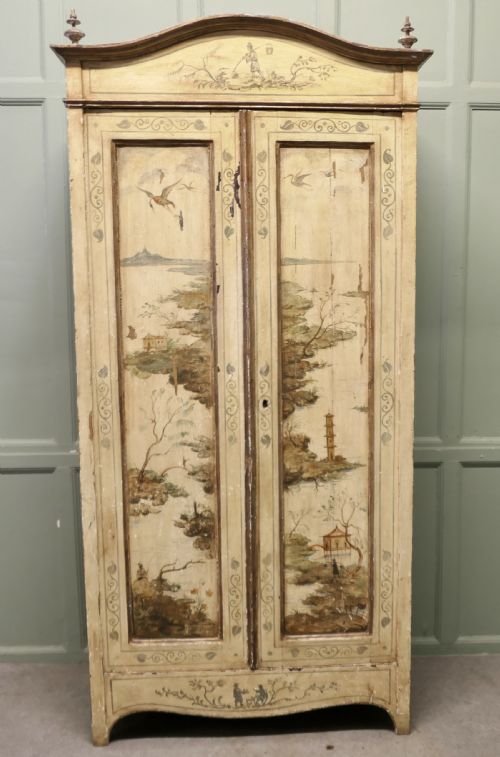
Buyers also encounter related forms such as Chinoiserie lacquer cabinets and Regency linen cupboards that expand the category beyond simple timber frames. These variations show how domestic storage adapted to different aesthetic demands across the periods.
Materials and construction methods
Makers relied primarily on solid pine and various mixed woods to build these functional storage pieces, often employing knockdown construction methods to allow large carcasses to be dismantled. Iron and brass fittings such as hinges and handles secured the doors and internal panels.
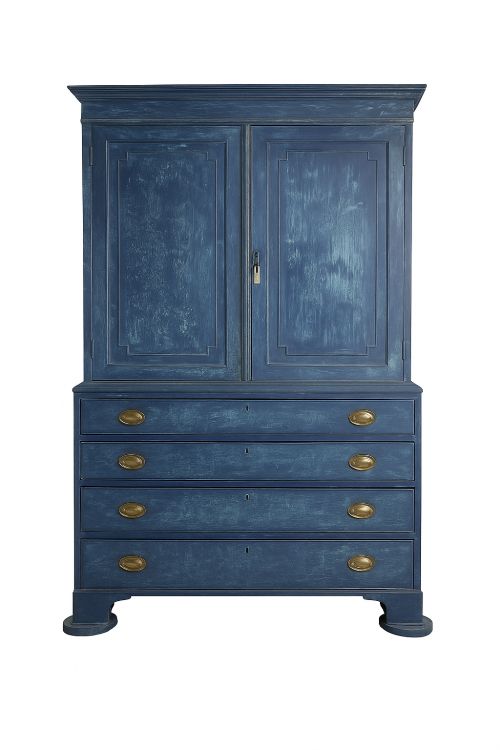
Surfaces received decorative treatments ranging from original lacquer and Chinoiserie outdoor scenes to later applied coats of paint in blue, green, grey, and black. Many pine carcasses also left the workshop ready for waxing or further painting by the owner.
The inventory records vernacular forms including Welsh hanging cupboards, English housekeeper's cupboards, and Swedish hall wardrobes.
Assessing quality in painted storage
Quality rests upon the integrity of the original timber frame and the survival of early or period surface decoration. Pieces featuring untouched original paint layers or sophisticated Chinoiserie lacquer work stand apart from standard utilitarian pine carcasses.
Construction detail distinguishes finer examples, particularly the precision of fielded panels, the stability of knockdown joints, and the balance of proportions in regional forms like Welsh hanging cupboards and English housekeeper's cupboards.
The Georgian Painted Wardrobe Glossary
- Knockdown wardrobe
- A large piece of furniture engineered with pegged or bolted joints so the carcass can be dismantled for moving. This practical design was essential for transporting bulky pine furniture between rooms or properties.
- Housekeeper's cupboard
- A tall storage unit traditionally used in large domestic kitchens or storerooms to hold linens and provisions. These pieces typically combine enclosed cupboards with drawer sections.
- Linen press
- A hybrid storage form featuring upper sliding trays or shelves enclosed by doors, positioned above a base of wider drawers. They were designed specifically to keep folded textiles flat and organised.
- Chinoiserie
- A European decorative style imitating Chinese artistic traditions, featuring hand-painted motifs like outdoor scenes and figures on lacquered surfaces. It appears on sophisticated cabinets from the nineteenth and early twentieth centuries.
- Fielded panel
- A wooden panel with bevelled edges that fits into a grooved frame, allowing the timber to expand and contract with humidity changes. This technique provides both structural strength and decorative depth to cabinet doors.
Georgian Painted Wardrobe: Frequently Asked Questions
What is a knockdown wardrobe?
A knockdown wardrobe is a large piece built with modular joints that allow the main frame to be taken apart. This made it easier to move heavy furniture through narrow staircases and doorways.
Most surviving examples in pine utilise this clever construction method to facilitate transport between rooms.
Are the paint finishes original?
Paint finishes vary significantly, with some pieces retaining their early or original decorative schemes while others show later coats applied over bare pine. Descriptions often distinguish between original painted surfaces and pieces sold ready to wax or paint.
Examining the paint layers helps determine whether the colour dates to the piece's construction or represents a later decorative choice.
How do I use a linen press today?
A linen press provides deep internal shelving or sliding trays originally intended for folded textiles, alongside lower drawer space. Modern owners frequently repurpose these compartments for wardrobe storage or general household organisation.
The deep proportions make them well suited for stacking clothes, bedding, or media items in bedrooms and landings.
What distinguishes a housekeeper's cupboard?
A housekeeper's cupboard is a substantial storage piece traditionally found in domestic service quarters for holding household stores and linens. They are characterised by wide upper cabinet doors and sturdy timber construction.
These pieces offer exceptional capacity and often display regional vernacular details rooted in English or Welsh cabinet making.
How do I identify a Georgian pine wardrobe?
Georgian pine wardrobes are identified by their eighteenth-century architectural proportions, pegged joinery, and heavy panelled doors. Many exist as single-door hall wardrobes or large two-door storage cupboards.
Makers working in this period focused on functional utility, resulting in sturdy carcasses that frequently accepted later coats of paint.