


Painted Carved Rocking Horse
A painted carved rocking horse brings the charm of Victorian playrooms and early workshops directly into a modern interior.
Painted Carved Rocking Horse
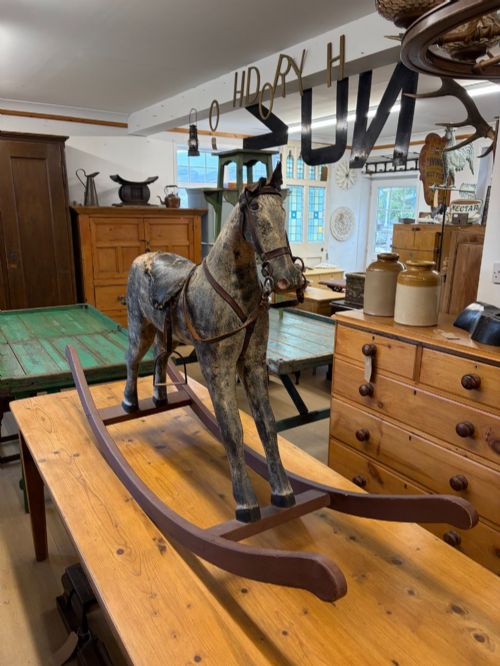
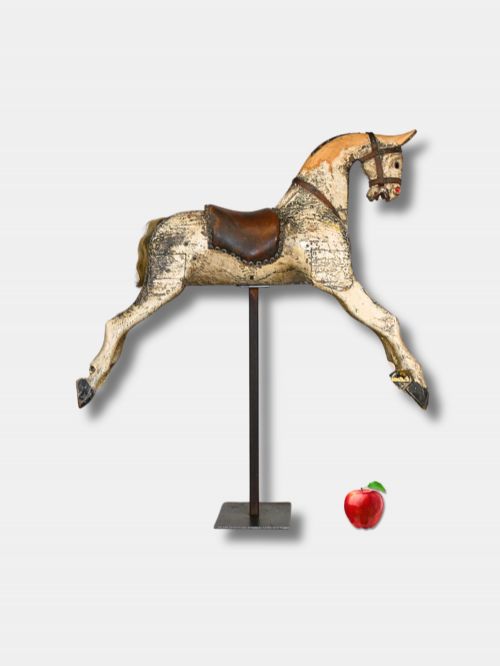
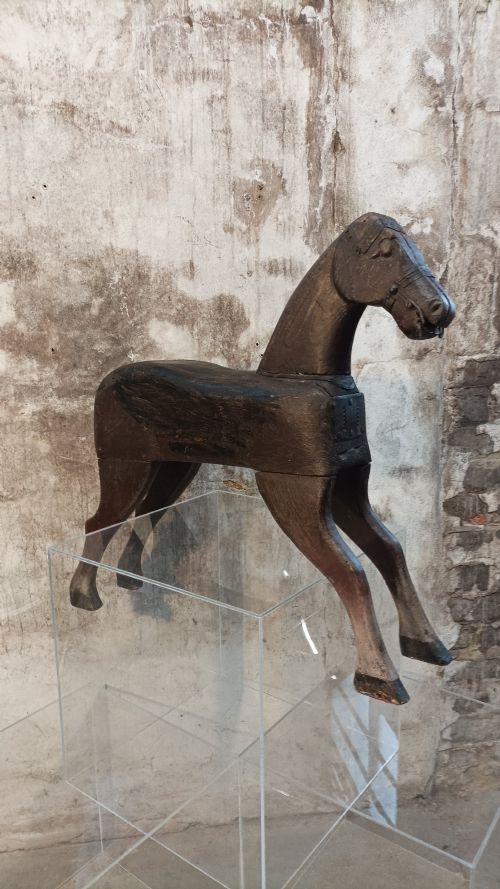
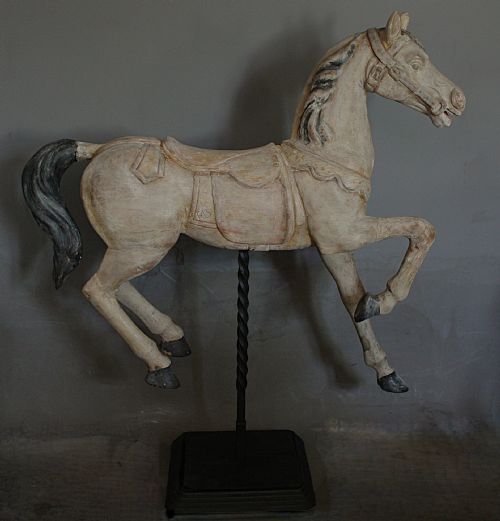
A painted carved rocking horse is a sculptural children's toy or decorative object fashioned from wood, often displaying layers of historic paint and folk art characteristics.
Most examples found on this page date from the nineteenth century through the early twentieth century, spanning Victorian and Edwardian periods.
Makers such as G & J Lines, F.H. Ayres, Lines Bros, and Collinson & Sons appear alongside uncredited primitive and folk art pieces.
Materials and construction
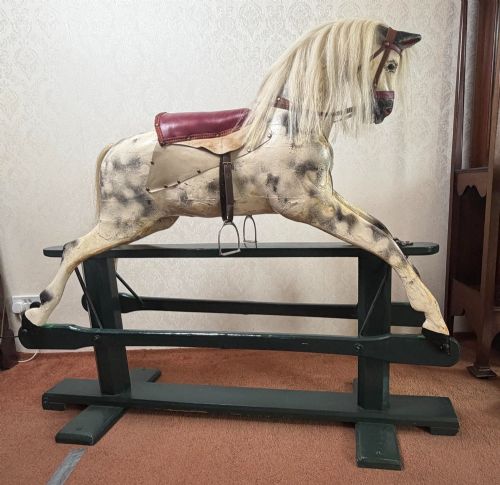
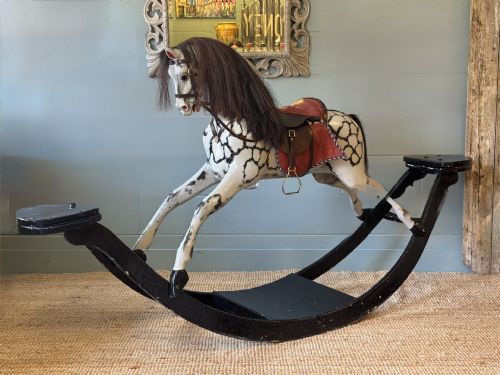
Carvers shaped bodies from pine and other woods, mounting the animals on curved wooden rockers or wooden trestle stands.
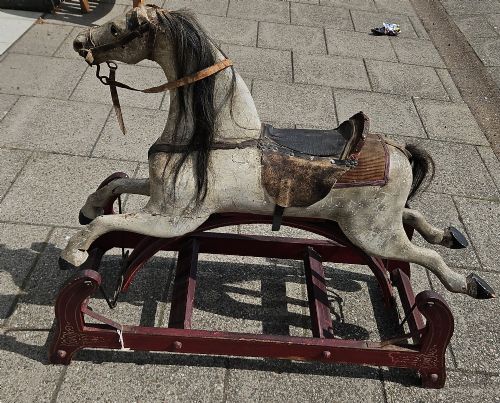
Makers finished the carved forms using traditional paint layers, sometimes incorporating horsehair, leather, metal, iron, and glass details.
The listings show materials including wood, leather, horsehair, iron, paint, metal, pine, and glass across various decades.
Judging quality and character
Quality rests in the sculptural depth of the carving and the presence of original paint surfaces rather than modern restoration.
The sophistication of the maker's workshop, from branded London firms to naive regional folk art, defines the character of each piece.
G & J Lines of London·F.H. Ayres·Lines Bros Sportiboy·Collinson and Sons Liverpool
The Painted Carved Rocking Horse Glossary
- Original paint
- The historic pigment layers applied to the carved wooden surface during the manufacturing period.
- Trestle base
- A supporting wooden frame holding the rocking mechanism separate from curved floor rockers.
- Folk art
- Items created by traditional artisans or untrained makers outside mainstream academic artistic traditions.
- Glass eyes
- Inset optical elements used to give the carved animal a lifelike expression.
Painted Carved Rocking Horse: Frequently Asked Questions
How do I date an old rocking horse?
Dating relies upon examining the construction methods, nail types, and underlying timber alongside any visible maker stamps or workshop labels.
Paint layers and wear patterns also help establish whether the piece originates from the Victorian era or later decades.
Are these horses safe for children to ride?
These antique and vintage pieces function primarily as decorative sculptures and folk art objects rather than modern toy replacements.
Structural integrity varies across historic items, so careful placement as a static display piece is standard practice.
What is the difference between a stand and rockers?
A rocking horse on rockers moves directly on curved wooden feet resting on the floor.
Pieces mounted on a trestle base or safety stand swing within a fixed wooden frame.
How should I clean the original paint?
Maintenance requires only gentle dusting with a dry microfibre cloth to protect the historic pigment and surface texture.
Moisture and chemical cleaners should be avoided entirely to prevent damage to the aged wood and finish.