




Antique Equestrian Toy
An antique equestrian toy brings the enduring magic of the stable and the nursery together, offering lasting tactile charm for any interior.
Antique Equestrian Toy
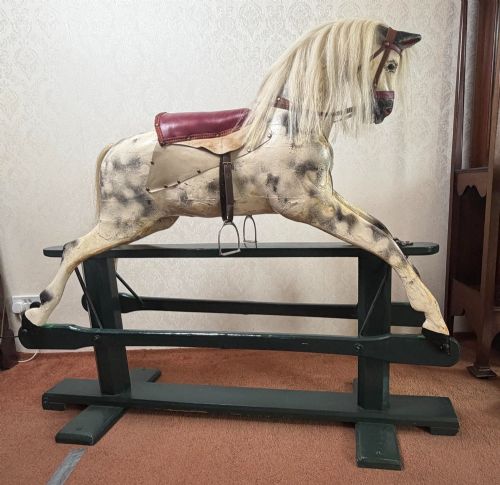
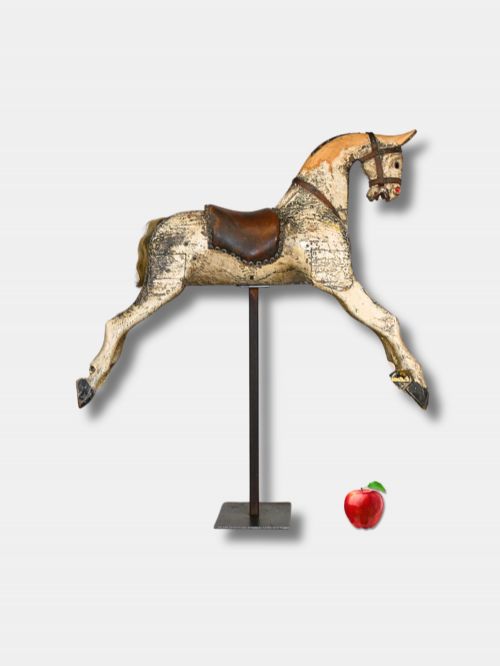
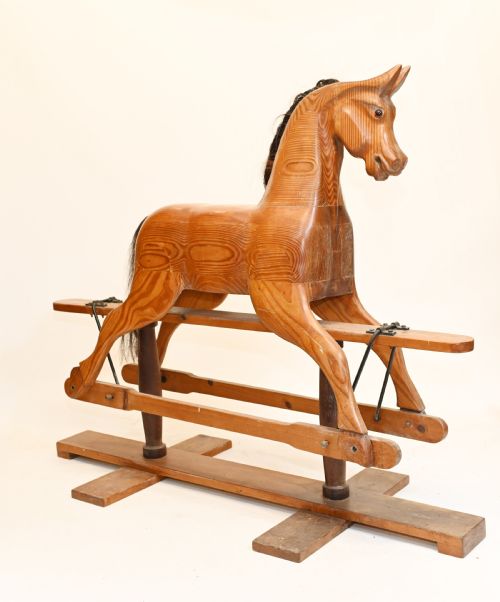
Visitors on this page will most frequently encounter nineteenth-century rocking horses and folk art interpretations mounted on stands or original rockers. Examples span simple painted wooden figures to more elaborate Victorian workshop creations designed for domestic spaces.
The form stretches from early nineteenth-century creations up to mid-twentieth-century workshop pieces like those by Collinsons. Each survival reflects the specific craftsmanship of its era, whether naive provincial work or structured commercial production.
Construction and materials
Makers fashioned these equine figures primarily from carved wood, utilising timber bodies that often incorporated genuine horsehair for manes and tails. Artisans supplemented the carved forms with leather harnesses, iron hardware, and fabric elements to complete the realistic appearance.
Surface decoration relied heavily on paint, with many pieces retaining original painted finishes and folk art details applied by hand. Structural integrity depended on sturdy wooden rocker bases or floor stands that supported the weight of a riding child.
Countless children spent rainy afternoons galloping across nursery floors on these trusty wooden steeds without ever leaving the room.
Judging quality and character
The presence of original rockers, stands, and authentic tack elevates an example above heavily altered counterparts. Playworn character also plays a part, distinguishing charmingly honest historical use from later intervention.
Collinsons
The Antique Equestrian Toy Glossary
- Folk art
- Artistic work created within a traditional culture by self-taught makers, often displaying a naive charm. These pieces lack academic training yet exhibit strong visual appeal.
- Pull-along horse
- A toy mounted on a small wooden platform with wheels, designed to be towed by a child using a string. They were popular nursery companions in the nineteenth century.
- Original paint
- The initial surface coating applied by the maker or contemporary decorator, highly prized by collectors for authenticity. Unaltered pigment preserves the true historical character of the object.
- Playworn
- A descriptive term for items showing honest wear and tear resulting from active use by children in period nurseries. Such markings indicate genuine age and history rather than neglect.
Antique Equestrian Toy: Frequently Asked Questions
How do I date an antique rocking horse?
Dating relies upon examining the construction methods, nail types, timber choices, and stylistic cues of the carved wooden body. Structural designs evolved significantly between the Georgian period, the Victorian era, and the mid-twentieth century.
Comparing the mounting system and rocker shape to documented examples provides further chronological context. Original paint layers and historical tack can also help narrow down the decade of creation.
Are these toys safe for modern children?
Antique equestrian toys are primarily valued as decorative historical objects and collectors' pieces rather than robust modern playthings. Their vintage construction, historic paint, and older iron fittings may not meet contemporary safety standards for children's toys.
Collectors generally preserve them in domestic interiors or display spaces to protect their fragile materials. Gentle handling ensures that horsehair, leather, and nineteenth-century wood remain stable over time.
How should I care for wooden toys?
Keep wooden toys away from direct sunlight, damp environments, and sudden temperature shifts that could cause timber to split or paint to flake. Maintaining a stable indoor climate protects the delicate organic materials like horsehair and leather.
Dust the carved surfaces gently with a dry, soft cloth rather than using liquid cleaning products. Preserving the existing surface character requires minimal intervention and respect for the piece's age.