


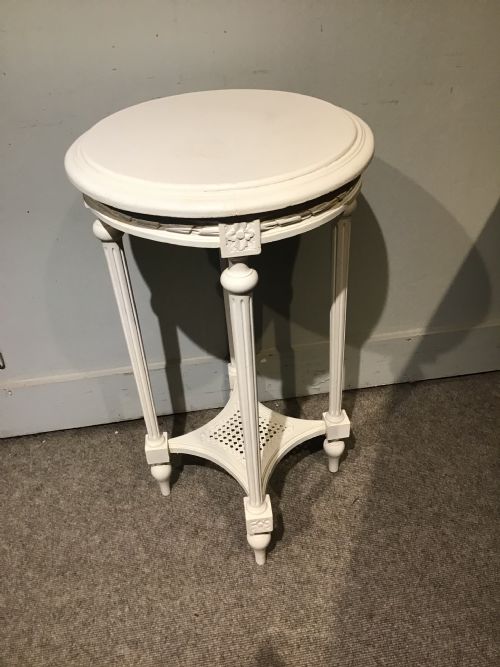


Painted Cane Furniture
Painted cane furniture brings together structural woven plant material and decorative pigments across periods from the Regency era through to the twentieth century.
Painted Cane Furniture
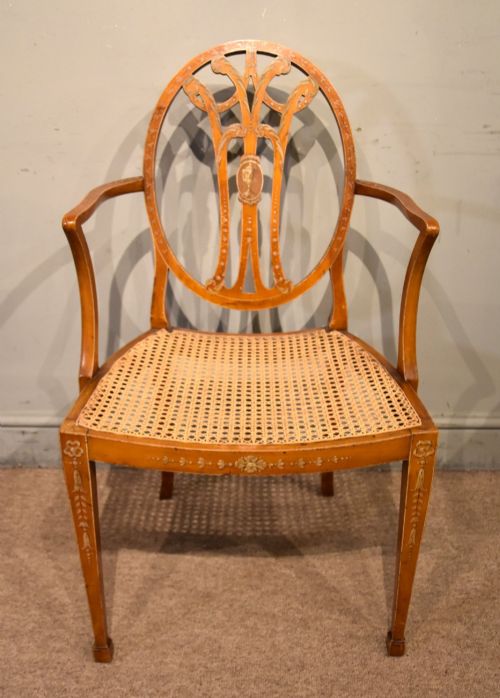
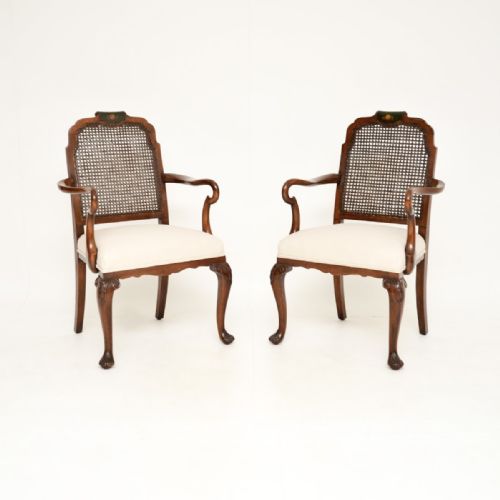
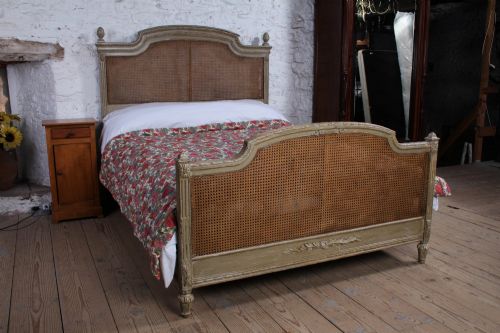
Painted cane furniture spans seating and structural forms like armchairs, sofas, beds, and umbrella stands produced across the Victorian, Edwardian, and Regency periods. Buyers seeking painted cane furniture encounter diverse interpretations ranging from French Neoclassical Louis XVI style bergères to Victorian faux bamboo and cast iron stands.
The pieces on this page include dining chairs, window seats, side tables, and bedsteads executed in painted wood, beech, satinwood, walnut, and cast iron. Makers such as Maple and Co represent the manufacturing output found within these categories.
Forms vary from grand super king size suites to delicate children's chairs and pairs of Italian window seats. Each piece demonstrates how woven cane inserts integrate with painted wooden or metal frames.
Materials and construction methods
Makers built frames primarily using timber species such as beech, satinwood, and walnut, alongside cast iron for structural umbrella and stick stands. Papier mache also appears among the material options for specific seating forms.
Caning was woven tightly into open frames to create resilient seats and backrests, while surfaces received layers of paint, lacquer, or ebonisation. Decorative elements frequently incorporate French Neoclassical motifs or faux bamboo finishes.
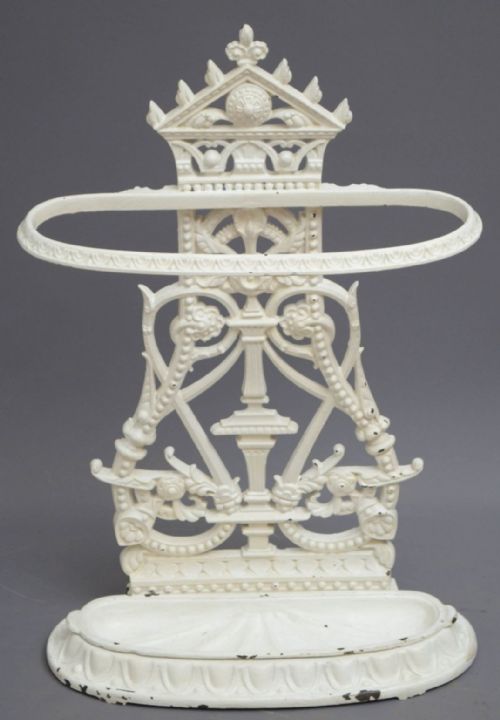
Young Hercules watches over wet umbrellas from nineteenth-century cast iron.
Distinguishing quality in production
The fineness of the timber preparation and the precision of the paintwork dictate the visual standard of each piece. Finer examples display carefully applied lacquer, satinwood, or ebonised surfaces that complement the tension of the woven cane.
Structural integrity depends on the joinery of the wooden frames or the casting quality of iron umbrella stands. Pieces that retain their original painted schemes and tight cane work demonstrate superior preservation.
Maple and Co
The Painted Cane Furniture Glossary
- Cane
- Woven material derived from the rattan palm used for seats and backrests. It provides a flexible yet durable surface.
- Bergère
- An enclosed upholstered or caned armchair with wooden sides originating in France. This form is common in Louis XVI style seating.
- Satinwood
- A durable hardwood with a lustrous golden yellow appearance utilised for fine cabinetwork. It offers a smooth surface for painted decoration.
- Ebonised
- Wood treated to resemble ebony through a staining and polishing process. This finish appears on Regency dining chairs.
- Faux bamboo
- Wood turned and painted to imitate natural bamboo stalks. It is characteristic of Victorian fancy furniture and umbrella stands.
Painted Cane Furniture: Frequently Asked Questions
How do I clean painted cane furniture?
Dust surfaces gently with a soft dry cloth to prevent accumulation in the woven cane interstices. Avoid harsh chemical cleaners that might degrade the painted finish or dry out the natural plant material.
Maintain moderate humidity levels in the room to keep the cane from becoming brittle. Professional conservation is recommended for any structural repairs to the woven panels.
What periods do these pieces come from?
The selection includes items from the Regency, Victorian, and Edwardian eras, spanning the nineteenth and early twentieth centuries. Design influences range from classic French Neoclassical to Victorian aesthetic movements.
Each period utilises specific construction traits and decorative palettes that help identify its origin.
Are these pieces suitable for daily use?
Many items, such as dining chairs and armchairs, were built for functional domestic seating. Careful handling ensures the longevity of both the painted wooden frames and the woven cane surfaces.
Heavier items like cast iron umbrella stands function well in hallways for daily umbrella storage.
How can I tell if the paint is original?
Original painted surfaces show natural wear patterns and patination consistent with age. Examination under magnification often reveals underlying layers and traditional preparation techniques.
Refinished pieces typically exhibit uniform modern paint application without historical micro-cracking.