




Louis XVI Caned Bench
A louis xvi caned bench brings French neoclassical elegance to a room through woven cane panels and linear wooden frames.
Louis XVI Caned Bench
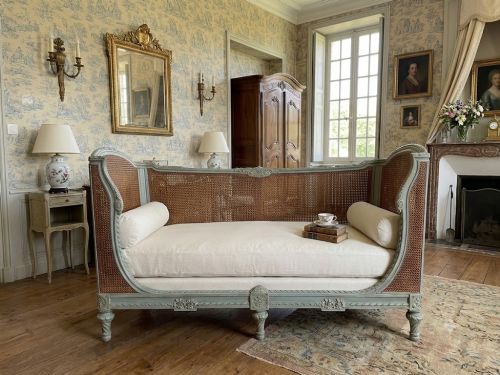
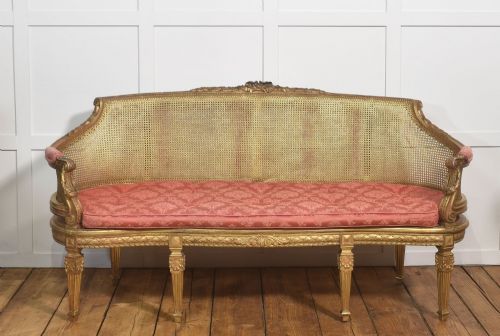
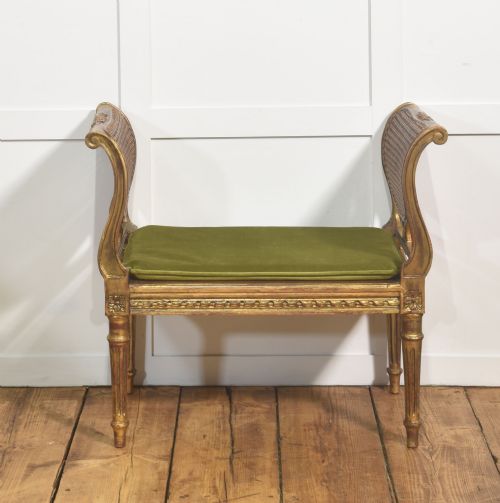
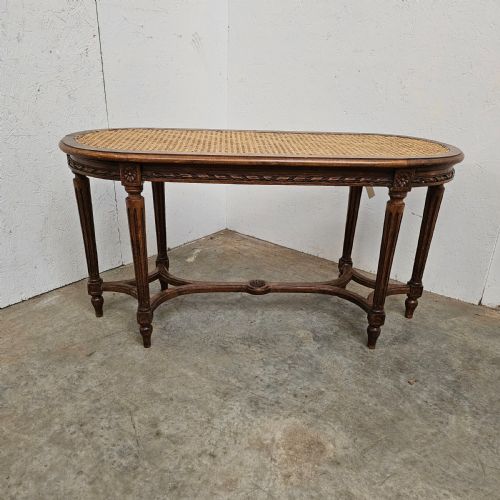
A louis xvi caned bench encompasses a variety of seating forms designed with neoclassical restraint, including settee benches, daybeds, and window seats. These pieces typically feature rectilinear or oval proportions, differing from the curving lines of earlier rococo furniture.
Most examples found here date from the late nineteenth century revival periods up through the early twentieth century, alongside earlier nineteenth century pieces. Makers of these later revivals borrowed heavily from eighteenth century French chateau designs.
The materials recorded in these listings show beech, walnut, and giltwood frames combined with woven cane seats or backs. Upholstered elements often use linen and other traditional fabrics alongside painted or gilded wood.
How they were made
Makers shaped the structural framework from timbers such as beech and walnut, often applying a painted finish, giltwood, or simple carved detailing. These wooden frames support tightly woven cane panels used for backrests and seats.
Joinery techniques follow traditional cabinetmaking standards, ensuring rigid support for the woven cane under tension. Carved ornamentation remains restrained, reflecting the neoclassical aesthetic of straight lines and classical motifs.
Some nineteenth century makers apparently believed a love seat required extra cane panels just to ensure the gossip stayed breezy.
What varies in quality
The standard of carving and the crispness of the wood detailing dictate the upper tier of these pieces. Hand-carved beech or walnut frames display sharper definition in their neoclassical motifs than later, simpler production runs.
The integrity of the woven cane work significantly influences the overall construction standard. Tightly woven, uniform cane panels demonstrate superior craftsmanship compared to loose or unevenly tensioned weaving.
The Louis XVI Caned Bench Glossary
- Cane
- Strips of rattan woven in an open pattern to form breathable seats and backs on wooden frames. This technique provides flexible yet durable support.
- Neoclassical
- A style prevailing in the eighteenth century and later revivals that draws inspiration from classical antiquity. It favours straight lines, symmetry, and geometric proportions.
- Giltwood
- Timber coated with a thin layer of gold leaf or metallic paint. This finish creates a luminous surface common on formal seating.
- Banquette
- An upholstered bench or long seat, often placed against a wall or beneath a window. It serves as a secondary seating option in formal rooms.
Louis XVI Caned Bench: Frequently Asked Questions
Where should I place a window seat?
These benches fit naturally beneath large windows or at the foot of a bed, where their low backs do not obstruct outside views.
They also work well in narrow hallways or entry spaces as practical spots for sitting while removing shoes.
How do I care for cane seating?
Keep woven cane panels supple by occasionally wiping them with a damp cloth to prevent the natural fibres from drying out and snapping.
Avoid placing these pieces in direct sunlight or too close to heating vents, which can cause the wooden frames and cane to warp.
Are these pieces from the eighteenth century?
The majority of these listings originate from nineteenth and early twentieth century revival periods rather than the original eighteenth century reign of Louis XVI.
Cabinetmakers of the later nineteenth and early twentieth centuries frequently recreated these neoclassical French forms using traditional methods.