


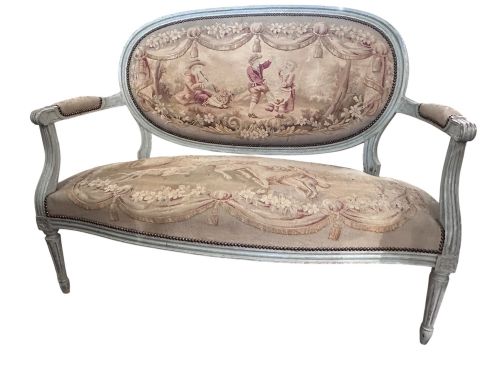


French Parlour Bench
A french parlour bench offers elegant seating, bringing refined proportions and classic upholstery into a reception room or salon.
French Parlour Bench
A french parlour bench is represented here by various multi-seat forms including settees, sofas, canapés, and salon suites dating from the nineteenth century into the early twentieth century. Buyers seeking this seating style will most frequently encounter painted wood, giltwood, and walnut frames reflecting historic French design idioms.
The selections span distinct stylistic revivals such as Louis XVI style, French Rococo Revival, and French Empire, alongside Regency examples. These pieces function as principal seating arrangements in formal reception spaces, offering carved wooden structures paired with upholstered elements like damask and textile covers.
Construction and Materials
Frames are constructed from solid timbers including beech and walnut, alongside carved giltwood and painted wood surfaces finished with cream or gold pigments. Caned panels appear alongside upholstered backs and seats covered in fabric, textile, and damask.
Carpentry techniques rely on detailed carving and bentwood construction methods, visible in salon suites and settees from the nineteenth and early twentieth centuries.
Listings feature pieces utilising giltwood, beech, walnut, painted wood, and textiles across nineteenth and early twentieth-century periods.
Evaluating Quality and Finish
The refinement of the carved wooden ornament dictates the distinction between standard production and higher execution, with hand-carved giltwood and walnut frames showing superior definition compared to simpler painted surfaces. Crisp detailing in Louis XVI style motifs and well-preserved original gilding elevate the visual impact of a settee.
The integrity of the structural frame and the execution of applied finishes such as cream paint or gold leaf separate basic seating from masterwork salon suites. Superior upholstery materials like damask and intact caning reflect a higher original investment in the piece.
The French Parlour Bench Glossary
- Canape
- An upholstered sofa or settee, typically featuring an exposed wooden frame and an elongated seat designed for multiple occupants. These forms are central to traditional French salon seating arrangements.
- Giltwood
- Timber that has been coated with a thin layer of gold leaf or gilt finish. This decorative treatment appears frequently on formal nineteenth-century frames.
- Bergere
- An enclosed upholstered armchair or sofa style originating in France, characterised by padded sides and a built-in upholstered back. Caned variants also occur within this tradition.
- Louis XVI Style
- A neoclassical design movement marked by straight tapered legs, rectilinear framing, and classical ornamental carvings. This aesthetic heavily influences nineteenth-century parlour seating.
- Salon Suite
- A matched set of seating furniture, including sofas and matching chairs, designed for formal reception rooms. These suites provide a cohesive decorative scheme for large interiors.
French Parlour Bench: Frequently Asked Questions
What is a french parlour bench?
A french parlour bench encompasses historical settees, sofas, and canapés designed for formal reception rooms and parlours. These seats typically feature carved wooden frames and upholstered surfaces.
They reflect aesthetic movements from the nineteenth and early twentieth centuries, including Louis XVI and Empire revivals.
How do I date a french parlour bench?
Dating relies on stylistic markers such as neoclassical straight legs, rococo curves, and specific revival periods recorded from the nineteenth century onward. Material choices like giltwood, beech, and painted finishes also offer chronological context.
Examining the construction techniques of the wooden frame provides further indication of the manufacturing era.
Where should I place a settee?
A settee functions effectively as a focal point in a living room, drawing room, or grand hallway. Its decorative back and carved frame allow it to be positioned against a wall or within an open seating arrangement.
Pairing the piece with complementary armchairs creates a cohesive salon grouping.
What is the difference between a sofa and a canape?
A canapé is a traditional French term for a decorative upholstered sofa featuring an exposed wooden frame. It often displays specific period carvings related to Louis styles.
Standard sofas may encompass broader international design traditions and different frame proportions.