


Painted Bronze Bird Ornament
A painted bronze bird ornament brings brilliant plumage and character to a desk or cabinet, crafted in cast metal and finished with delicate pigment.
Painted Bronze Bird Ornament
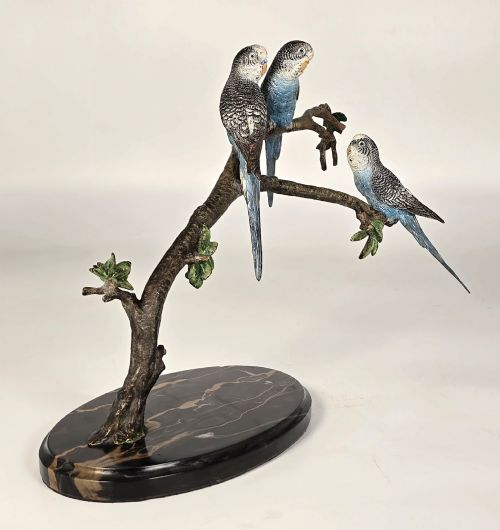
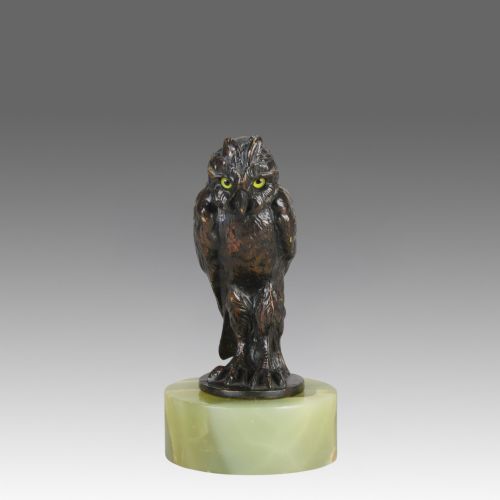
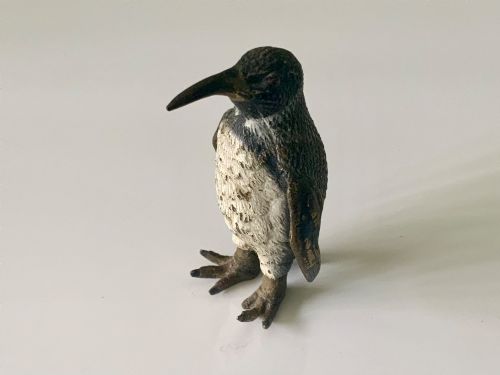
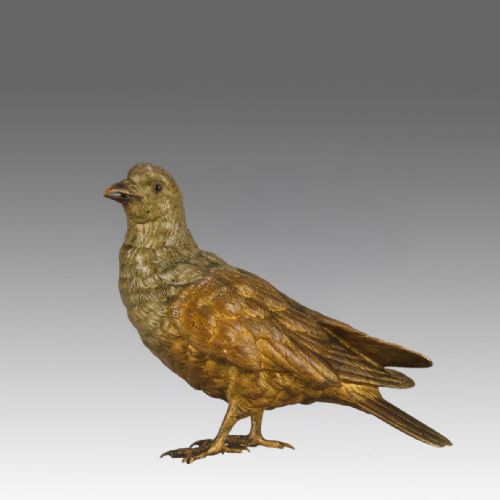
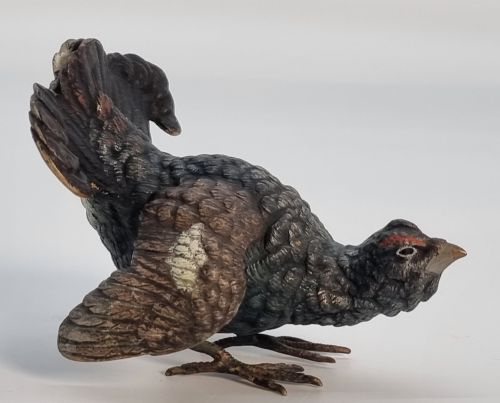
When you search for a painted bronze bird ornament, you encounter small animalier sculptures and desk accessories from the nineteenth and early twentieth centuries. These pieces depict naturalistic birds such as budgerigars, owls, penguins, pigeons, and grouse rendered in solid metal.
The most common examples on this page are Austrian and Viennese works dating from around nineteen hundred, often mounted on bases of onyx or marble. They capture avian forms with lively poses, ranging from solitary standing figures to pairs perched upon branches.
Makers such as Franz Bergman dominate the selection, producing finely detailed studies that function both as cabinet ornaments and practical items like pin trays.
How they were made
These items begin as bronze castings, shaped through traditional foundry methods to capture fine feather details and anatomical precision. Some figures are mounted directly onto bases of natural onyx or marble for stability and contrast.
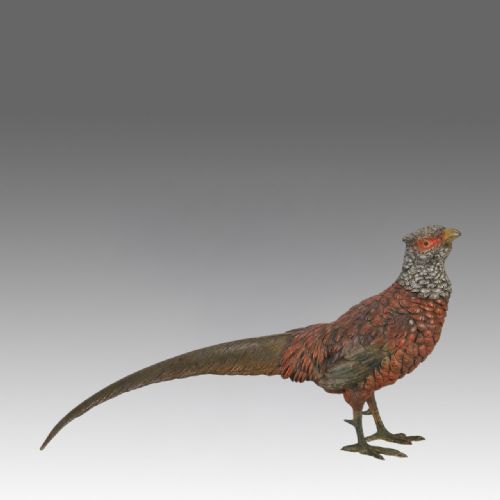
The surface colour is applied using cold-painting techniques, where pigment is layered over the metal rather than fired in a kiln. This leaves a matte finish that renders the varied plumage of kingfishers, parrots, and pheasants.
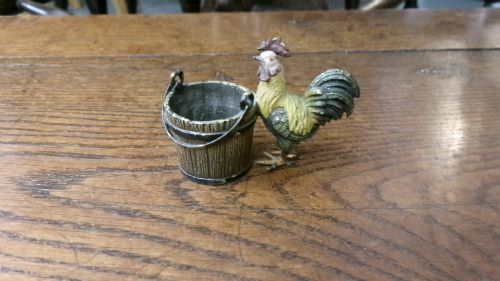
A tiny cockerel stands beside its own diminutive bucket, proving that even nineteenth century founders appreciated a touch of farmyard theatre.
What varies in quality
Quality rests principally on the precision of the casting and the preservation of the original cold-painted surface. Finer examples display crisp feather work and naturalistic postures that mark out the best foundry output.
The integrity of the pigment layer heavily influences desirability, as intact paint without significant loss reflects careful ownership over the decades. The presence of a recognised foundry mark or signature further distinguishes standard production from exceptional pieces.
Franz Bergman
The Painted Bronze Bird Ornament Glossary
- Cold-painted bronze
- Bronze sculpture finished with paint applied to the cold metal surface rather than fired in a kiln. This technique allows for subtle polychrome effects on plumage.
- Vienna bronze
- Small Austrian bronze figures produced primarily in the late nineteenth and early twentieth centuries. They are celebrated for humorous or naturalistic animal subjects.
- Animalier
- Art that faithfully depicts animals in sculpture or painting. The term covers the realistic bird studies found in this selection.
- Onyx
- A banded variety of chalcedony used frequently as a heavy plinth for bronze figures. It provides a smooth mounting base for desk accessories.
- Pin tray
- A small shallow dish for holding pins, often incorporated into the base of a bronze animal sculpture. These served a practical function on Victorian and Edwardian desks.
Painted Bronze Bird Ornament: Frequently Asked Questions
What is a cold painted bronze bird?
A cold painted bronze bird is a small metal sculpture finished with oil or enamel paint applied directly to the cold cast surface. Makers used this method to capture the vibrant colours of exotic and native birds.
These pieces typically date from the late nineteenth and early twentieth centuries, originating largely from Austrian foundries. They were designed as decorative cabinet pieces or functional desk accessories.
How do I care for my bronze bird?
Caring for these ornaments requires keeping them away from direct sunlight and moisture to protect the delicate pigment layers. Dusting should be done gently with a soft, dry brush.
Avoid using liquid cleaners, polishes, or abrasive cloths, as these will damage the original cold-painted finish. Proper handling preserves both the metal and the surface colour.
Are these figures solid bronze?
Most of these sculptures are cast in solid bronze, though some smaller elements or bases may incorporate different materials. Onyx and marble frequently serve as plinths for the figures.
The weight and feel of the metal help distinguish genuine period castings from later reproductions. Foundry marks sometimes appear on the underside or near the base.
Who made these bronze bird ornaments?
Many of the finest examples originate from Viennese workshops active around nineteen hundred. Franz Bergman is among the most prominent foundry owners associated with these bird studies.
Pieces often bear stamps or Bergman foundry marks that confirm their origin. Other works come from Viennese or Nuremberg makers who specialised in small animalier bronzes.