

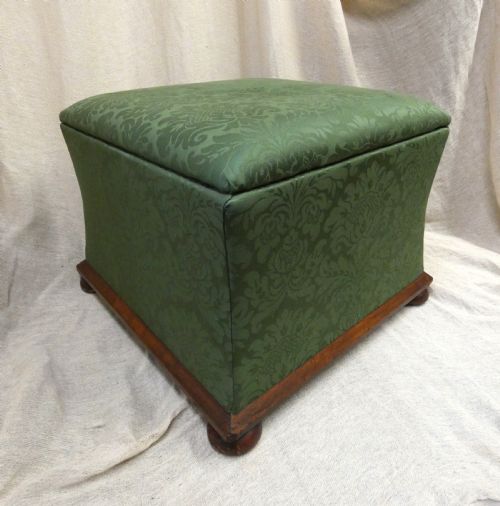

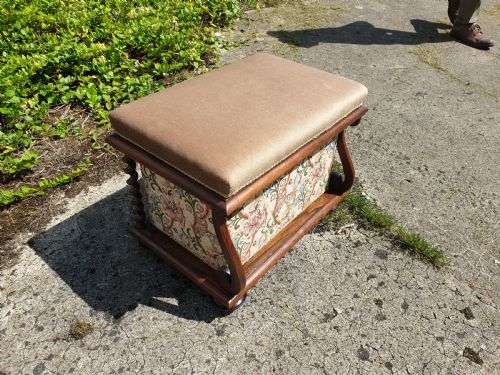


Padded Storage Stool
A padded storage stool brings hidden depth and comfortable seating to a room, spanning periods from Regency elegance to Edwardian practicality.
Padded Storage Stool
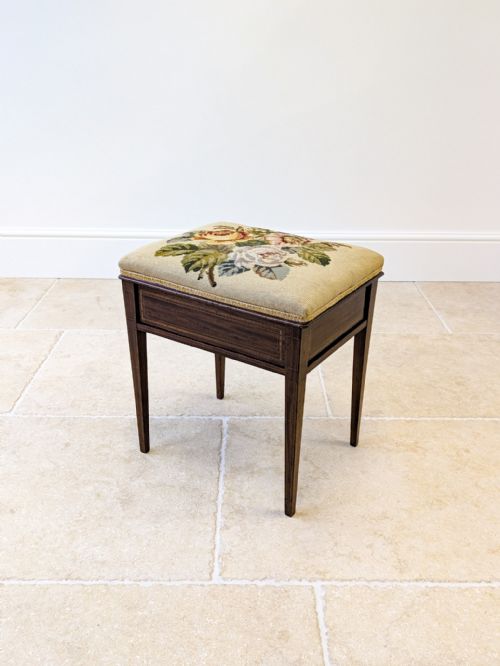
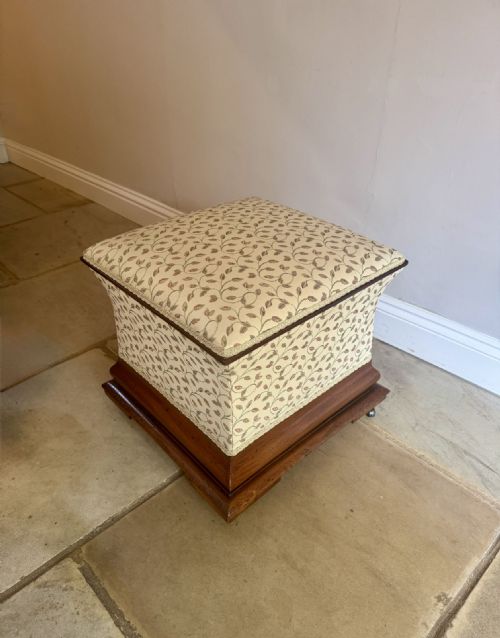
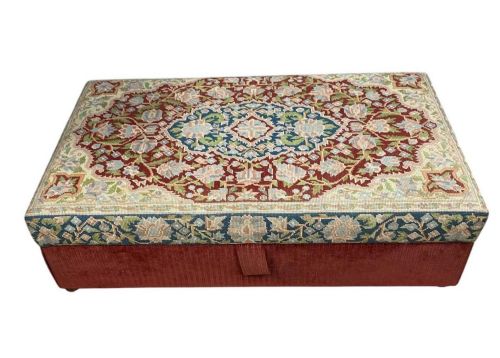
A padded storage stool combines a concealed compartment with a cushioned top, serving as a dual-purpose seat and container. When searching for a padded storage stool, buyers encounter forms ranging from compact piano seats to large ottomans and blanket boxes.
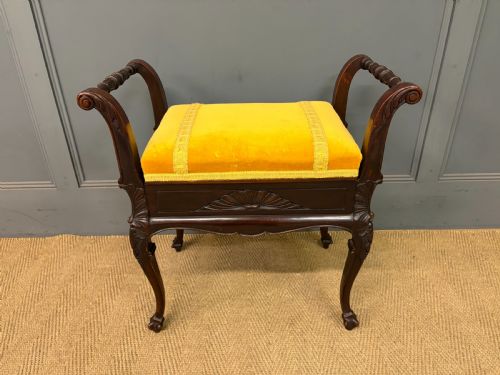
The pieces on this page stem from the Regency, Victorian, and Edwardian eras, alongside early twentieth-century examples. Common variations include duet piano stools with hinged seats, drop-front mechanisms, and waisted or concave frames.
Makers utilised timber frames upholstered in velvet, fabric, leather, and needlepoint, frequently incorporating brass details or lions paw feet. These items functioned in music rooms, drawing rooms, and dressing areas to house sheet music, blankets, and personal items.
Materials and construction
Cabinet makers built the structural frames using solid hardwoods including mahogany, rosewood, walnut, and oak. These timbers provided the necessary strength to support daily seating while housing internal storage compartments.
Upholstery techniques involved traditional stuffing secured beneath top layers of fabric, velvet, leather, or worked needlepoint such as gros-point. Hinged mechanisms, fall fronts, and lift-up seats allowed access to the interior storage space.
Decorative elements often included fine wood inlays, carved details like lions paw feet, and brass hardware. The combination of sturdy timber joinery and tactile textile surfaces defined the construction of these items across the nineteenth and early twentieth centuries.
Padded Storage Stool Retail Price Guide 2026
Typical asking prices for padded storage stool among the pieces listed under this phrase on Sellingantiques today, from the lower quarter to the upper quarter. They describe what is for sale here now, not the wider market.
Listings feature timbers such as mahogany, rosewood, walnut, and oak, paired with velvet, leather, and needlepoint upholstery.
Distinguishing quality across examples
The refinement of the timber frame and the sophistication of its carving or inlay set finer pieces apart from simpler utilitarian boxes. Dense hardwoods like rosewood and figured mahogany indicate a higher grade of manufacture than basic pine or secondary woods.
The integrity of the internal storage mechanism, whether a smooth-action hinged seat or a drop-front fall mechanism, demonstrates superior craftsmanship. Original upholstery materials and well-executed needlepoint tops further elevate the standing of a piece.
Proportion and scale dictate visual success, with waisted shapes and concave forms showing greater design ambition. The survival of original feet, such as brass fittings or carved paws, preserves the intended aesthetic harmony.
The Padded Storage Stool Glossary
- Ottoman
- A low, upholstered seat without arms or a back, frequently fitted with a hinged lid for storage. These pieces originated as oriental-inspired furnishings before becoming staples of nineteenth-century British interiors.
- Duet piano stool
- An extended seating bench designed for two players, commonly featuring a lift-up seat to store sheet music. They appeared frequently during the Victorian and Edwardian periods.
- Gros-point
- A heavy, counted-thread needlework technique utilising wool yarn on canvas to create durable, textured upholstery. It frequently appears on mid-nineteenth-century footstools and ottoman tops.
- Waisted
- A furniture profile that curves inward towards the centre before flaring out again at the base or ends. This shaping adds visual lightness to boxy storage forms.
- Fall front
- A hinged vertical panel that drops down to reveal internal compartments or shelving. This mechanism allows easy access to stored items without disturbing the seat cushion.
Padded Storage Stool: Frequently Asked Questions
What is a padded storage stool used for?
These pieces provide a dual function as a comfortable seat and a concealed container for household items. Historically, they held sheet music near pianos, blankets in bedrooms, or sewing supplies in drawing rooms.
Today, they serve equally well in living spaces and hallways to hide clutter while offering an accessible perch.
How do I identify a Victorian storage stool?
Victorian examples often feature dense timbers like rosewood or walnut, combined with rich upholstery such as velvet, leather, or gros-point needlework. Look for structural characteristics like hinged lids, fall-front panels, and occasionally carved mahogany frames.
The decorative vocabulary typically reflects revival styles including Gothic or Queen Anne influences.
Can I use an antique piano stool in a modern room?
Antique piano and ottoman stools integrate smoothly into contemporary interiors due to their compact footprints and practical storage capabilities. They function effectively as dressing table seats, hallway benches, or auxiliary living room seating.
The variety of woods and neutral or patterned textiles allows them to complement diverse interior colour schemes.
What is the difference between an ottoman and a footstool?
An ottoman generally incorporates an enclosed storage space beneath a padded lid, functioning as a box seat or small chest. A traditional footstool consists purely of a cushioned support for the feet without internal cavities.
Many nineteenth-century designs blur these lines by offering low profiles combined with deep interior compartments.