
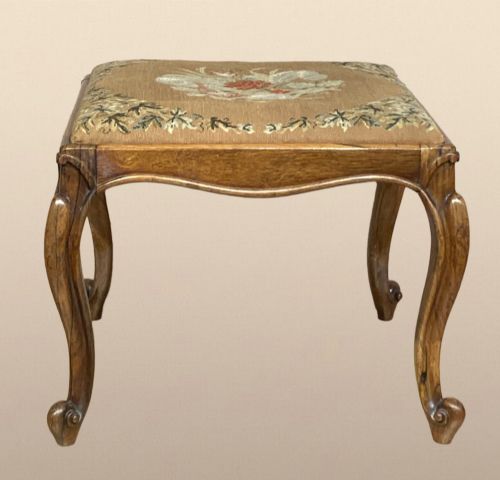


Rosewood Footstool Seat
These rosewood footstool seat options bring sturdy timber frames and soft textile tops together for comfortable seating by the fire or piano.
Rosewood Footstool Seat
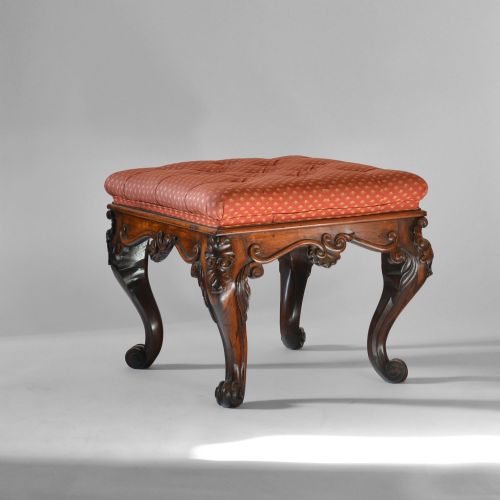
A rosewood footstool seat offers low-profile seating or foot support, constructed primarily from dense tropical timber and surfaced with various textiles. When searching for a rosewood footstool seat, buyers encounter examples originating mainly from the Georgian, Regency, and Victorian periods.
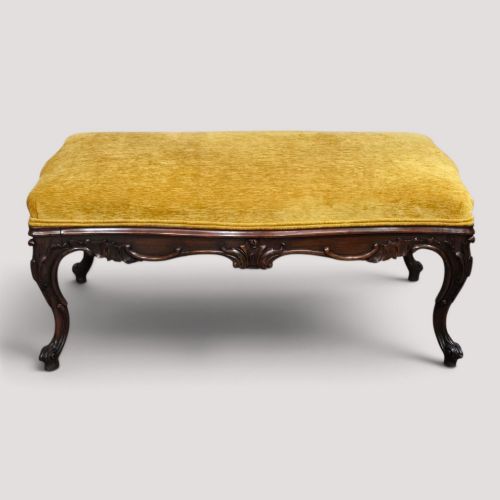
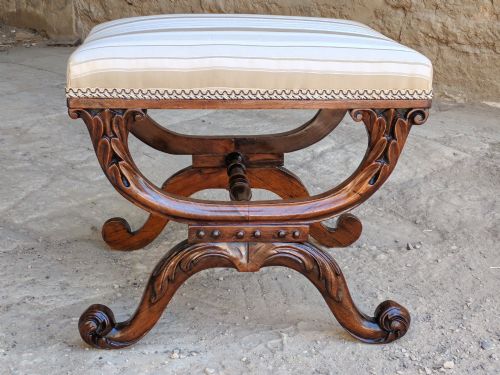
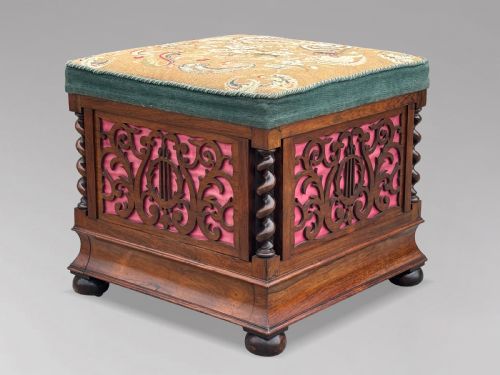
The inventory on this page spans distinct nineteenth-century sub-styles, ranging from Regency and George IV pieces to Victorian Rococo Revival and Anglo-Indian designs. Common configurations include oblong stools, dressing stools, piano stools, and larger ottomans with lift-out upholstered seats or cross-frame supports.
Most items rely on solid timber frameworks shaped into cabriole legs or turned supports, occasionally featuring carved ornamentation. The combination of dark wood grain and period upholstery defines the visual character of these furnishings across every listed era.
How they were made
Cabinetmakers utilised dense rosewood for the structural frames, shaping the timber through turning and carving to create cabriole legs or X-frame bases. This heavy wood provided the necessary stability for daily seating and supported intricate decorative details.
Upholstery techniques combined internal stuffing with outer coverings of fabric, tapestry, velvet, wool, or leather, secured with trim such as braid. Brass fittings and components also appear in specific joints and structural elements.
The listings on this page span the 19th Century, Victorian period, Regency, George IV era, and 1850 through 1880.
What varies in quality
The standard of carving and timber selection separates finer examples from standard production, with deep hand-carving on cabriole legs indicating superior craftsmanship. The density and grain pattern of the rosewood itself play a significant role in the overall execution.
The sophistication of the upholstery work and the integrity of the underlying frame construction determine the durability and finish of each piece. Original textile coverings and period-appropriate tapestry or needlework add distinct character compared to later replacements.
The Rosewood Footstool Seat Glossary
- Cabriole leg
- A furniture leg that curves outward at the knee and tapers inward toward the ankle, imitating animal limbs. This form appears frequently on Victorian examples in this selection.
- Cross-frame
- A structural base formed by intersecting diagonal timbers that support the seat. Pieces utilising this configuration are often described as X-framed.
- Ottoman
- A low, upholstered seat or footstool typically lacking arms or a back. Several larger examples feature lift-out seats providing internal storage space.
- Tapestry
- A heavy hand-woven or needlepoint textile used for decorative upholstery on seat tops. Floral trellises and pictorial scenes frequently adorn these surfaces.
Rosewood Footstool Seat: Frequently Asked Questions
What is a rosewood footstool seat used for?
These furnishings served various domestic purposes in nineteenth-century interiors, functioning primarily as footrests, piano seating, or low dressing stools.
Their sturdy timber construction and upholstered tops allowed them to be easily moved around drawing rooms and chambers as needed for comfort.
How do I identify a Regency period stool?
Regency pieces typically exhibit cleaner architectural lines, classical proportions, and specific design motifs associated with the early nineteenth century.
Comparing the turned legs and overall silhouette against dated examples from the same decade helps confirm the era of manufacture.
Are these stools comfortable for daily use?
The upholstered tops provide soft cushioning supported by rigid wooden frames, though padding firmness varies depending on internal materials.
Many buyers use them as functional seats in living spaces, provided the historical upholstery or modern replacement offers adequate support.
What is an Anglo-Indian stool?
Anglo-Indian items reflect furniture manufactured in India during the British colonial period using local rosewood and traditional carving techniques.
These pieces often display distinct regional decorative motifs that differentiate them from standard domestic British production of the same century.