



Antique Blanket Stool
An antique blanket stool combines practical storage with a seat, offering period craftsmanship in mahogany, oak, and rosewood.
Antique Blanket Stool
The antique blanket stool category encompasses multi-functional seating options designed with internal storage spaces, frequently catalogued as ottomans, box stools, or close stools. Buyers searching this phrase encounter examples ranging from heavy 17th-century oak formats to refined Regency and Victorian mahogany or rosewood designs.
Originating across multiple centuries, the pieces reflect shifting domestic needs from the 17th century through the Victorian era and into the early 20th century. The most common survivals on this page balance sturdy hardwood frames with functional lidded compartments.
Materials and construction methods
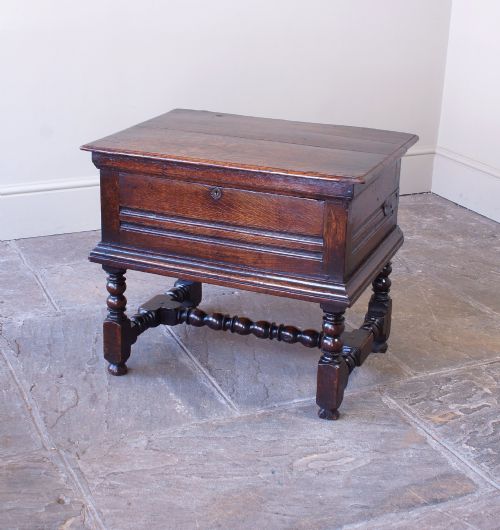
Makers built these pieces using solid hardwoods like oak, mahogany, rosewood, and general hardwoods, relying on traditional joinery to support heavy use as both seats and storage chests. Oak examples from earlier periods demonstrate robust panel construction, whilst later Regency and Victorian iterations utilise dense mahogany and rosewood veneers or solids.
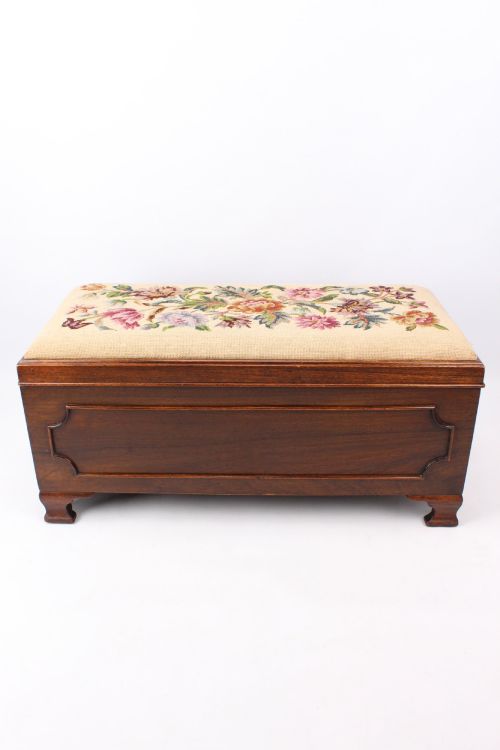
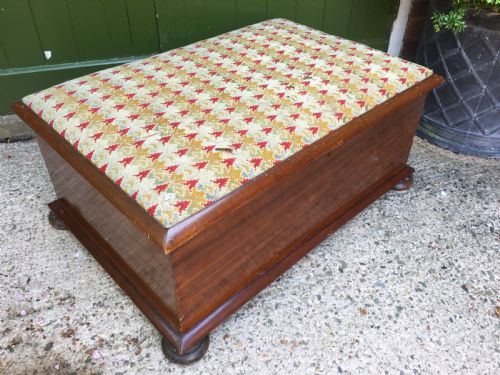
Upholstered surfaces utilise traditional textiles including wool, velvet, and gros-point needlework tops secured over padding. Brass details occasionally appear as decorative mounts or functional hardware, complementing the carved woodwork and turned elements characteristic of Elizabethan Revival and Jacobean styles.
Listings feature woods such as mahogany, oak, rosewood, and general hardwood, alongside textiles including wool, velvet, and gros-point needlework.
Assessing quality in antique blanket stool pieces
Quality reveals itself in the weight and selection of the timber, where dense, well-figured mahogany or richly patinated old oak denote higher status manufacture. The crispness of hand-carved details and the structural integrity of the internal box compartment separate utilitarian pieces from finer country house commissions.
Upholstery standards also distinguish better examples, particularly where original gros-point needlework or high-grade velvet and wool textiles survive intact. The harmony between the proportions of the base and the execution of specialised feet, such as lions paw designs, marks superior craftsmanship.
Hallett And Sons
The Antique Blanket Stool Glossary
- Box stool
- A seat featuring a hinged or removable lid that opens to reveal an internal storage compartment. This form serves multiple domestic functions.
- Close stool
- An early form of enclosed stool, historically containing a chamber pot, often constructed in oak during the 17th and 18th centuries.
- Gros-point
- A heavy, counted-thread needlework technique using wool yarn, commonly found on Victorian ottoman tops. It provides a durable and textured seating surface.
- Ottoman
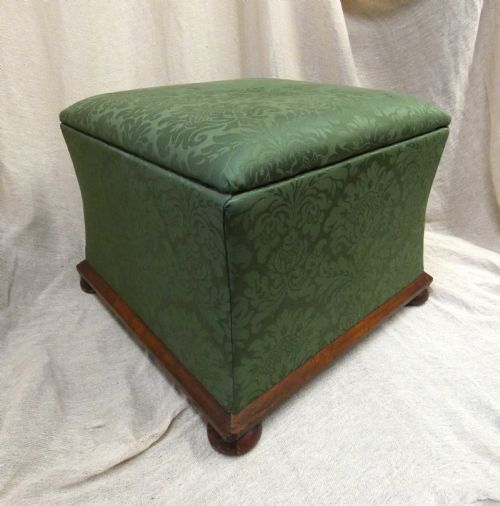
- A padded, upholstered seat without a back or arms, frequently designed with internal storage space for blankets and textiles.
- Regency
- A British design period spanning the early 19th century, characterised by classical influences, rosewood and mahogany timbers, and decorative feet.
Antique Blanket Stool: Frequently Asked Questions
What is an antique blanket stool?
An antique blanket stool is a dual-purpose piece of furniture combining a seat with an internal storage compartment for textiles. These items range from early oak box designs to refined mahogany and rosewood ottomans.
They appear under various historical designations, including close stools and storage ottomans, spanning the 17th to the early 20th centuries.
How were these stools used historically?
Historically, these pieces served sitting rooms, bedrooms, and halls as both portable or stationary seating and discreet storage chests for linens or blankets. Some specialised forms like close stools incorporated internal accommodations for chamber pots.
Over the centuries, their domestic utility shifted toward comfortable upholstered lounging and decorative placement at the foot of beds.
How do I date an antique blanket stool?
Dating relies on identifying primary timbers, construction methods, and stylistic markers such as Elizabethan Revival carving or Regency proportions. Oak is more prevalent in 17th and 18th-century examples, while mahogany and rosewood dominate the Regency and Victorian periods.
Secondary indicators include upholstery materials like original gros-point needlework and the presence of specific foot designs like lions paw feet.
Where should I place one at home?
These pieces suit living rooms as coffee table alternatives, bedrooms at the base of a bed, or hallways for convenient seating and hidden storage. Their robust hardwood frames and upholstered tops allow them to integrate easily into both traditional and contemporary interiors.
Ensure the internal storage space remains dry and avoid placing delicate velvet or needlework tops in direct, harsh sunlight.