




Antique Box Seat Stool
An antique box seat stool offers clever hidden storage beneath a padded lid, combining the utility of a chest with the comfort of a seat.
Antique Box Seat Stool
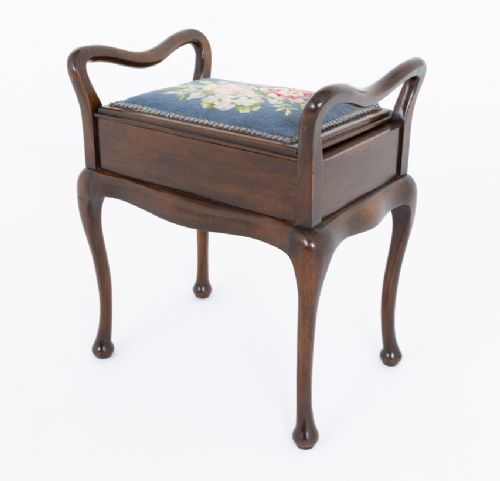
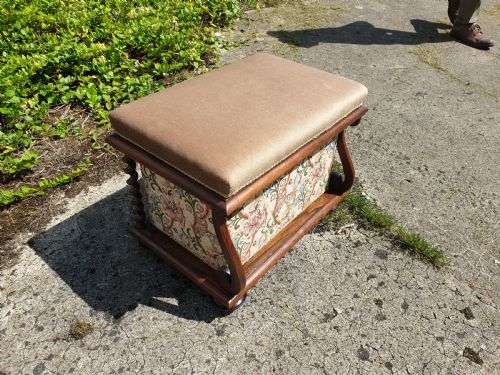
An antique box seat stool serves dual purposes as a seat and a concealed container, taking forms such as piano stools, ottomans, and blanket boxes. These pieces emerge from periods spanning the eighteenth, nineteenth, and early twentieth centuries, reflecting changing domestic needs for compact storage.
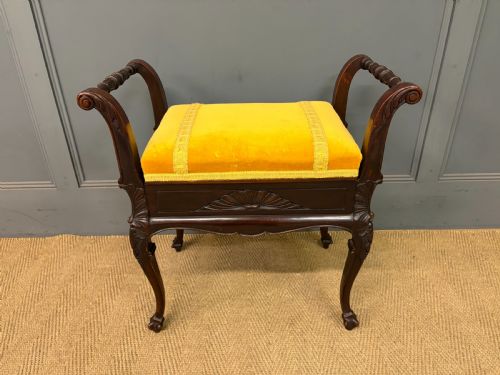
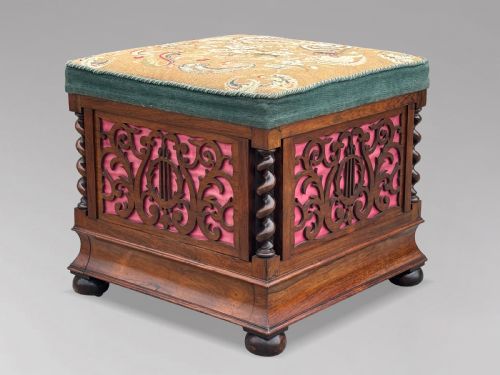
The varieties encountered most frequently on this page are nineteenth-century piano stools and Victorian ottomans. These versions range from simple hinged piano seats to large country house storage pieces designed for bedrooms and drawing rooms.
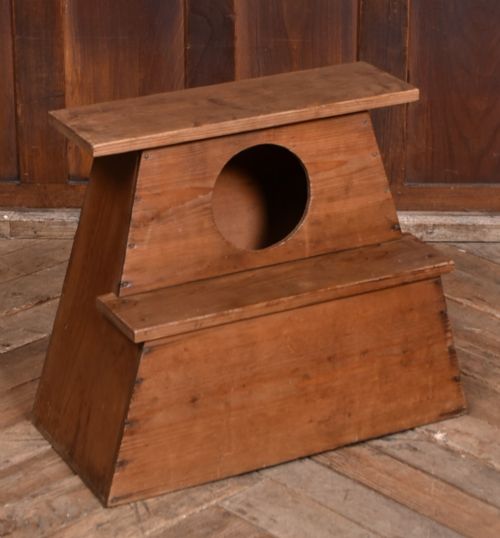
Makers fashioned them in various regional interpretations, from English mahogany and rosewood examples to Japanese folk art items. The fundamental architecture remains consistent: a sturdy timber carcass supporting an upholstered top that lifts or drops to reveal a hollow interior.
How they were made
Cabinetmakers utilised dense hardwoods like mahogany, walnut, rosewood, and oak to construct the main storage boxes and frames. These timbers were often polished to a deep lustre or carved with period motifs depending on the prevailing style.
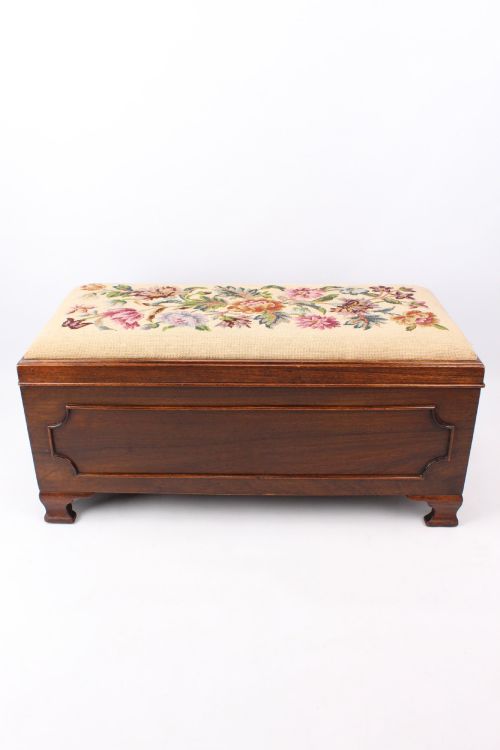
Upholstery techniques involved layering natural stuffings beneath decorative top textiles such as velvet, wool, tapestry, and patterned fabric. Needlework tops frequently feature on nineteenth-century examples, displaying intricate hand-stitched designs that required considerable artisan time.
Antique Box Seat Stool Retail Price Guide 2026
Typical asking prices for box seat stool among the pieces listed under this phrase on Sellingantiques today, from the lower quarter to the upper quarter. They describe what is for sale here now, not the wider market.
A vendor in the nineteenth century once carried their wares in a specialist stool designed specifically for itinerant trade.
What varies in quality
The distinction between ordinary and superior pieces rests on the choice of timber and the sophistication of the internal mechanism. Fine examples employ substantial hardwoods throughout the carcase, whilst lesser items utilise secondary softwoods in concealed areas.
Upholstery execution and hardware selection dictate the upper tier of craftsmanship. Smoothly operating hinges, fall-front fall mechanisms, and dense, supportive padding distinguish the better workshops from standard commercial production.
Hallett & Sons·Gillows
The Antique Box Seat Stool Glossary
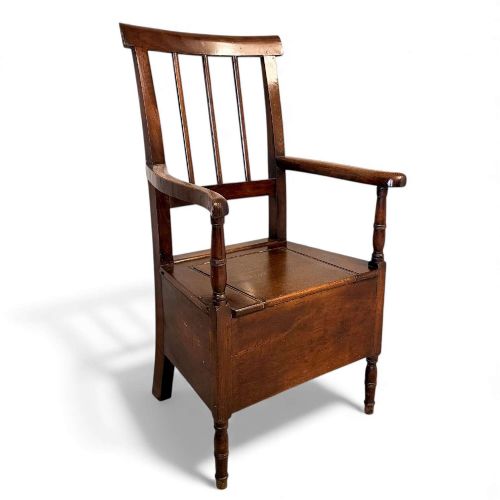
- Commode chair
- A seat enclosing a chamber pot or configured as a box stool with a lid. Early versions date to the seventeenth and eighteenth centuries in oak or walnut.
- Duet piano stool
- A wider seating bench designed for two players, often incorporating a lift-up lid for sheet music storage. These commonly date from the Edwardian period and late nineteenth century.
- Fall-front
- A hinged vertical panel that drops forward to access the interior storage space. This mechanism appears frequently on Victorian walnut piano stools.
- Needlework
- Hand-stitched textile work utilised for seat covers, using wool or silk threads on canvas grounds. It is a defining feature of many nineteenth-century footstools and ottomans.
- Ottoman
- A low, upholstered seat without arms or a back, frequently constructed with a hinged top for linen or blanket storage. Large country house versions often feature extensive upholstery.
Antique Box Seat Stool: Frequently Asked Questions
What were antique box seat stools used for?
These pieces served multiple domestic functions, primarily providing discrete storage for sheet music near pianos, blankets in bedrooms, or sewing materials in drawing rooms. Their dual nature made them practical additions to smaller nineteenth-century parlours where floor space carried a premium.
Over successive decades, households adapted them to various daily routines, using the internal compartment to keep clutter out of sight whilst offering a comfortable perch for guests.
How do I identify a Victorian box seat stool?
Victorian examples typically rely on dense timbers such as rosewood and walnut, often paired with heavy button-tufted upholstery or elaborate needlework. Turnings on the legs and the use of hinged or fall-front mechanisms point directly to mid-to-late nineteenth-century manufacturing methods.
Examining the underside and internal linings reveals the construction standards of the period, distinguishing true Victorian pieces from later revival items.
How do I care for antique upholstery?
Protect antique fabric and needlework tops by keeping them away from direct sunlight, which fades natural wool and velvet fibres over time. Gentle surface cleaning with a soft brush helps remove dust without disturbing the underlying vintage padding.
Avoid applying modern chemical cleaners to older textiles, as delicate threads can easily fracture under harsh treatments.
What is the difference between a piano stool and an ottoman?
Piano stools are generally compact, tailored specifically for keyboard players, and sometimes feature rotating seats or specialised sheet music compartments. Ottomans are broader, lower upholstered storage boxes designed for general seating or resting feet.
Both share the fundamental box seat construction, but their proportions reflect their distinct original placements within the home.