
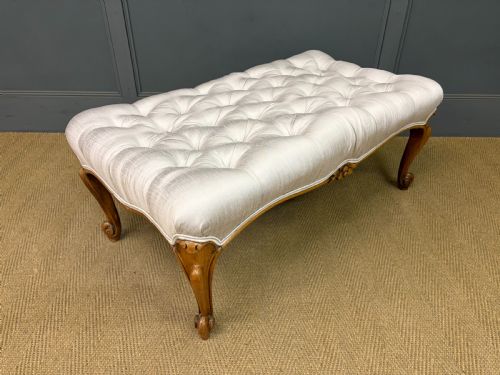
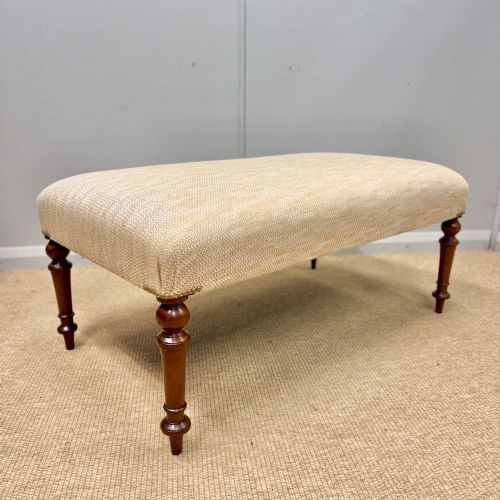
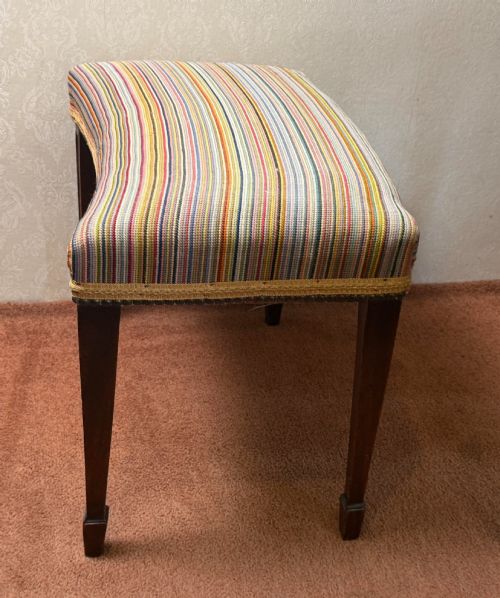
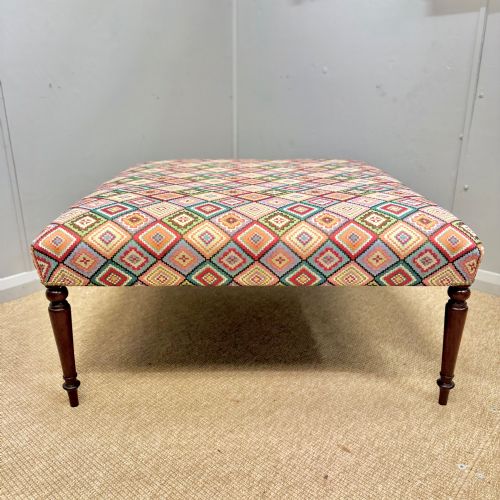
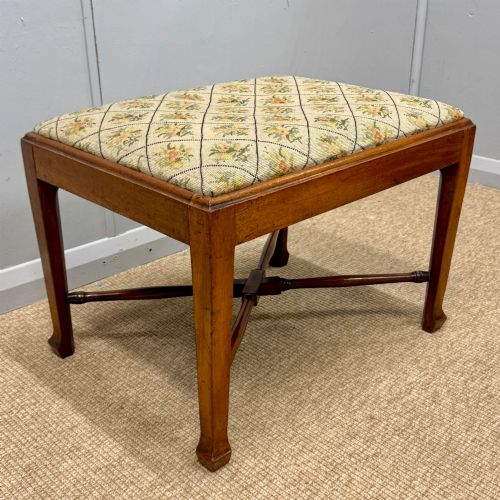
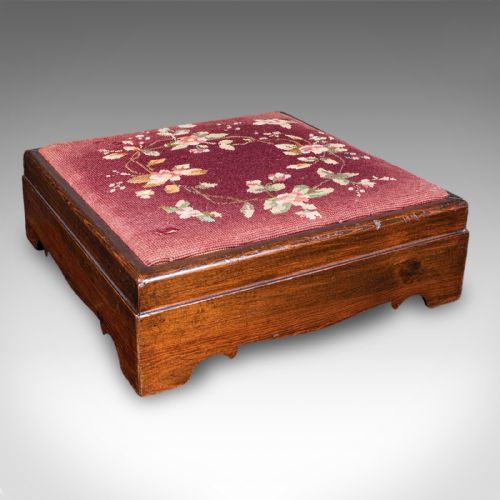


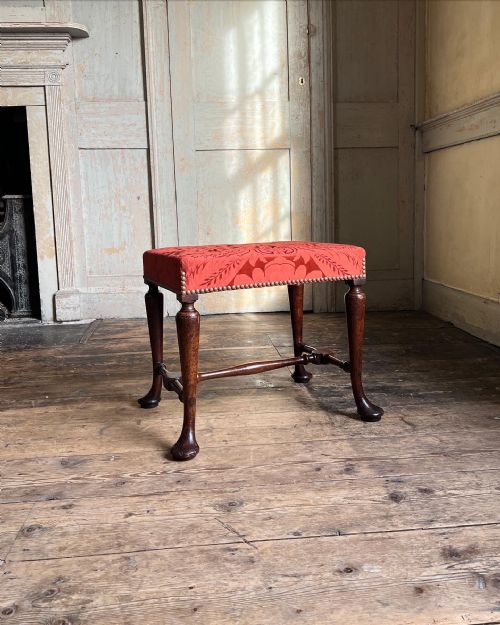

Padded Rectangular Footstool
These padded rectangular footstool examples bring period comfort to a room, offering low seating or a place to rest tired feet.
Padded Rectangular Footstool
A padded rectangular footstool serves as a practical addition to a seating arrangement, functioning both as a fireside companion and a dressing table seat. You will frequently encounter Victorian and 19th Century iterations alongside examples from the 18th Century and Edwardian periods.
The forms range from large country house ottomans and dressing table stools with cross stretchers to low stools fitted with brass castors. Materials span solid timbers like mahogany, rosewood, teak, pitch pine, walnut, and oak, often paired with woven rattan or upholstery.
Makers such as Howard and Sons contributed to this tradition, producing pieces that sit alongside unassigned vernacular workshop items. Styles stretch from George II and George III designs to English Country House, Anglo-Indian, and aesthetic influences.
How they were made
Carpenters constructed the wooden frames of a padded rectangular footstool using hardwoods such as mahogany, rosewood, and walnut, often shaping components with square tapering legs or carved details. Joinery techniques ensured structural stability for everyday use in domestic interiors.
Upholstery methods applied textiles, wool, tapestry, and modern or period fabrics over padding to create the cushioned top surface. Brass castors were frequently added to the feet of larger 19th Century examples to aid movement across carpets.
Listings feature timbers including mahogany, rosewood, teak, pitch pine, walnut, and oak across several centuries.
What varies in quality
The refinement of the timber framework and the precision of the carving dictate the baseline quality of a padded rectangular footstool. Pieces displaying crisp George II style carving or well-drawn walnut proportions from the 18th Century stand apart from simpler vernacular items.
Upholstery choices and the integrity of the underlying webbing and padding also influence the overall standard. Original brass castors and intact woven rattan panels add notable merit compared to later replacements.
Howard and Sons
The Padded Rectangular Footstool Glossary
- Cross stretcher
- An intersecting wooden brace set between the legs of a stool to provide structural reinforcement. This feature appears frequently on dressing table stools and period seating.
- Castor
- A small wheel fitted to the foot of a piece of furniture to allow easy rolling across floors. Brass examples are common on larger 19th Century footstools.
- Tapering leg
- A support column that narrows gradually toward the base, often seen on 18th century mahogany stools. This shaping lightens the visual weight of the timber.
- Ottoman
- A fully upholstered low seat or footstool lacking a backrest, often built on a large scale for country house drawing rooms. These pieces accommodate generous padding and diverse textile coverings.
- Rattan
- A slender climbing palm used in woven form for panels and seating inserts. It provides a light, textured contrast to solid timbers like teak.
Padded Rectangular Footstool: Frequently Asked Questions
Where should I place a footstool?
These items suit placement beside armchairs by the fireplace or in front of a sofa for leg support. They also function well as low dressing table seats in bedrooms.
Their compact height allows them to slide out of the way when not in use, keeping floor space open.
How do I care for the upholstery?
Vacuum textile and tapestry surfaces gently with a soft brush attachment to remove dust and debris. Protect antique fabrics from direct sunlight to prevent fading over time.
For newly upholstered examples, follow standard fabric care guidelines suited to the specific textile used.
Are these stools sturdy enough to sit on?
Most examples were built with solid hardwood frames designed for regular domestic weight capacity. However, older frames from the 18th Century require careful assessment of their joints before daily seating use.
Larger versions easily double as impromptu seats when hosting guests in a living room.
How do I identify a Victorian stool?
Victorian pieces frequently employ dense timbers like rosewood or mahogany alongside heavy padding and turned supports. The inclusion of brass castors points toward mid to late 19th century manufacturing habits.
Look for proportion and secondary wood choices that match documented workshop practices of the era.
What is an Anglo-Indian stool?
An Anglo-Indian piece reflects furniture made in India during the British colonial period, often combining local timbers with European forms. These items display distinct carving styles and decorative motifs not found in standard English country house pieces.
They bring an eclectic visual weight to traditional room schemes.