
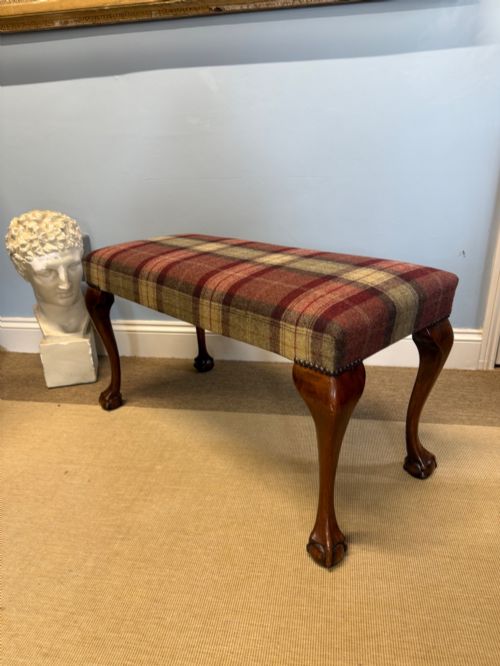
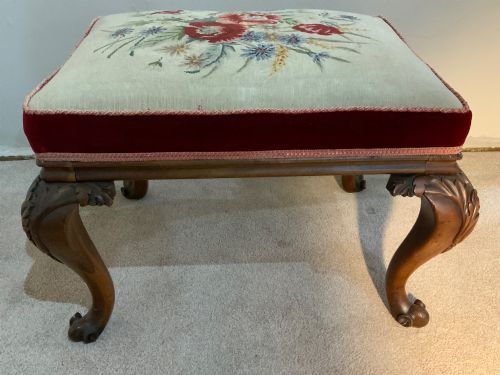

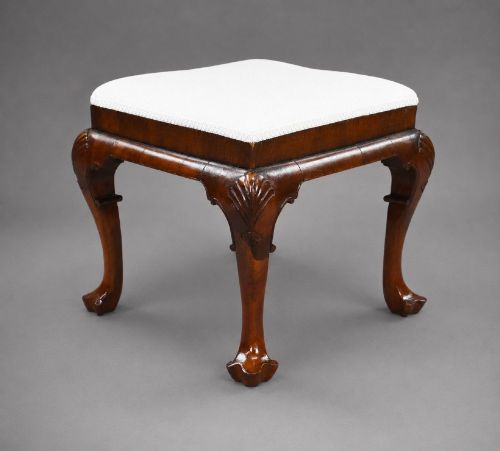
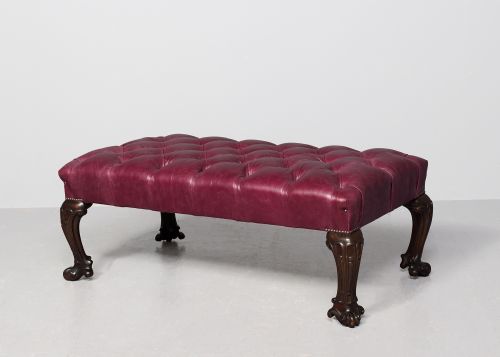
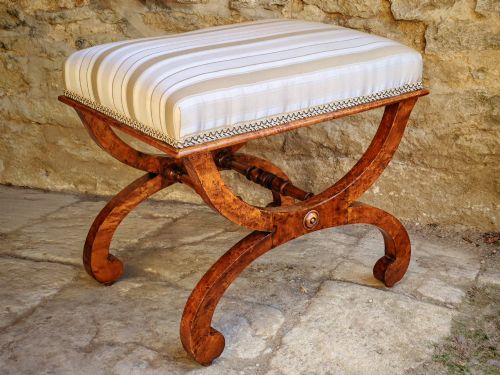


Georgian Style Upholstered Stool
A georgian style upholstered stool combines solid timber framing with traditional textile work to create a versatile seat for dressing rooms or living spaces.
Georgian Style Upholstered Stool
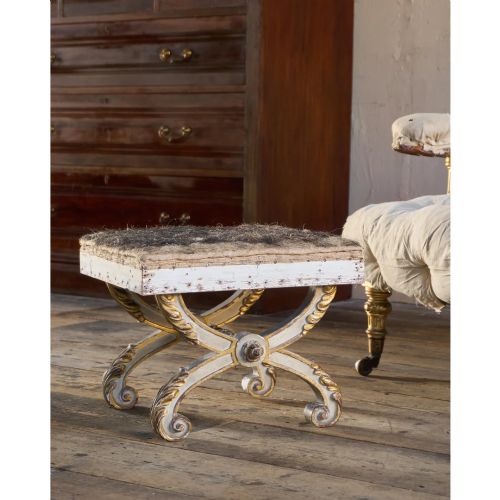
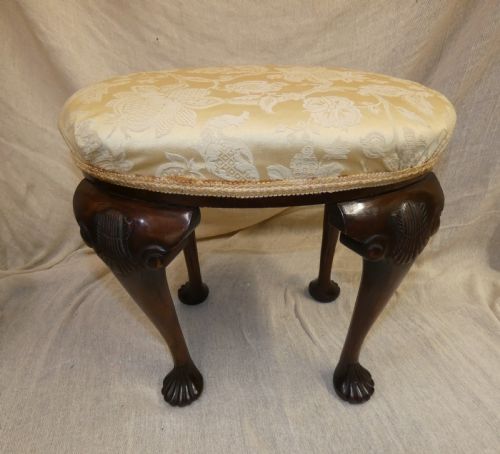
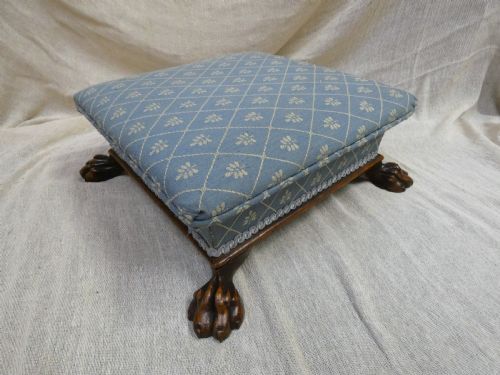
A georgian style upholstered stool appears in forms ranging from compact footstools and dressing table seats to long window benches and duet piano stools. Most examples on this page date from the nineteenth and early twentieth centuries, drawing on earlier eighteenth-century proportions and carving traditions.
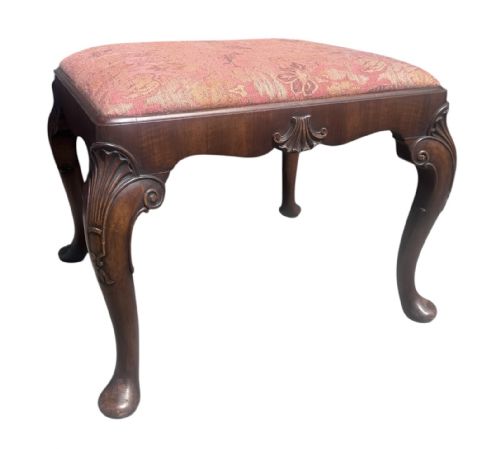
The selection includes rectangular frames, X-frame curule supports, and oval shapes, often resting on cabriole legs or straight stretchers. Buyers encounter variants dressed in hide, velvet, needlework, tapestry, and plain wool textiles.
How They Were Made
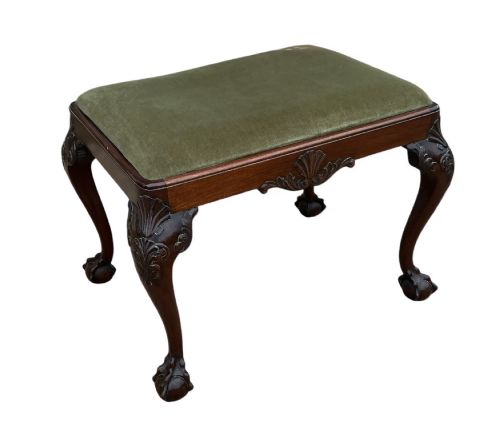
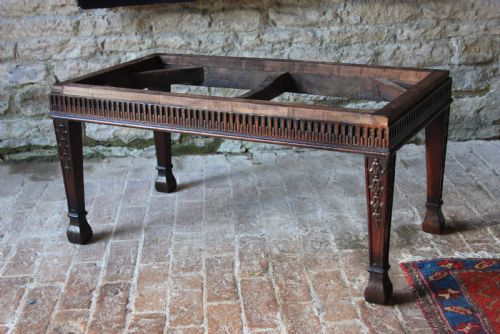
Cabinetmakers constructed the structural frames primarily from mahogany and walnut, occasionally utilising beechwood, burr maple, or giltwood for specific decorative schemes. Timber components frequently feature carved details, claw and ball feet, or cross stretchers to reinforce the legs.
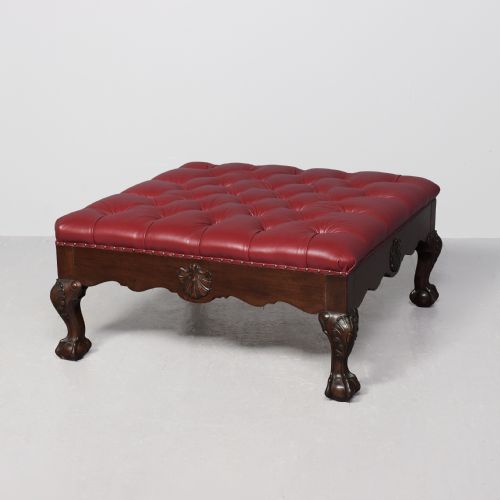
Upholstery techniques applied to these frames incorporate buttoned leather, hide, woven tapestries, and textile covers secured over padding. Brass tacks and careful stitching finish the perimeters where fabric meets wood.
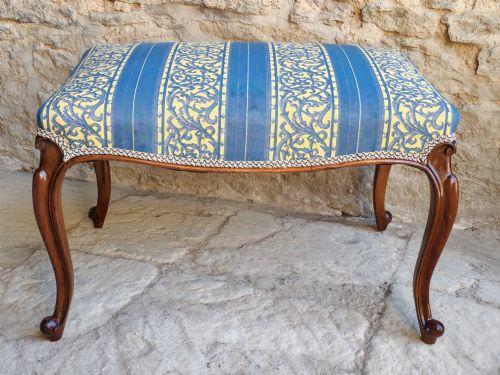
Form variations on this page include window seats, X-frame stools, gout footstools, and standard dressing benches.
What Varies in Quality
The distinction between standard production and top tier work rests on the crispness of the timber carving and the architectural balance of the frame. Robust joinery and dense, well-figured mahogany or walnut indicate superior cabinetmaking.
Upholstery execution also defines standard, with hand-stitched hides, buttoning, and traditional textile choices showing greater care than simpler modern recoverings. Original stretchers and undisturbed frame construction elevate individual pieces.
Miles & Edwards
The Georgian Style Upholstered Stool Glossary
- Cabriole leg
- A furniture leg that curves outward at the knee and tapers inward toward an ankle or foot. This form derives from classical traditions and appears frequently on walnut and mahogany seating.
- Cross stretcher
- Wooden rails connecting the lower legs of a stool to provide structural stability. They often intersect at the centre and may include decorative turning.
- Curule
- An X-shaped furniture support derived from ancient Roman magistrate seats. It creates a folding or cross-braced visual effect on decorative stools.
- Window seat
- A long stool or bench designed to sit within a window recess. These pieces often feature upholstered tops and elongated proportions.
- Tapestry
- A heavy woven textile featuring pictorial or geometric designs used for historic upholstery. It provides a textured, decorative surface on period frames.
Georgian Style Upholstered Stool: Frequently Asked Questions
How do I identify the period of a stool?
Examine the timber species, joinery methods, and secondary woods beneath the frame to determine age. Nineteenth-century revivals often copy eighteenth-century proportions closely, so tool marks and wear patterns provide the clearest clues.
Compare the turned elements and carving styles against known historical examples. Hardware, such as brass tacks or internal screws, also helps narrow down the manufacturing decade.
Can I use these stools daily?
Most antique stools are structurally robust enough for regular sitting when placed on level floors. Solid mahogany and walnut frames distribute weight effectively across the legs.
Avoid dragging heavy stools across carpets to protect the lower joints and foot blocks. Periodic checks of the stretcher connections keep the frame stable.
What is the difference between a footstool and a dressing stool?
Dressing stools typically stand higher off the floor to match the height of a vanity or dressing table. They often feature upholstered tops designed for extended sitting.
Footstools sit lower and are proportioned to support resting feet while seated in an armchair. Some variants include adjustable mechanisms or elongated benches for multiple users.
How should I care for hide upholstery?
Clean leather or hide surfaces gently with a dry or slightly damp cloth to remove surface dust. Avoid harsh chemical cleaners that strip natural oils from the skin.
Keep antique stools away from direct heat sources and strong sunlight to prevent the timber and leather from drying out. Periodic conditioning maintains the flexibility of vintage hide.