




Oval Writing Desk
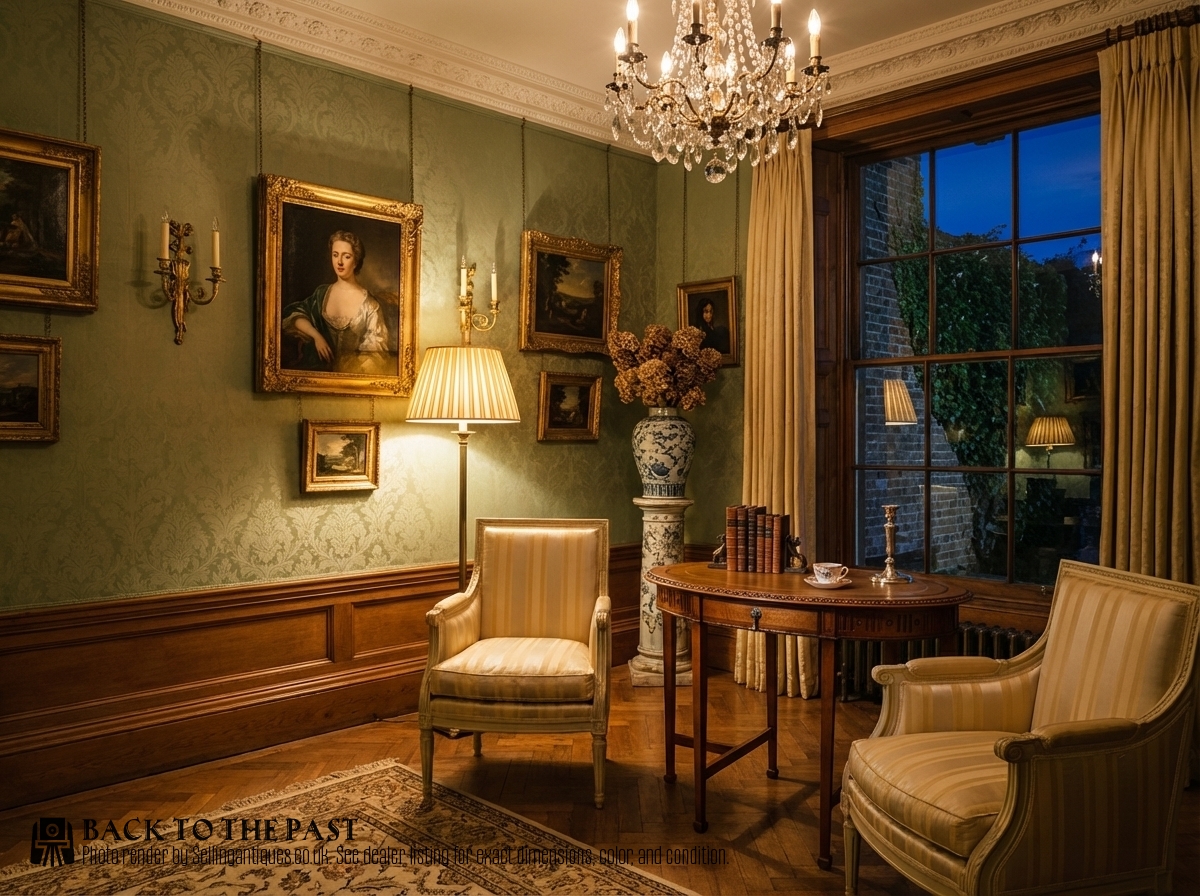
An oval writing desk offers a curved workspace that sits gracefully in the centre of a room rather than against a wall.
Oval Writing Desk
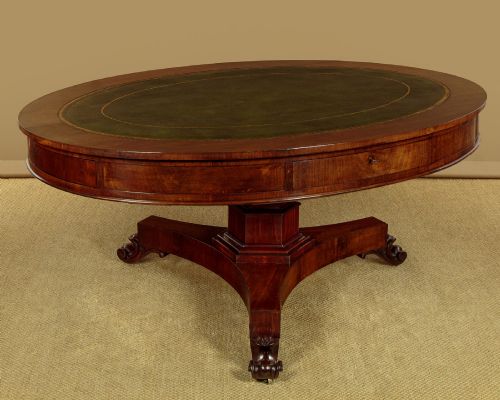
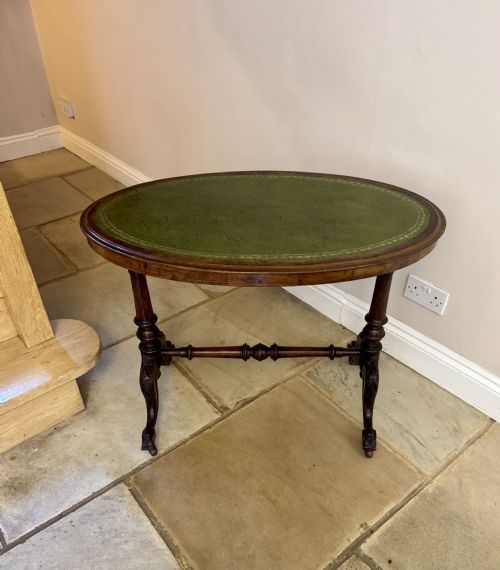
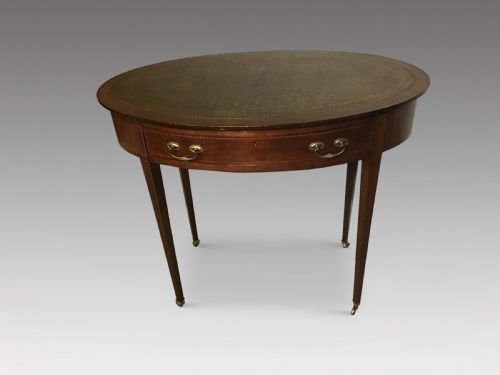
An oval writing desk provides a rounded surface designed for correspondence and study, often standing freely as a centre table. The examples recorded here span the Georgian, Victorian, and Edwardian periods, displaying distinct proportions and decorative treatments according to their era of origin.
Most pieces encountered on this page belong to the Victorian and Edwardian epochs, utilising mahogany, walnut, or burr walnut. Alongside dedicated writing tables, the selection includes library drum tables and occasional pieces adapted for similar domestic functions.
Makers of these tables employed classical geometric shapes to soften the lines of a traditional study or library. The absence of sharp corners gives an oval writing desk a lighter presence within a furnished interior.
Materials and construction
Cabinet makers constructed the primary carcase and legs from sturdy timbers such as mahogany, oak, walnut, or rosewood, often applying finer veneers like burr walnut or satinwood to the main surfaces. Inlaid borders in contrasting woods or boxwood frequently accentuate the curved perimeter of the top.
Writing surfaces characteristically feature inset panels of leather, sometimes decorated with gilt tooling around the edges. Brass fittings appear on drawers and castors, while specialised pieces incorporate satinwood inlay and hidden internal compartments.
Oval Writing Desk Retail Price Guide 2026
Typical asking prices for oval writing desk among the pieces listed under this phrase on Sellingantiques today, from the lower quarter to the upper quarter. They describe what is for sale here now, not the wider market.
Some tables hide secret rising compartments designed for confidential correspondence.
Assessing craftsmanship and finish
Quality in an oval writing desk reveals itself in the selection of timber veneers and the precision of any inlay work. Matched burr walnut or figured mahogany across a curved top requires considerable skill from the artisan.
The sophistication of the underframe, whether a pedestal base, a stretcher support, or tapering legs with brass castors, dictates the overall elegance. Superior examples maintain structural stability while preserving delicate proportions.
The Oval Writing Desk Glossary
- Burr walnut
- A figured timber obtained from the warted growths of walnut trees, prized for its swirling grain patterns on furniture surfaces.
- Drum table
- A circular or oval library table with a deep top containing drawers, typically supported on a central pillar and tripod base.
- Satinwood
- A durable, lustrous yellow-brown timber used extensively for fine stringing, banding, and decorative inlay work.
- Stretcher table
- A table featuring horizontal wooden bars connecting the legs near the base to provide additional structural rigidity.
- Secretaire
- A piece of furniture incorporating a writing drawer or drop-front desk compartment concealed behind a false drawer front.
Oval Writing Desk: Frequently Asked Questions
Where should I place an oval writing desk?
Because these pieces are finished on all sides, they are ideally positioned in the middle of a room rather than pushed flat against a wall.
Their curved profiles allow people to walk around them easily while maintaining a functional workspace in a library or study.
How do I care for the leather top?
The inset leather writing surface benefits from occasional cleaning with a slightly damp cloth and specialised leather dressing to prevent cracking.
Avoid placing damp items directly onto the leather and keep the desk away from direct heat sources to preserve the material.
Are these desks suitable for daily work?
Antique writing tables accommodate modern tasks such as laptop use or letter writing, provided you use appropriate care with the surface.
Consider the height and knee clearance beneath the drawer frames to ensure comfortable seating during extended periods of use.
How do I distinguish Victorian from Edwardian pieces?
Victorian examples often employ heavier timbers like rosewood or burr walnut with rich, dark patination and robust structural elements.
Edwardian pieces tend to show lighter mahogany construction, frequently accompanied by delicate satinwood inlay and more restrained proportions.