


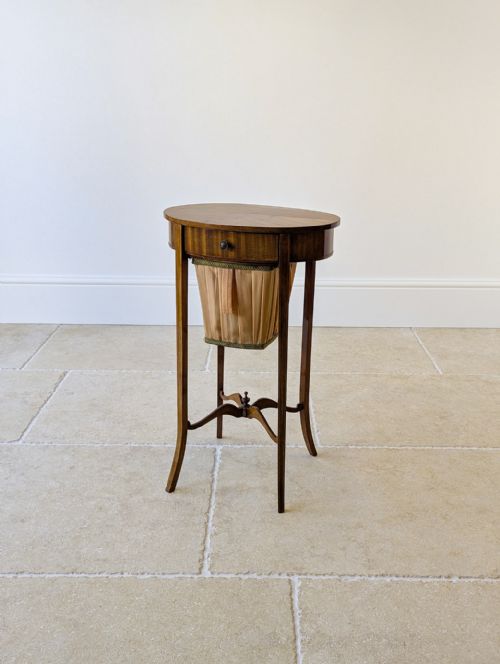

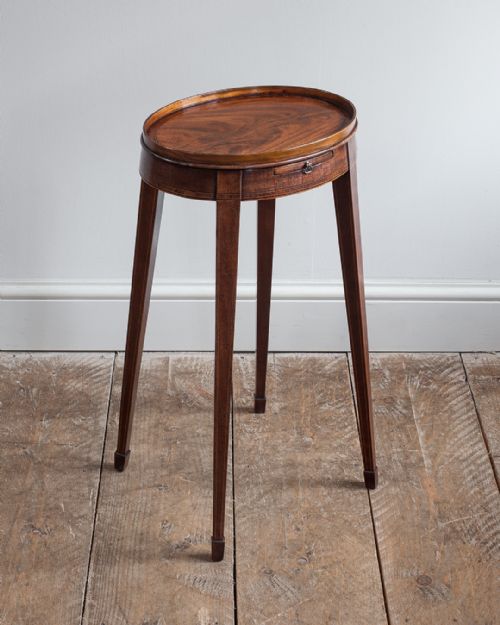


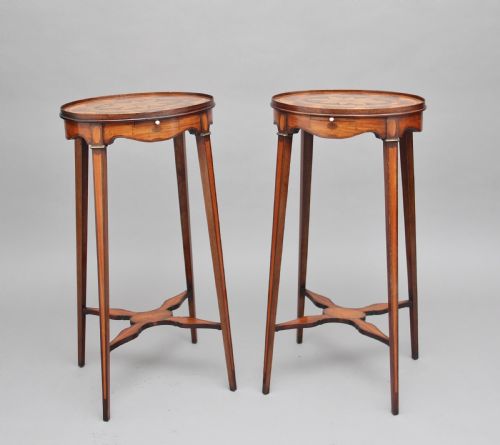
Oval Wooden Occasional Table
An oval wooden occasional table brings portable surface space to a room, offering warm timber grains and varied historical periods from Georgian to Edwardian.
Oval Wooden Occasional Table
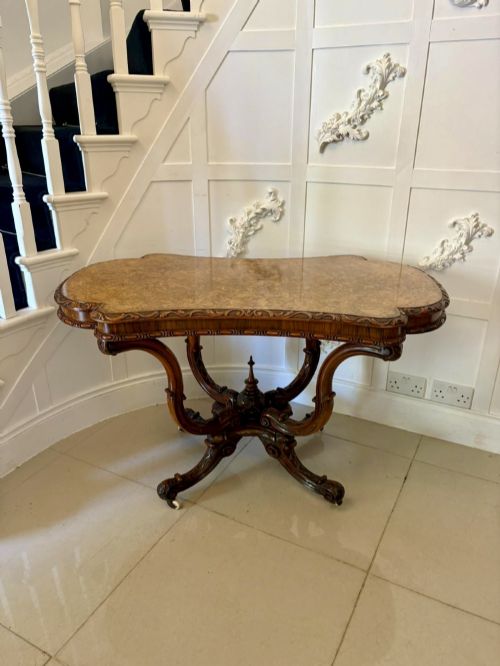
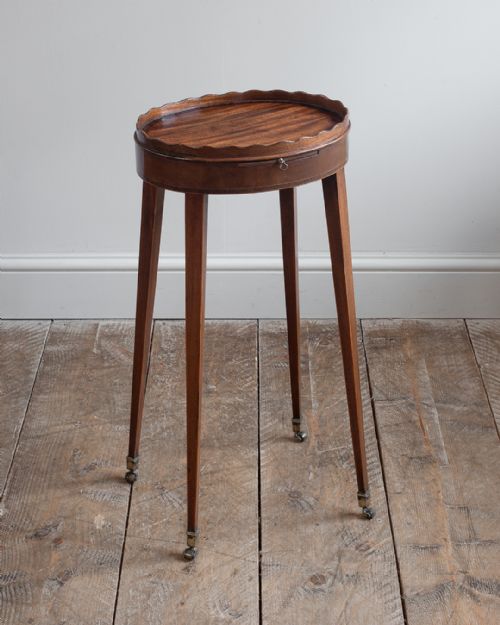
An oval wooden occasional table serves as a flexible surface for lamps, drinks, or display within a domestic interior. These pieces range from compact Edwardian side stands to larger Victorian centre tables and Georgian Pembroke forms.
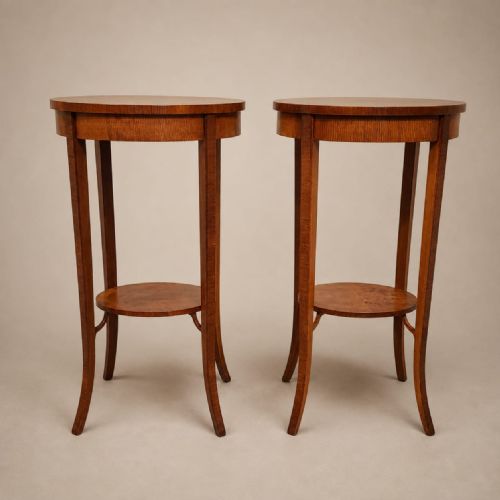
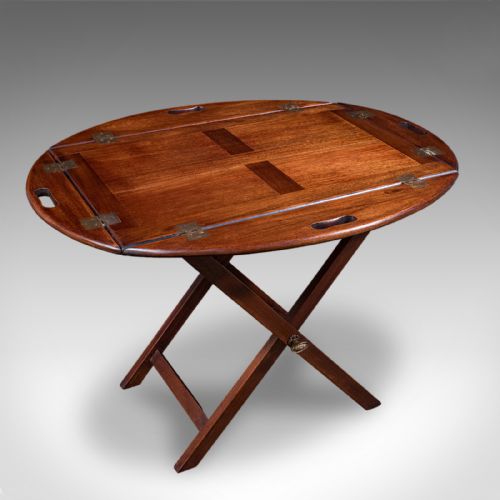
The form adapts easily to different rooms, functioning equally well beside a sofa or as a standalone display piece in a hallway. Variations include drop-flap serving stands, two-tier designs, and inlaid coffee tables.
Materials and construction methods
Cabinetmakers utilised solid hardwoods and decorative veneers, selecting mahogany, walnut, and oak for structural stability while employing burr walnut, satinwood, and rosewood for visual contrast on tabletops. Wood inlay and marquetry ornament many of the surfaces across nineteenth and twentieth-century examples.
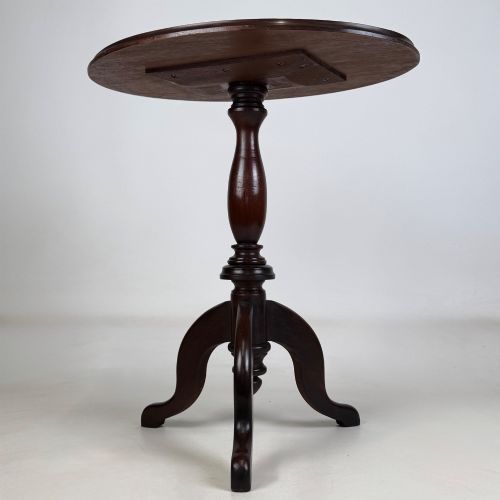
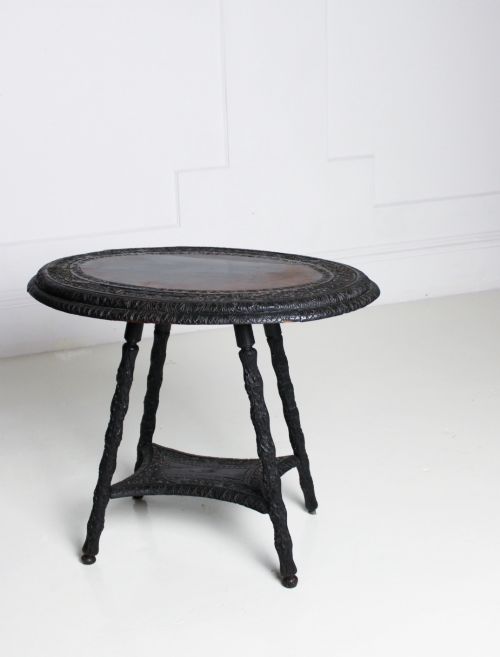
Structural framing often incorporates hand-carved bases, barley twist legs, or folding mechanisms depending on the specific type of table. Brass fittings appear on drop-flap Pembroke tables and tray stands to support functional folding or pivoting elements.
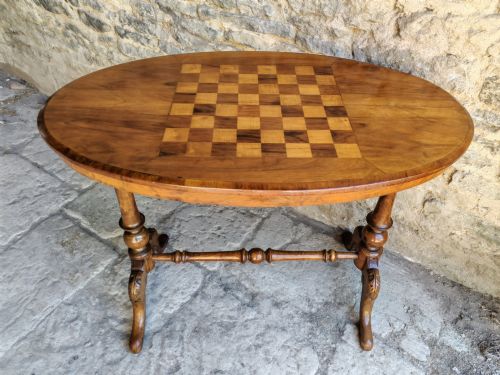
Some tables hide elaborate chessboards within their polished wooden tops, ready for an impromptu match.
Distinguishing quality factors
The standard of timber selection and veneer matching defines the visual appeal of a piece, particularly on inlaid satinwood or burr walnut surfaces where grain patterns are carefully composed. Finer examples display meticulous hand-carving on the bases and legs rather than cast or machine-reproduced ornamentation.
Structural integrity depends on the precision of the joinery in legs, aprons, and drop-flaps, ensuring the table remains stable in daily use without excessive movement in the joints.
The Oval Wooden Occasional Table Glossary
- Pembroke table
- A small rectangular or oval table with two hinged drop leaves on opposing sides. It typically includes one or more small drawers.
- Occasional table
- A small, movable table intended for specific, intermittent use rather than permanent placement. These items include lamp tables and wine stands.
- Centre table
- A freestanding table designed to be viewed from all sides, commonly placed in the middle of a room. Victorian examples often feature heavily carved walnut pedestals.
- Inlay
- A decorative technique where contrasting pieces of wood, brass, or other materials are inserted into recessed portions of the base timber. This creates pictorial or geometric patterns on the top.
- Urn stand
- A tall, slender table originally designed to hold a tea urn. They frequently feature elevated galleries or tray tops.
Oval Wooden Occasional Table: Frequently Asked Questions
How are oval wooden occasional tables used?
These tables provide convenient surfaces for lamps, books, or decorative objects next to seating arrangements. Their compact proportions allow them to fit easily into corners or beside chairs.
Drop-flap versions like Pembroke tables offer expandable surfaces for serving tea or drinks when guests visit. Two-tier and nest configurations add extra storage without increasing the floor footprint.
What periods do these tables cover?
The selection spans from the Georgian era through the Victorian period and into the Edwardian years and early twentieth century. Each era brings distinct proportions and decorative treatments.
Georgian and George III pieces often feature refined mahogany or satinwood with subtle banding. Victorian and Edwardian examples lean towards bolder burr walnut veneers, inlaid marquetry, and turned legs.
What is a nest of tables?
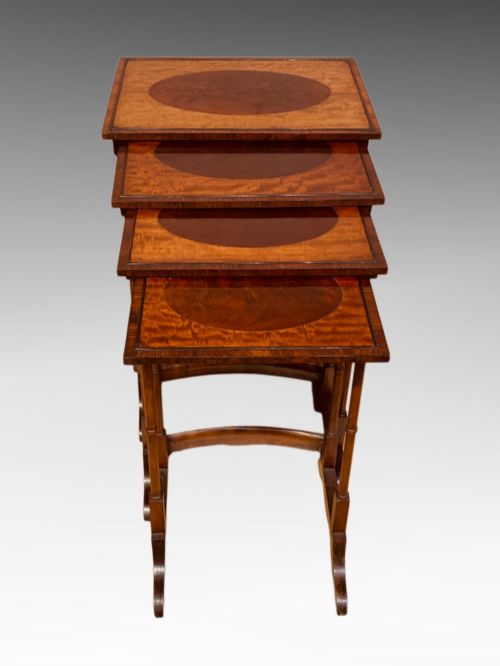
A nest consists of a set of graduating tables designed to slide neatly underneath the largest one when not in use. Edwardian makers produced many fine examples in inlaid mahogany.
This format offers multiple independent surfaces that can be distributed around a room for drinks or writing and stored compactly afterwards.