
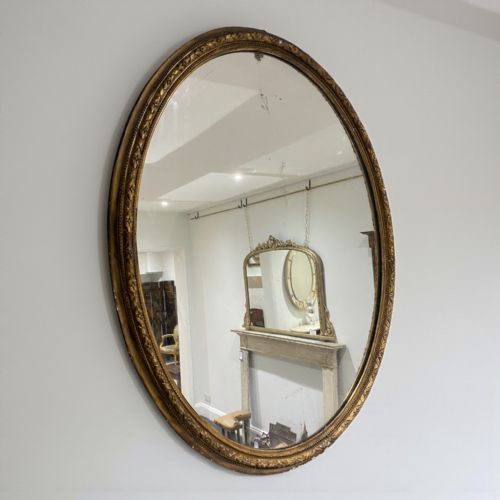
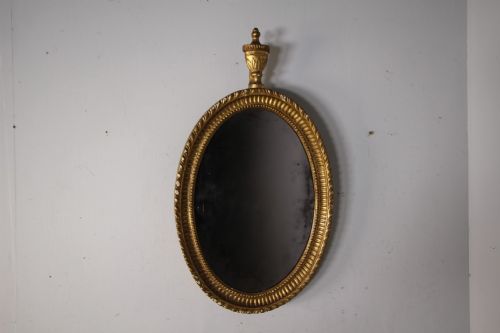
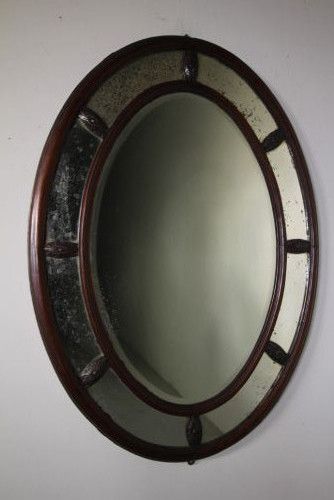
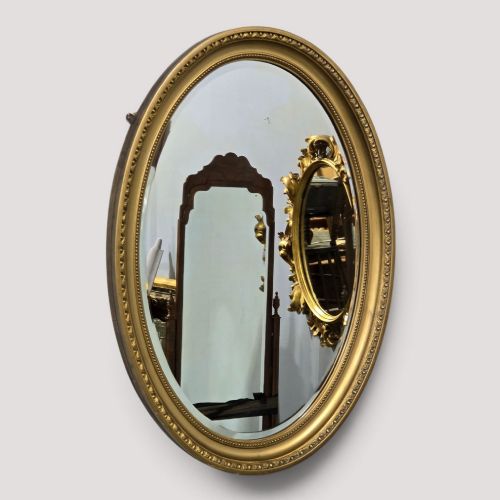
Oval Wall Mirror Frame
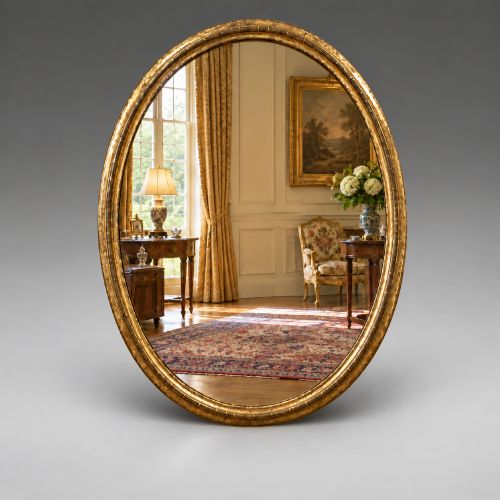
An oval wall mirror frame focuses light and softens a room, drawing the eye with curved timber or gilded ornament.
Oval Wall Mirror Frame
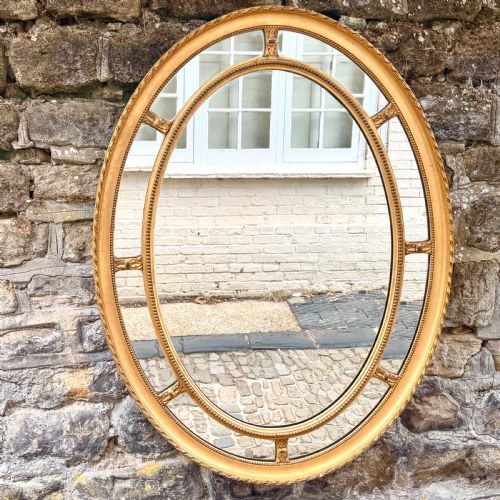
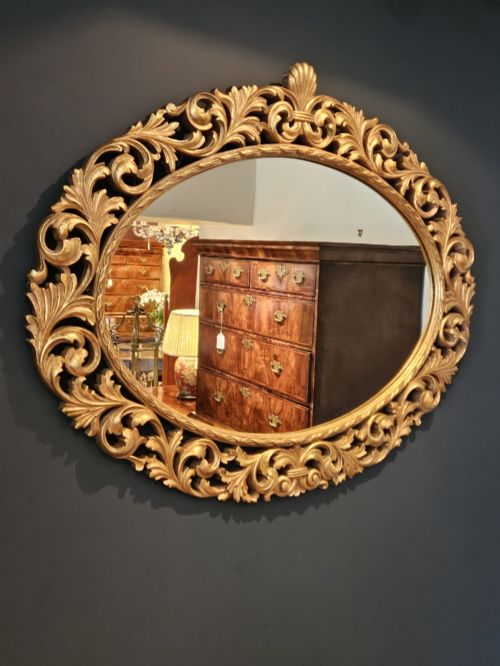
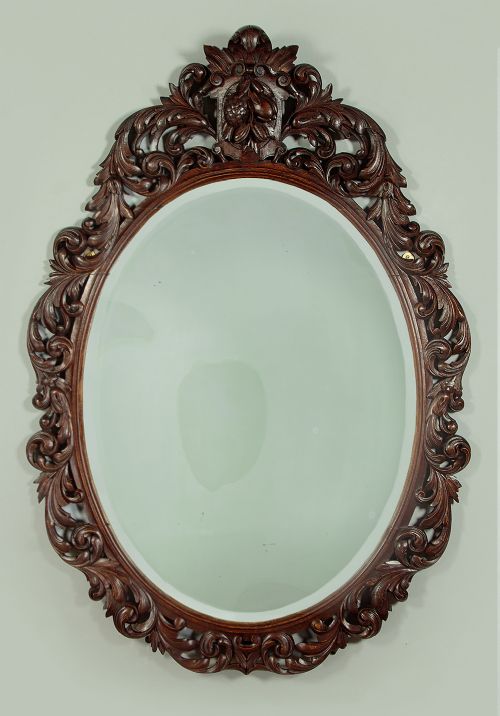
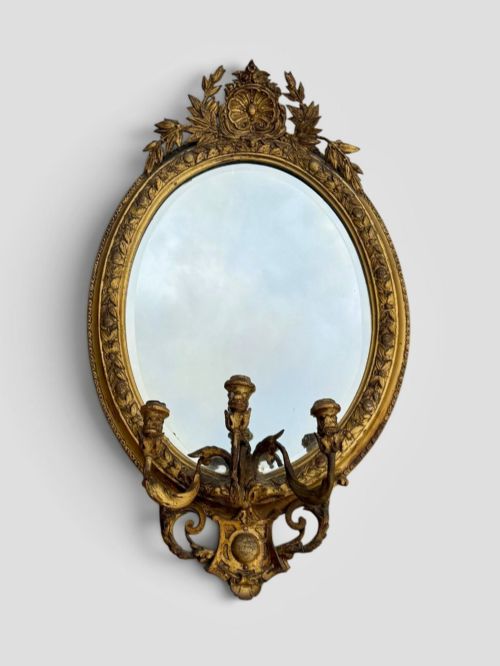
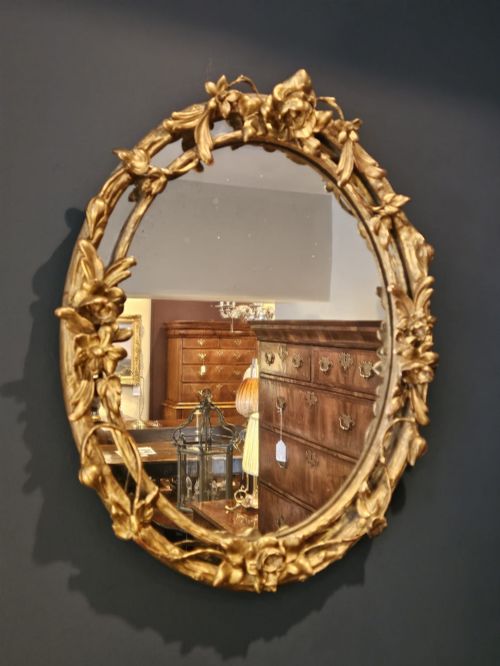
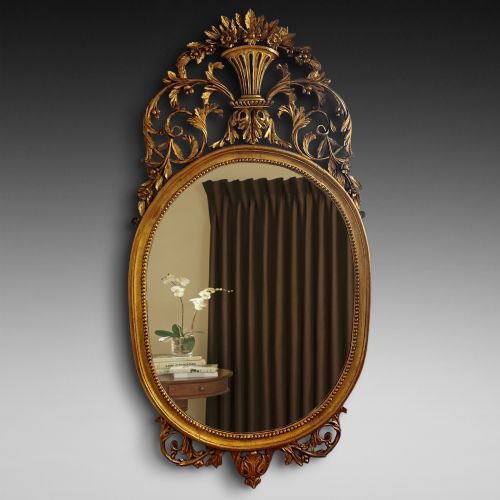
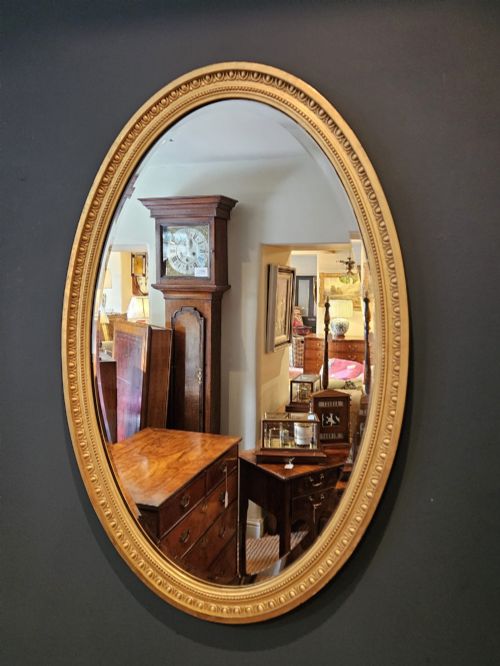
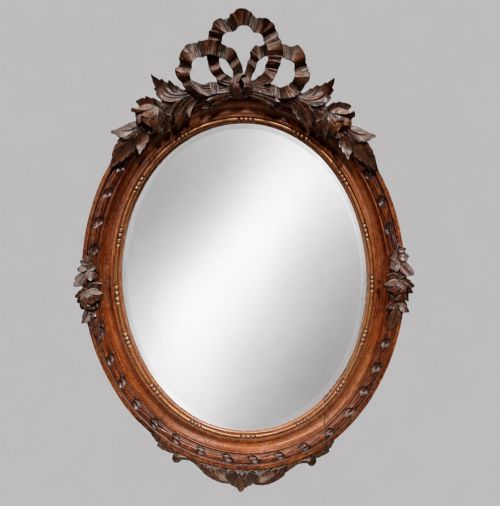
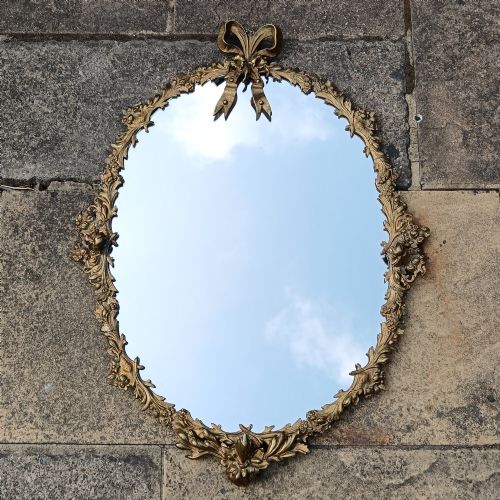
The oval wall mirror frame appears across Georgian, Victorian, and Edwardian periods in both domestic timber and ornate gilded finishes. Buyers seeking an oval wall mirror frame will encounter mahogany, oak, and carved softwood structures designed to hang vertically or horizontally in principal rooms. These pieces range from simple polished wooden rims to deeply moulded plaster and gesso compositions styled after French and English neoclassical models.
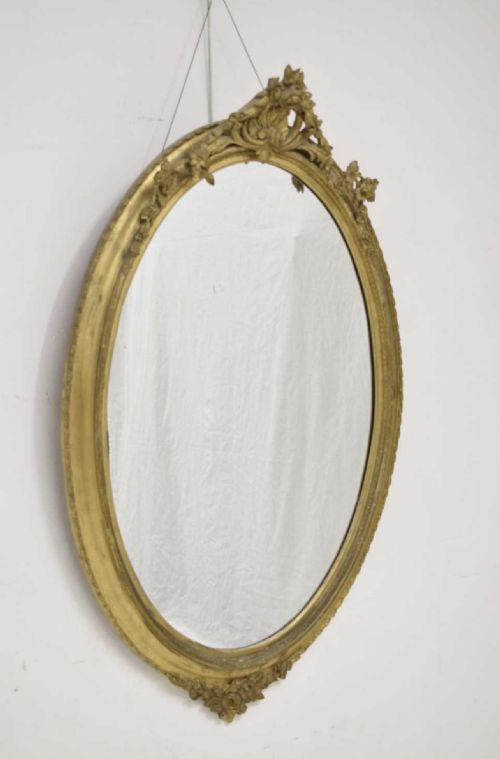
Country house mahogany and oak examples share space with French Chateau and Rococo Revival designs featuring elaborate floral and vine leaf motifs. Smaller boudoir pieces and large overmantel editions illustrate how varied these furnishings were in scale and intended placement. The selection moves between austere Edwardian borders and heavy Victorian gilt frames carrying substantial plaster relief work.
Materials and construction
Makers shaped structural carcases from solid mahogany, oak, and walnut, often joining segmented timber sections to form the curved perimeter. Carved wooden ornaments were pinned or glued directly to the wooden foundation before finishing.
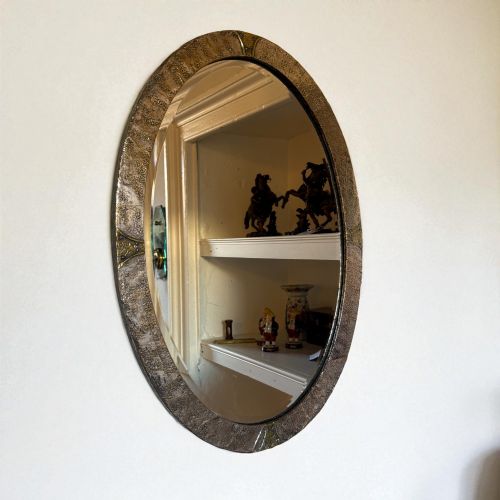
Gilded surfaces relied upon layers of gesso applied over wood or plaster, which were then gilded with gold leaf or painted. Copper, brass, and bronze mounts also appear, alongside specialised painted floral treatments on silk or wood.
Makers occasionally hid painted silk scenes inside carved wooden borders, offering a secret garden view alongside the reflection.
Judging quality and craftsmanship
The distinction between ordinary and superior examples lies in the depth and sharpness of the hand carving within the timber or gesso. Crisp undercut foliage and well-defined moulding reflect a high standard of workshop execution, whereas soft, blurred relief indicates mass production or heavy over-painting.
Original mercury plates and untouched gilding with natural patination elevate a piece above later replacements. The integrity of the wooden joints and the weight of the backing boards further distinguish superior historical items from later reproductions.
Liberty and Co
The Oval Wall Mirror Frame Glossary
- Gesso
- A plaster-like mixture applied to wood surfaces to create a smooth base for gilding or painting. It allowed craftsmen to mould intricate relief decoration around the frame.
- Giltwood
- Timber that has been coated with gold leaf. This material defines the luxurious appearance of many formal 18th and 19th-century mirrors.
- Girandole
- A decorative wall mirror featuring attached candle sconces. The candle flames reflected brightly in the glass to increase ambient illumination.
- Parcel-gilt
- A finish where only specific carved details are highlighted in gold leaf against a contrasting painted or dark wood background. This technique accentuates particular motifs on the frame.
- Overmantel
- A large mirror designed to hang directly above a fireplace mantelpiece. These substantial pieces frequently utilise horizontal or grand vertical oval formats.
Oval Wall Mirror Frame: Frequently Asked Questions
Can I place an oval wall mirror in a bathroom?
Humidity from bathrooms can damage antique gesso, degrade silvering on older glass, and cause wooden frames to warp. It is generally better to keep these pieces in dry living areas, hallways, or bedrooms.
If placed in a damp environment, moisture seals and careful ventilation are essential to protect the historic materials. Regular monitoring prevents permanent deterioration of the finish.
How do I clean an antique gilt frame?
Dusting gently with a soft, dry artist's brush removes surface particles without disturbing delicate gesso or gold leaf. Avoid liquid cleaners, chemical sprays, and abrasive cloths entirely.
Water and commercial solvents strip original gilding and soften historical plaster. Professional conservators should handle any deep cleaning or repairs to damaged sections.
What indicates a Georgian period mirror?
Georgian pieces often feature precise mahogany carpentry, carved giltwood with symmetrical scrollwork, or authentic fret-cut silhouettes. The timber construction methods and hand-beveled glass plates reflect 18th-century workshop standards.
Examining the backboards and fixings helps confirm the period of manufacture. Hand-cut screws and aged pine backing boards typically accompany genuine Georgian examples.