
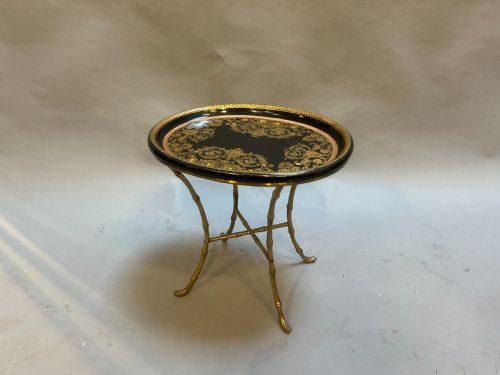

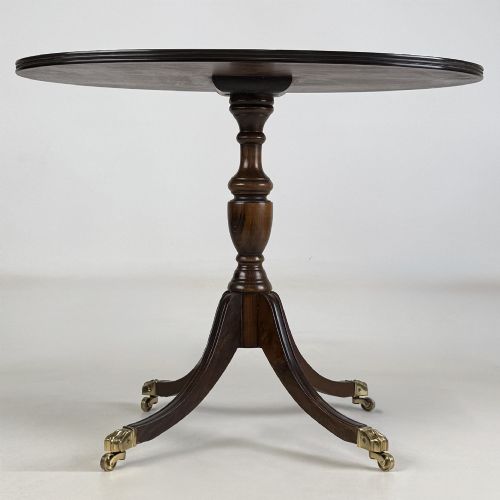
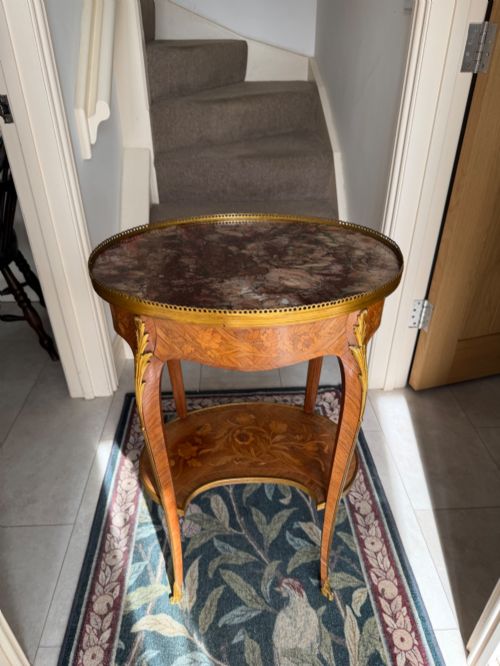
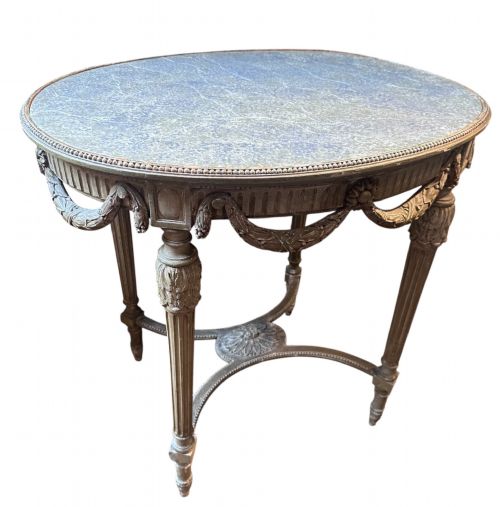


Oval Top Accent Table
These oval top accent table pieces span the Victorian, Edwardian, and earlier periods, offering versatile small surfaces crafted in mahogany, walnut, and marble.
Oval Top Accent Table
An oval top accent table brings a softer silhouette to a room than traditional square or rectangular pieces, functioning readily as a lamp table, side table, or occasional surface.
The selection ranges from Victorian burr walnut and Edwardian oak designs to French Louis XVI style and Regency revival pieces, spanning the eighteenth, nineteenth, and early twentieth centuries.
Formats include tripod tables, wine tables, nesting sets, and window tables, alongside more specialised display and night tables.
Materials and Construction
Cabinet makers utilised timbers such as mahogany, walnut, burr walnut, oak, and kingwood, frequently incorporating detailed inlays and figuration into the timber grain.
Surface treatments combine hand-carved foliate details, giltwood, and painted finishes with inset marble slabs or tray tops.
Ormolu mounts and brass elements appear on continental examples, particularly those following French Louis XVI and Italian rococo styles.
Materials recorded across the inventory include mahogany, walnut, burr walnut, oak, brass, ormolu, marble, and painted wood.
Assessing Quality and Execution
Quality rests upon the selection of timbers, where highly figured burr walnut, rosewood, or matched mahogany veneers elevate a piece.
The precision of hand-carved foliate ornament, the integration of inlaid details, and the weight and finish of marble inserts or ormolu mounts mark the distinction between standard production and superior craftsmanship.
The Oval Top Accent Table Glossary
- Ormolu
- Gilded bronze mounts applied to furniture, commonly seen on French and continental pieces of the nineteenth century. The technique provides a bright metallic contrast to dark woods.
- Bijouterie table
- A glass-topped display table designed to showcase small decorative objects, medals, or jewellery. These pieces often lift open or feature hinged glazed lids.
- Tripod table
- A freestanding small table supported by a central pillar resting on three legs. This form gained popularity during the eighteenth century and persists into later periods.
- Tray top
- A table top finished with a raised rim or gallery designed to prevent items from sliding off. This feature appears on mahogany and occasional tables.
Oval Top Accent Table: Frequently Asked Questions
Where should I place an oval top accent table?
These tables fit easily beside seating arrangements as lamp or wine tables, where their curved edges soften room layouts.
Smaller formats such as tripod or nesting tables also serve well in corners or occasional spaces.
How do I identify a Victorian oval table?
Victorian pieces often display rich timbers like walnut, burr walnut, and mahogany, frequently accompanied by hand-carved foliate details.
Many examples from this era date between the mid-nineteenth century and the late eighteen-nineties.
What is the difference between an occasional table and a centre table?
Occasional tables are typically smaller, lighter pieces designed to be moved easily around a room as needed.
Centre tables are traditionally larger, more substantial pieces meant to stand independently in the middle of a space.
Are marble topped tables difficult to maintain?
Marble surfaces require basic care to prevent staining from acidic liquids, utilising coasters and gentle cleaning methods.
These stone tops offer durability and coolness to the touch, frequently appearing on French and Italian revival pieces.