





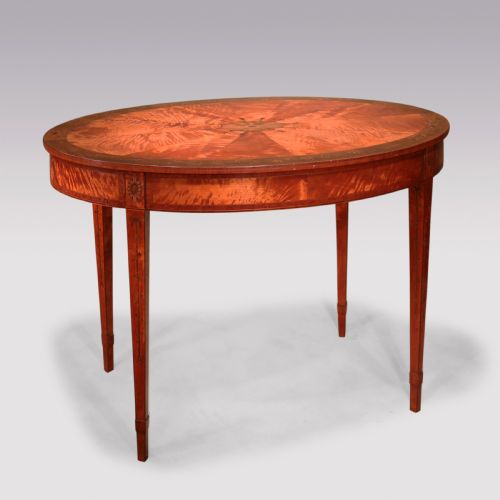
Oval Satinwood Centre Table
An oval satinwood centre table brings luminous grain and graceful curves to a room, offering a functional surface rooted in Georgian and revival craftsmanship.
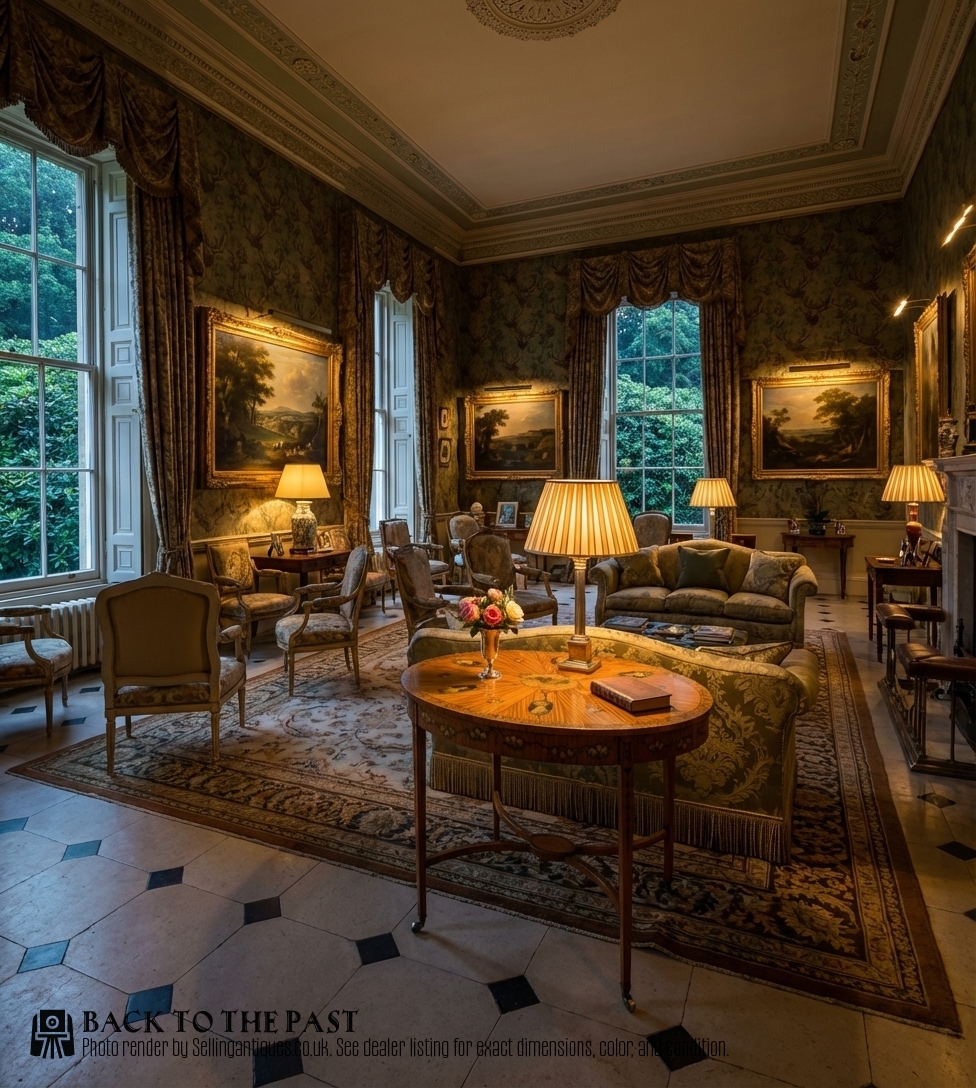
Oval Satinwood Centre Table
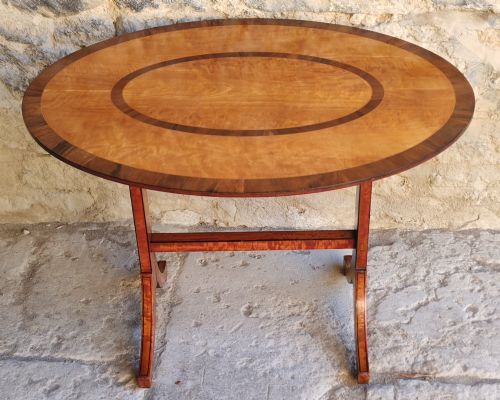
An oval satinwood centre table is a freestanding piece designed to sit proudly in the middle of a room, showcasing timber with a natural golden sheen and gentle iridescence. These tables span several periods, drawing heavily on eighteenth-century aesthetics through nineteenth-century revivals and Edwardian interpretations.
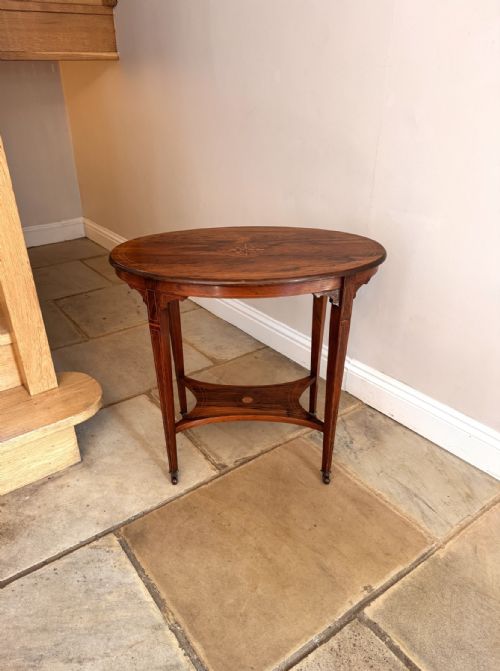
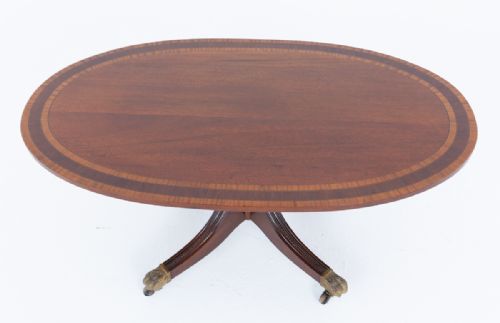
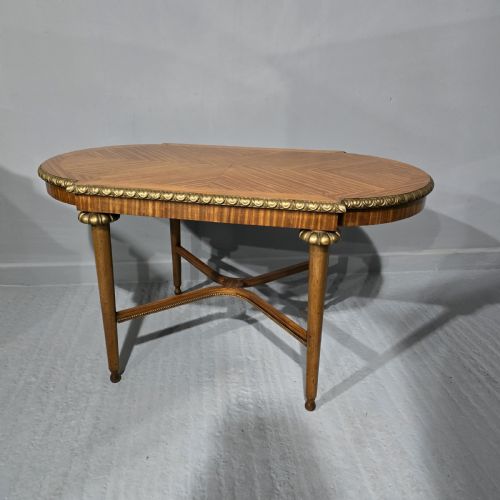
The pieces on this page appear predominantly as centre tables, occasional tables, and coffee tables, alongside occasional dining and breakfast formats. Buyers will frequently encounter Sheraton Revival and Edwardian examples featuring delicate inlays, alongside occasional nineteenth-century Swedish birch or French pieces.
Construction forms vary from single-tier occasional tables to two-tier designs and larger breakfast or dining formats. Each piece utilises the natural warmth of satinwood, often contrasted with darker banding, to create a striking visual focal point.
What varies in quality
Quality in an oval satinwood centre table rests on the selection of the timber and the precision of its grain matching across the top. Superior examples display carefully chosen figured veneers with a rich, uniform lustre rather than flat or dull surfaces.
The refinement of the inlay work and the crispness of any painted decoration separate standard production from finer cabinet work. Structural integrity, including the stability of the central pillar or leg assembly and the retention of original brass hardware, also defines the tier of the piece.
Oval Satinwood Centre Table Retail Price Guide 2026
Typical asking prices for oval satinwood centre table among the pieces listed under this phrase on Sellingantiques today, from the lower quarter to the upper quarter. They describe what is for sale here now, not the wider market.
Listings feature periods spanning the eighteenth century through the Edwardian era, incorporating materials such as satinwood, mahogany, satin birch, and boxwood.
The Oval Satinwood Centre Table Glossary
- Satinwood
- A hard, durable timber with a natural golden sheen and a lustrous, light-reflecting grain. It was favoured by eighteenth-century makers and later revivalists for high-status cabinet work.
- Sheraton Revival
- A late nineteenth and early twentieth-century design movement inspired by the neoclassical furniture of George Sheraton. It is characterised by slender proportions, satinwood veneers, and delicate inlay.
- Marquetry
- The art of applying small pieces of veneer to a structure to form decorative patterns or pictures. It often incorporates contrasting timbers such as boxwood and rosewood.
- Occasional table
- A small, movable table intended for specific, intermittent uses rather than permanent placement. These forms became particularly popular during the Edwardian period.
- Stringing
- A thin, linear inlay of contrasting wood used to outline panels, drawers, or table tops. It defines the edges of geometric designs on satinwood surfaces.
Oval Satinwood Centre Table: Frequently Asked Questions
Where should I place an oval table?
An oval satinwood centre table naturally suits the middle of a drawing room or a spacious hallway where it can be viewed from all sides. Its curved shape softens the geometry of a room while providing a practical surface for lamps or display.
Because these tables are freestanding, ensure there is adequate walking space around the perimeter. Pairing the piece with low seating allows the proportions of the table top to remain visible.
How do I care for satinwood?
Satinwood requires gentle treatment to preserve its polished finish and prevent the timber from drying out. Dust the surface regularly with a soft, dry cloth and avoid using harsh chemical sprays.
Keep the table away from direct sunlight and strong heat sources, which can fade the light wood and cause the veneer to lift. Apply a quality beeswax periodically to maintain the lustre of the grain.
How do I identify the period?
Dating an oval satinwood centre table involves examining the secondary timbers underneath, the style of the leg turned work, and the execution of any inlay. Edwardian and Sheraton Revival pieces often feature machine-sawn elements and lighter secondary woods like birch.
Earlier eighteenth-century and genuine George III examples display hand-cut joinery and heavier native hardwoods beneath the veneer. Reviewing the specific revival movements represented in the design helps narrow down the decade of manufacture.
What is a two-tier table used for?
A two-tier centre or occasional table provides an additional lower shelf for storage or display. In Edwardian interiors, these lower surfaces held books, magazines, or small decorative objects.
The extra shelf also added structural rigidity to the table frame while offering a secondary display area without increasing the overall footprint of the piece.