


Oval Oak Mirror
An oval oak mirror brings warmth and solid timber grain to a wall, taking many forms from simple Edwardian frames to heavily carved Victorian revival pieces.
Oval Oak Mirror
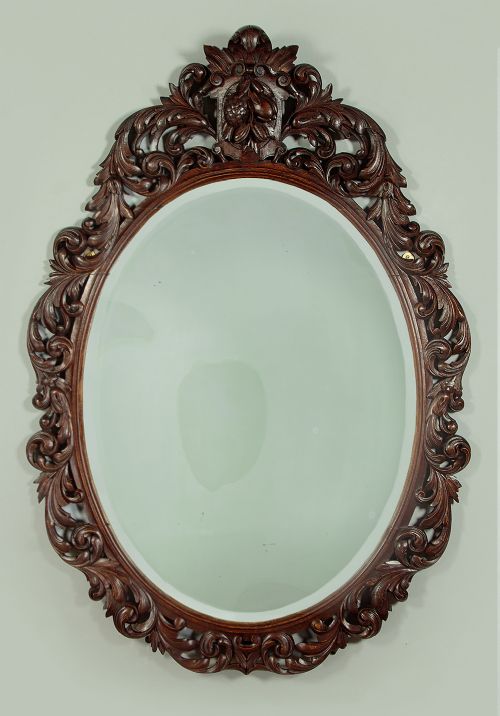
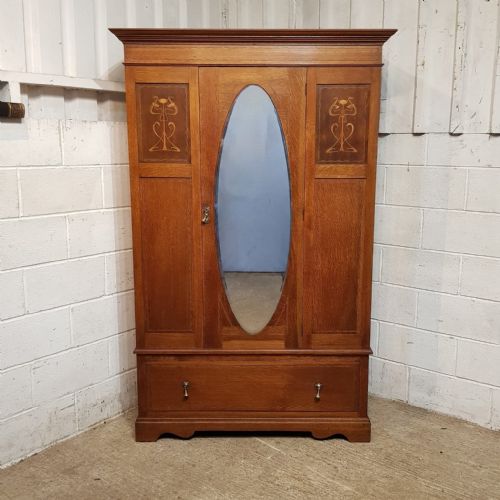
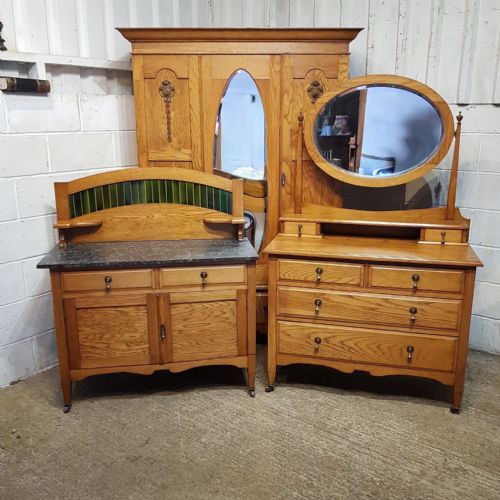
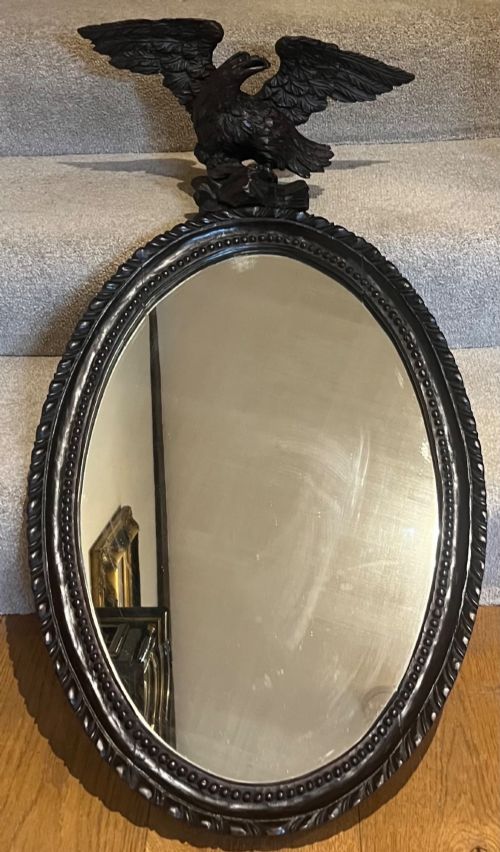
When you search for an oval oak mirror, you encounter pieces spanning the late nineteenth century through to the nineteen-twenties. The selection encompasses dedicated wall-hanging frames, components of larger dressing tables, and wardrobe doors fitted with glass.
Most examples date from the Edwardian period or the early twentieth century, reflecting a time when domestic interiors favoured sturdy timber furnishings. These pieces appear as simple, clean-lined frames as well as elaborately carved revival styles.
Beyond standalone wall mirrors, the search reveals mirrors integrated into larger bedroom suites, sideboards, and wardrobes. Buyers primarily seek the versatile shape of an oval glass paired with the distinct grain of oak timber.
How they were made
Makers constructed these frames using solid oak, frequently employing bentwood techniques or steam-moulding to achieve the curved oval shape. Joinery often involved secured corners or solid wood backings to support the weight of the timber and glass.
Glass panels were predominantly bevelled along the edges to catch the light, fitted securely behind the wooden rebate. Hardware typically included brass fixings, chains, or metal brackets for wall suspension.
Carving was executed by hand on many Victorian and revival pieces, displaying motifs such as leaves or geometric patterns directly into the oak. Simpler Edwardian versions relied on the natural figure of the timber rather than applied ornamentation.
Listings demonstrate that oval oak mirrors span the late nineteenth century through to the nineteen-twenties, incorporating Arts and Crafts, Edwardian, and various revival styles.
What varies in quality
Quality in these mirrors rests upon the selection of the timber and the depth of the woodwork. Superior examples feature quarter-sawn oak with prominent medullary rays, whilst lesser pieces utilise plain-sawn boards with less visual character.
The execution of the frame's curve and joint construction dictates structural integrity. Finely made mirrors exhibit seamless joins and substantial depth, avoiding the thin, flat framing strips found in mass-produced alternatives.
The quality of the mirror plate itself distinguishes better pieces, as original bevelled glass displays clarity and substantial thickness. Later replacements or lower-grade glass often lack the depth and distorted reflection characteristic of period plates.
A Lundmark·Heals
The Oval Oak Mirror Glossary
- Bevelled glass
- Glass with an angled edge ground down to a thinner perimeter. This technique catches light and adds a decorative dimension to the mirror face.
- Quarter-sawn oak
- Timber cut radially from the log, revealing distinctive medullary rays. This method produces a stable board with highly decorative grain patterns.
- Carolean style
- A decorative revival style drawing on seventeenth-century motifs. It frequently incorporates rich carving, scrollwork, and bold turning.
- Arts and Crafts
- A movement prioritising traditional craftsmanship and honest materials. Pieces from this tradition avoid excessive ornamentation in favour of structural simplicity.
- Overmantle
- A large mirror designed to hang specifically above a fireplace mantel. These pieces often feature extended proportions to suit domestic hearths.
Oval Oak Mirror: Frequently Asked Questions
How do I hang a heavy oak mirror safely?
Heavy oval oak mirrors require secure wall fixings suited to the weight of the solid timber and glass. Utilise appropriate wall plugs and screws directly into masonry or wall studs rather than plasterboard alone.
Ensure the hanging wire or integrated metal brackets on the reverse are robust and properly secured to the wooden frame before mounting.
How do I clean and maintain antique oak frames?
Maintain the oak frame by dusting regularly with a soft, dry cloth to prevent dirt accumulation in the grain. Apply a quality beeswax periodically to nourish the timber and preserve the natural sheen.
Avoid using harsh chemical sprays or excess water on the wood, as moisture damages both the antique finish and the backing boards.
Are the mirror plates usually original?
Many surviving pieces retain their original bevelled glass plates, which often display minor age spots or foxing. These natural imperfections confirm the age of the piece and add to its historical character.
Some mirrors have undergone glass replacement over the decades if the original plate suffered breakage, which can be identified by the absence of historical wear.
What rooms suit an oval oak mirror best?
An oval oak mirror suits hallways, living rooms, and bedrooms, where the curved frame softens straight architectural lines. Smaller wall-hanging versions function well above chest of drawers or console tables.
Larger overmantle styles anchor a room above a fireplace, reflecting light and creating a sense of increased space.