


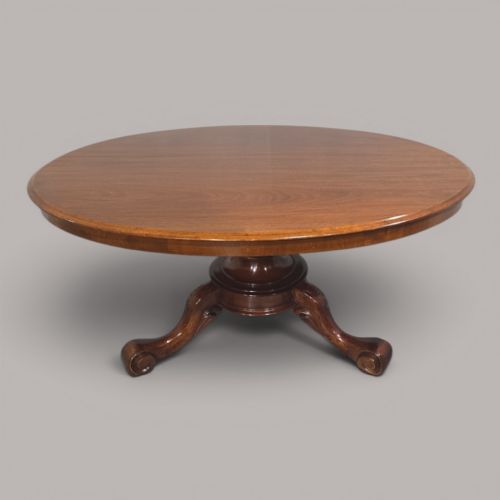
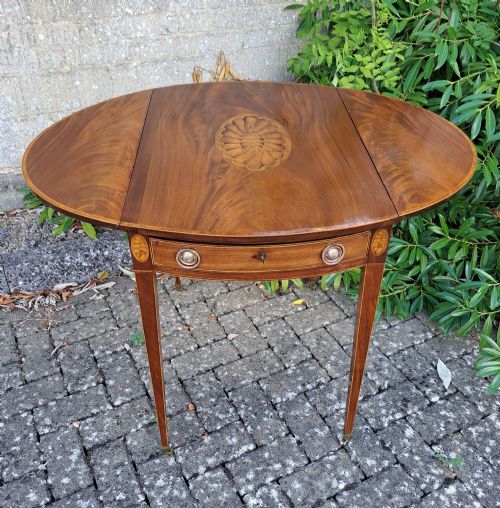
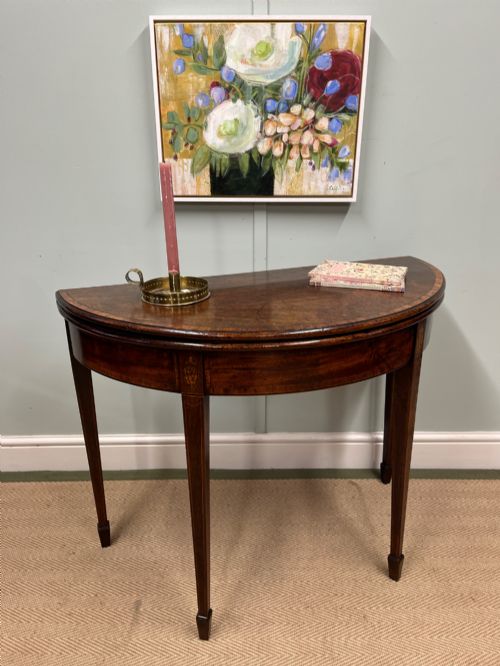
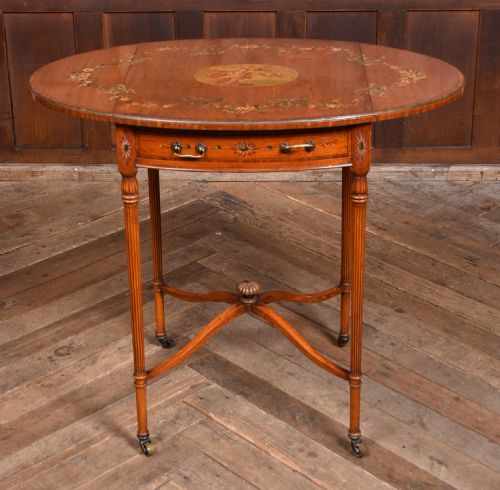
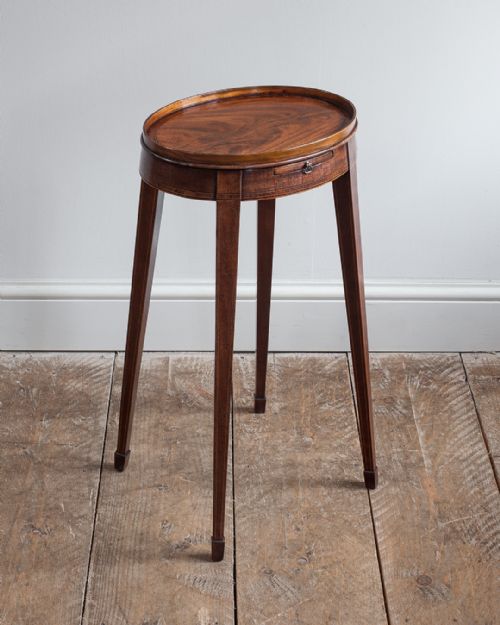

Oval Mahogany Tea Table
An oval mahogany tea table brings a refined curve to a room, offering a functional surface rooted in centuries of fine cabinet-making.
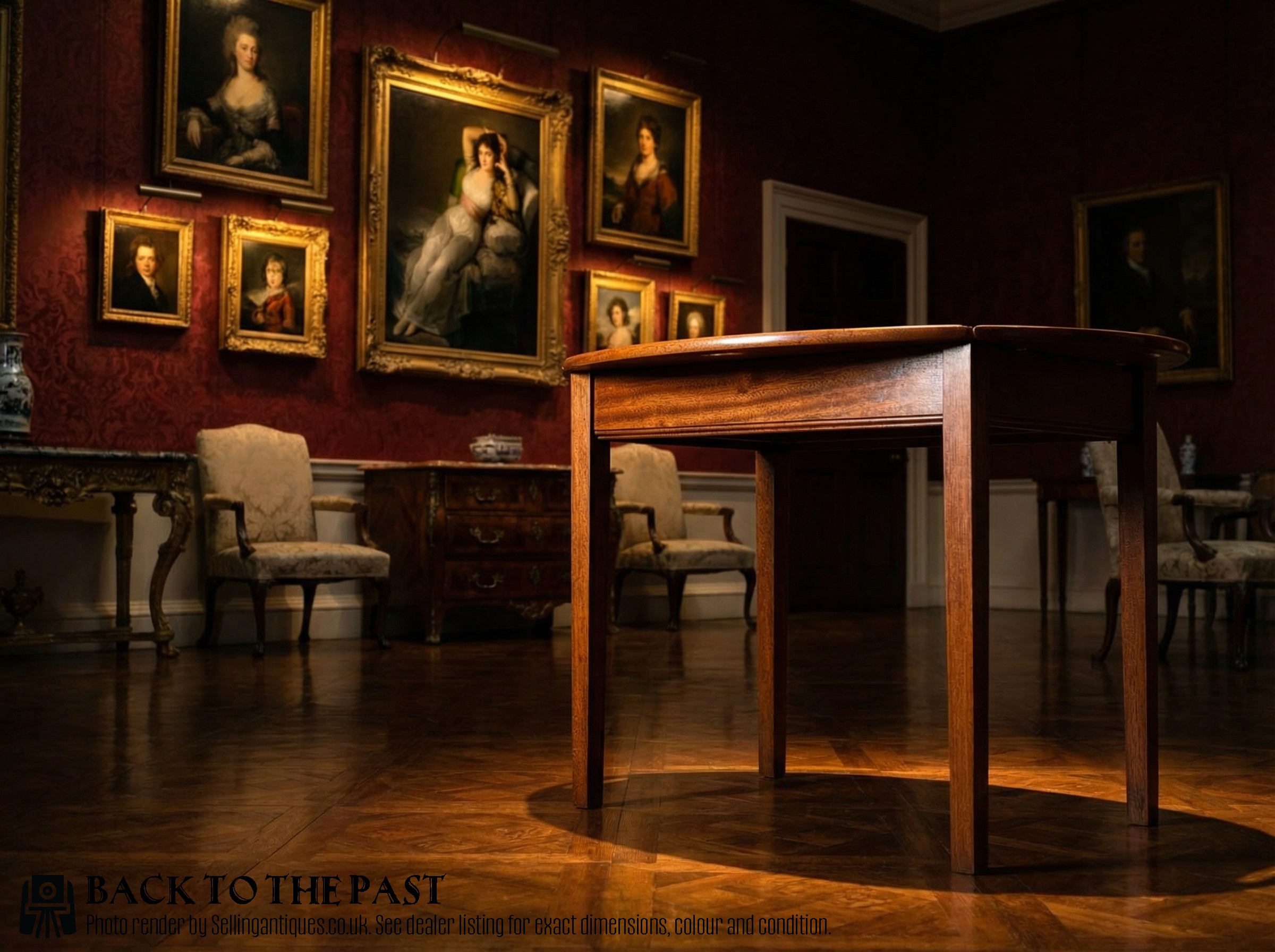
Oval Mahogany Tea Table
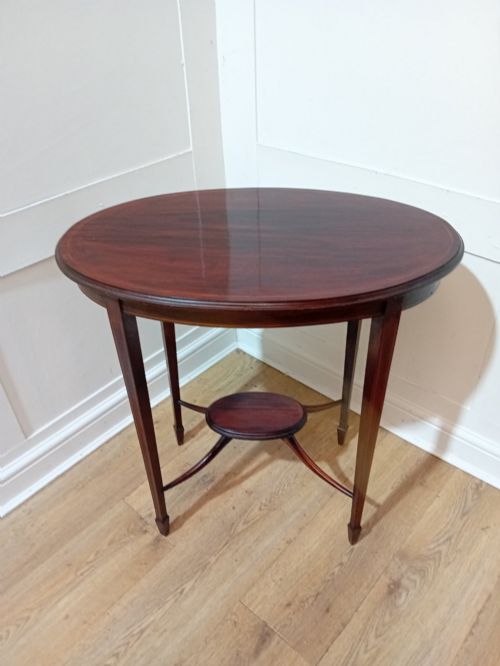
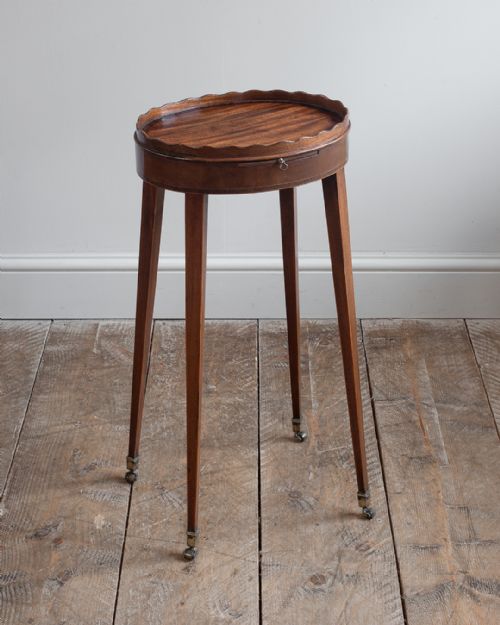
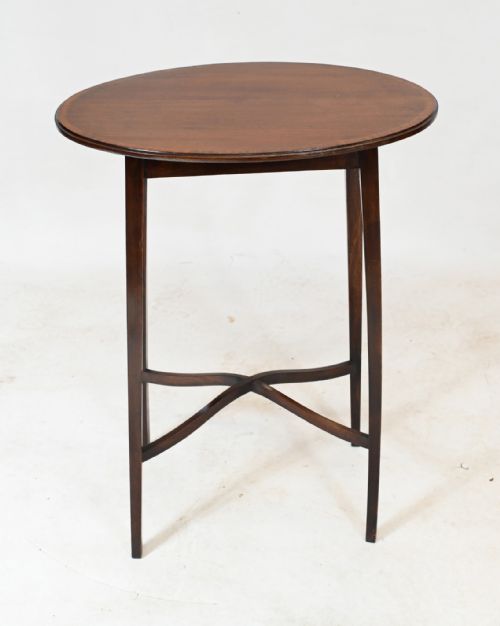
The most common forms on this page include Edwardian occasional tables and Georgian Pembroke or urn stands, often featuring subtle elongated tops and slender supports. These tables served social gatherings and display purposes, making them adaptable additions to modern interiors.
Makers and joiners worked timber to create both plain surfaces and intricate formats, utilising the natural grain of the wood to lend depth to domestic spaces. The enduring appeal of these tables lies in their combination of portability and formal presence.
Materials and construction methods
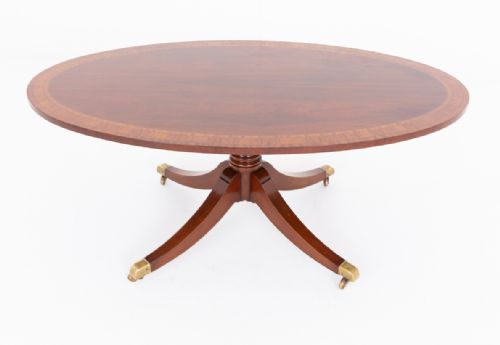
Cabinet-makers relied primarily on solid mahogany and mahogany veneers, selected for rich colour and stable grain, often enhanced by contrasting stringing and borders in satinwood, boxwood, and ebony. Workshops employed precise joinery techniques to shape drop leaves, tilt tops, and tiered frameworks without compromising structural integrity.
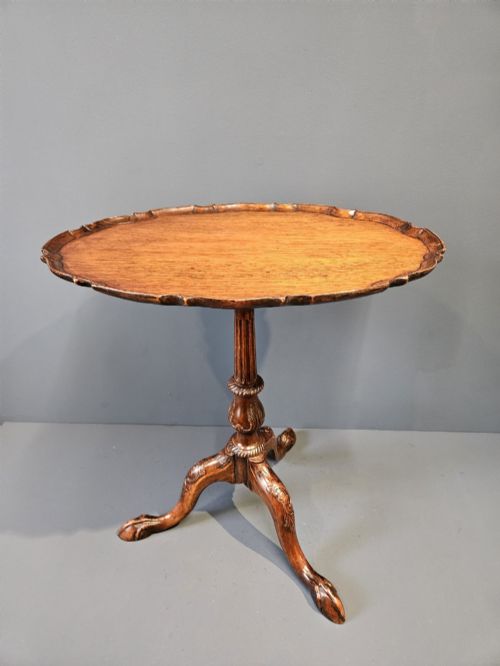
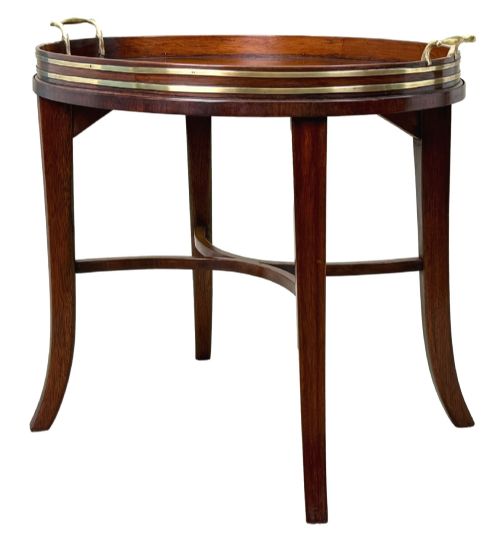
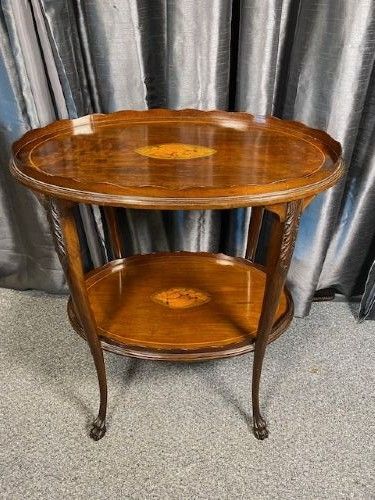
Decorative elements frequently include delicate wood inlay, hand-carved foliate details, and brass bound decoration, reflecting the prevailing styles from George III to the Edwardian era. These treatments were applied thoughtfully to edges, aprons, and tray borders to accentuate the curving silhouette.
Several tables come equipped with gallery edges and butler trays, ready in case your tea service attempts a sudden escape.
Distinguishing quality across examples
The standard of an oval mahogany tea table depends heavily on the crispness of its hand-carving and the precision of its inlaid details, such as boxwood or satinwood stringing. Superior pieces display harmonious proportions and careful selection of timber figures, where the grain follows the natural curve of the top.
Construction fidelity separates finer examples from simpler production pieces, seen in the seamless operation of drop leaves, the stability of tripod bases, and the integration of brass mounts or galleried edges. Original surfaces and patination earned through age further elevate the standing of a piece.
The Oval Mahogany Tea Table Glossary
- Pembroke table
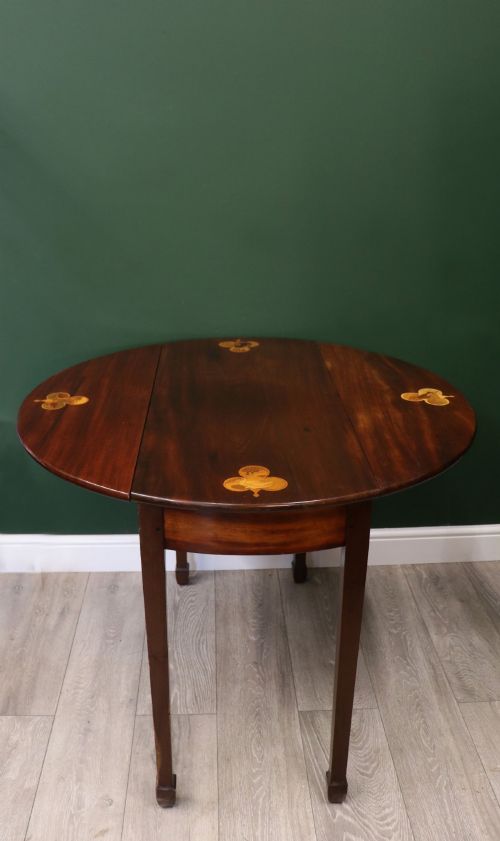
- A table with hinged flaps on either side that can be raised or lowered. These versatile pieces gained popularity in the eighteenth century for domestic utility.
- Urn stand
- A small, tall table specifically designed to hold a tea urn. They often feature elevated rims or galleried edges to secure vessels safely.
- Stringing
- A narrow line of contrasting inlay wood used to outline drawers, borders, or tabletops. It defines geometric and curved shapes with sharp visual clarity.
- Galleried tray
- A shallow tray top bordered by a raised wooden or pierced brass rim. This feature prevented tableware from sliding off during service.
- Tilt top
- A tabletop mounted on a mechanism allowing it to pivot vertically when not in use. This clever design saved valuable floor space in smaller rooms.
Oval Mahogany Tea Table: Frequently Asked Questions
How do I use an oval mahogany tea table today?
These tables function well as compact coffee tables, bedside surfaces, or display stands for lamps and ceramics. Their narrow profiles suit hallways and tight spaces where a rectangular table feels too heavy.
Dropleaf versions offer flexible surface area, expanding easily when entertaining and folding back to save floor space during daily routines.
How do I distinguish Georgian from Edwardian pieces?
Georgian tables, dating from the eighteenth and early nineteenth centuries, generally exhibit heavier timber construction, hand-cut joinery, and deep natural patination. Their proportions tend to be robust and functional for the period's domestic rituals.
Edwardian pieces, built around 1900, often show lighter frames, machine-assisted precision, and revivals of earlier Sheraton or Neoclassical styles, frequently utilising delicate satinwood inlay.
Are these tables sturdy enough for daily use?
Most antique occasional and Pembroke tables remain structurally sound for everyday items like books, drinks, and lamps. Tripod bases and pillar supports distribute weight evenly across the floor.
Care should be taken with tilt-top mechanisms and drop-leaf hinges to avoid straining original pivot points during movement.
What is the difference between an occasional table and a centre table?
Occasional tables are lighter, smaller pieces designed to be moved around a room as needed for specific tasks or gatherings. They fit easily beside seating.
Centre tables are built to stand independently in the middle of a room, finished on all sides with substantial frames meant to command visual attention.