





Oval Mahogany End Tables
Oval mahogany end tables bring rich timber tones and practical surface space to a room, rooted in Georgian and Edwardian craftsmanship.
Oval Mahogany End Tables
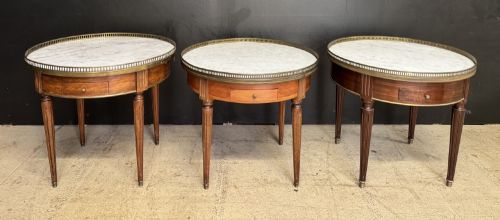
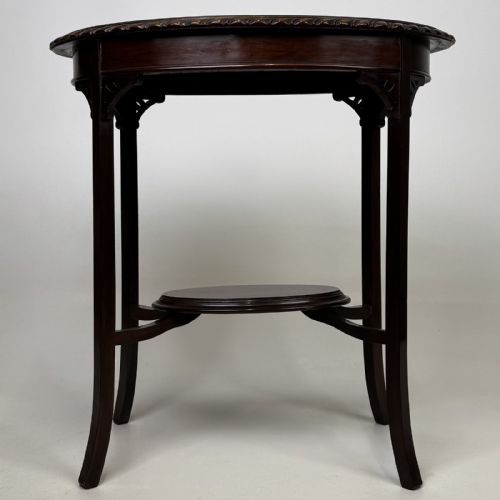
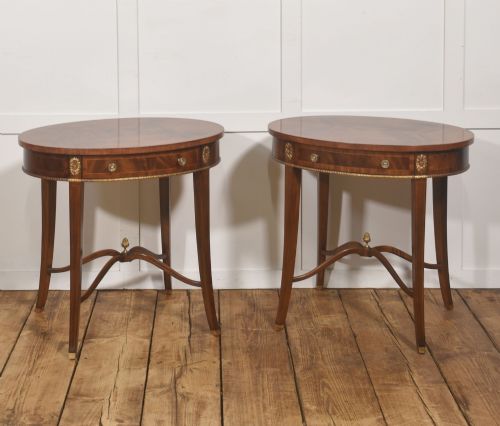
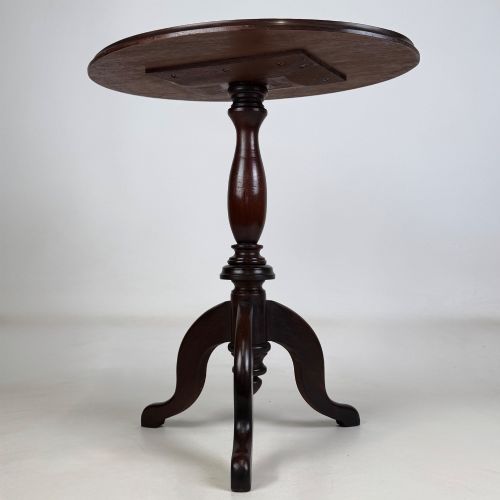
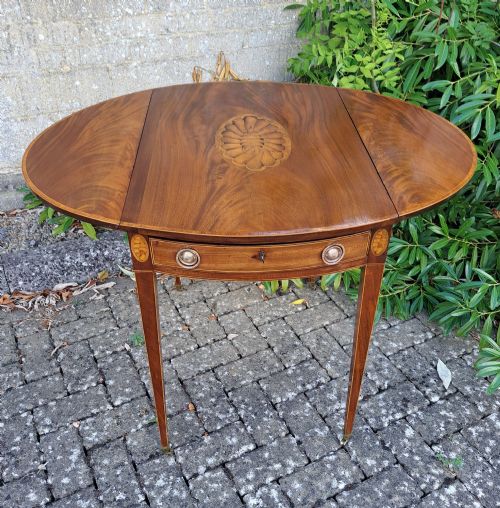
Oval mahogany end tables appear in various forms on this page, including side tables, lamp tables, and occasional tables designed to sit beside seating. The selection spans distinct periods from the eighteenth century through the Edwardian era, showing both Georgian and Sheraton Revival influences.
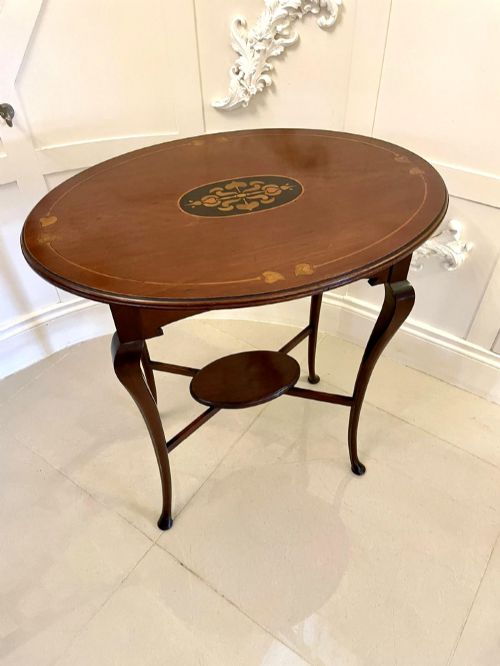
Buyers will most frequently encounter Edwardian and nineteenth-century examples configured as occasional or side tables. These pieces often feature inlaid details, tripod legs, or two-tier designs suited to smaller living spaces.
How they were made
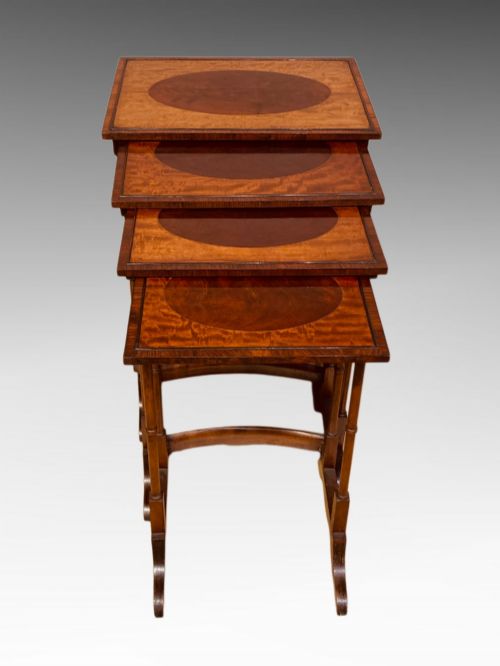
Cabinetmakers utilised solid mahogany and flame mahogany veneer over supportive timber carcases. Marquetry and wood inlay incorporating satinwood, boxwood, and ebony frequently decorate the tabletop surfaces.
Structural elements include carved cabriole legs, tripod bases with pad feet, and gadrooned edges. Brass accents and marble inserts appear on select pieces from the nineteenth century.
Oval Mahogany End Tables Retail Price Guide 2026
Typical asking prices for oval mahogany end tables among the pieces listed under this phrase on Sellingantiques today, from the lower quarter to the upper quarter. They describe what is for sale here now, not the wider market.
Tables featuring nested designs offer multiple surfaces that quietly hide away until tea is served.
What varies in quality
The sophistication of the timber figure and the precision of the wood inlay distinguish finer pieces from standard production. Flame mahogany veneer requires careful matching across the oval top to create a balanced visual depth.
Joinery execution and the crispness of carved details, such as gadrooning or cabriole legs, indicate the level of workshop skill involved. Subtle additions like boxwood stringing and ebony banding show greater labour investment.
Waring and Gillow
The Oval Mahogany End Tables Glossary
- Flame mahogany veneer
- A distinct timber slice displaying a flickering, flame-like grain pattern. Cabinetmakers applied this to prominent surfaces for strong visual movement.
- Gadrooned edge
- A carved decorative border featuring undulating, curved motifs. This finish appears along the outer rim of tabletops.
- Pembroke table
- A drop-leaf table with hinged flaps on opposing sides. These versatile tables were easily expanded for temporary use.
- Marquetry
- Elaborate patterns formed by fitting contrasting veneers into a prepared background. Artisans used diverse woods like satinwood and ebony to create floral or geometric designs.
Oval Mahogany End Tables: Frequently Asked Questions
What is an oval mahogany end table used for?
These tables provide a compact surface for lamps, books, and decorative items beside a chair or sofa.
Their curved oval shape allows them to fit smoothly into room corners or narrower passages without sharp angles.
How do I identify a Georgian oval mahogany table?
Look for deep, rich timber patination and understated proportions typical of eighteenth-century design. Construction details often include solid mahogany secondary timbers and hand-cut joinery.
Many later pieces adopted Georgian styles during the Sheraton Revival period, so examining construction methods helps clarify the actual age.
Where should I place an occasional table?
An occasional table functions effectively next to seating or as a standalone lamp table in a hallway. Their modest scale makes them easy to reposition within a room as needed.
Avoid placing antique mahogany in direct sunlight to protect the polish and timber tone.
What distinguishes Edwardian tables from earlier pieces?
Edwardian examples frequently incorporate lighter decorative elements like boxwood stringing, satinwood inlay, and painted motifs. These pieces often reflect revival styles inspired by eighteenth-century Sheraton designs.
They tend to be lighter in physical construction compared to heavier Georgian or Victorian counterparts.