


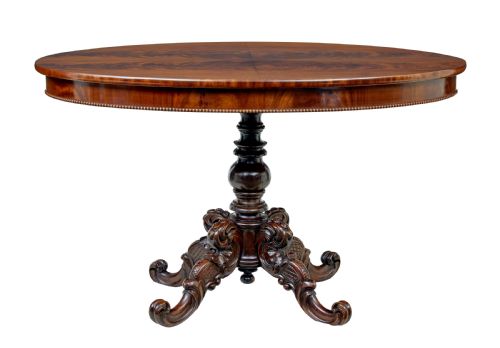


Oval Mahogany Centre Table
An oval mahogany centre table brings architectural presence to a room, offering generous surface space coupled with curved lines that soften interior layouts.
Oval Mahogany Centre Table
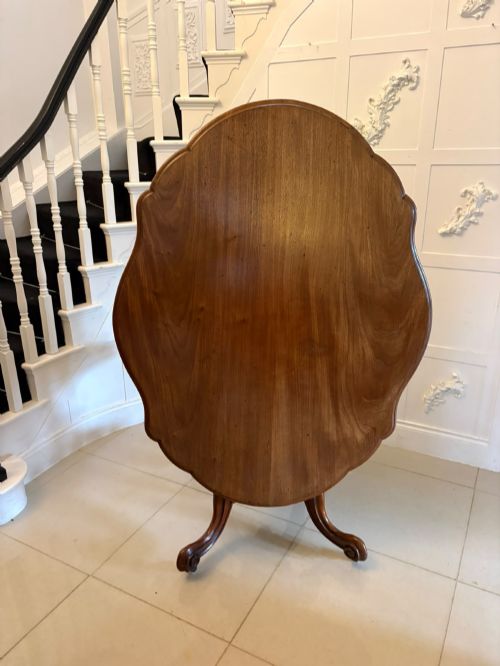
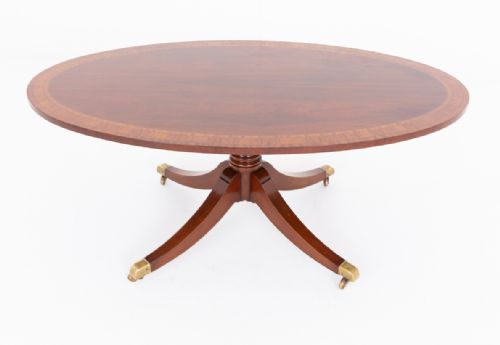
When you search for an oval mahogany centre table, you encounter a versatile category spanning the Georgian, Regency, and Victorian eras, alongside later Edwardian interpretations. These pieces range from grand pedestal dining tables and tilt-top breakfast tables to smaller occasional tables designed to anchor a room.
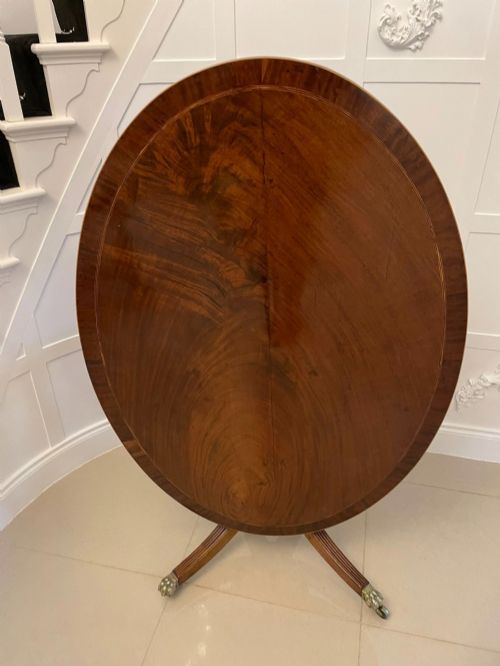
The material vocabulary relies heavily on figured mahogany, often enhanced by flame mahogany veneers or contrasting satinwood, boxwood, and ebony inlays. Many examples feature pedestal bases or turned legs, occasionally incorporating brass mounts or castors for mobility.
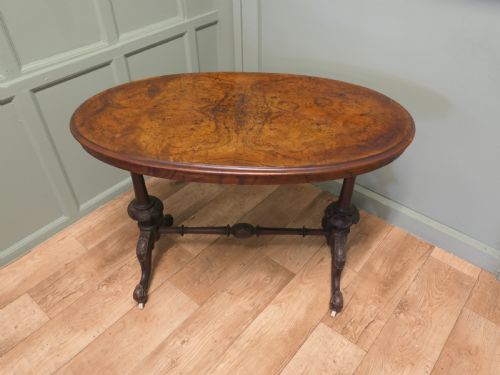
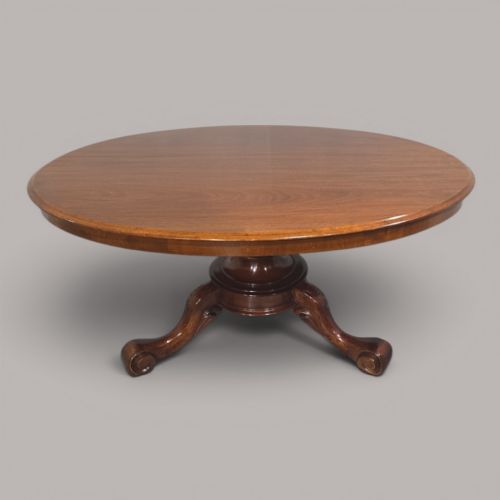
Victorian and Edwardian versions frequently appear alongside earlier George III and Regency pieces, reflecting shifting domestic needs from formal dining to flexible reception room furnishing.
How They Were Made
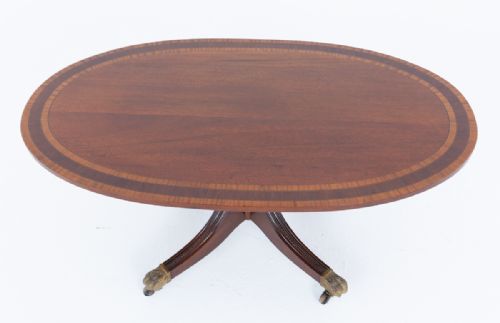
Cabinet makers utilised solid mahogany and applied veneers of figured or flame mahogany to tabletops, securing stable construction through seasoned timber sub-frames. Crossbanding in satinwood or ebony frequently frames the perimeter, demonstrating precise joinery and marquetry skills.
Pedestal formats rely on heavy turned pillars supported by splayed legs, often terminating in brass claw feet or castors. Tilt-top mechanisms employ hinged wooden blocks and brass catches, allowing the surface to fold away when not in use.
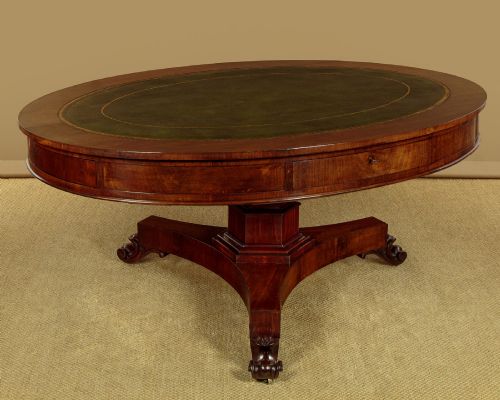
Some nineteenth-century tables arrive with secret drawers hidden beneath the rim, once used for storing visiting cards or forgotten spectacles.
What Varies in Quality
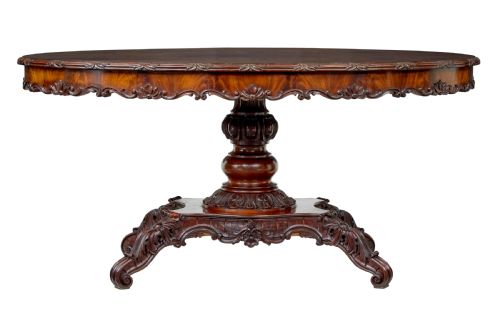
The distinction between standard production and top-tier examples lies in the selection of timber and the restraint of ornamentation. Highly figured flame mahogany and crisp, hand-carved mahogany details separate ambitious cabinet work from simpler workshop output.
Proportion and structural integrity dictate the standing of a table. Superior pieces maintain balanced pedestal dimensions and seamless veneer matching across the oval top, ensuring both visual harmony and enduring stability.
Gillows·A. Beurdeley
The Oval Mahogany Centre Table Glossary
- Crossbanding
- A border technique where veneer is applied perpendicular to the grain of the main surface, often seen in contrasting timbers like satinwood.
- Tilt-top
- A mechanism allowing the tabletop to pivot into a vertical position for storage or room clearance.
- Flame mahogany
- A veneer cut from the branch junction of the tree, producing a distinctive flickering flame pattern.
- Pedestal
- A central supporting column rising from a branched or plinth base, common in larger dining formats.
- Marquetry
- The art of applying decorative pieces of veneer to form geometric or pictorial designs on the table surface.
Oval Mahogany Centre Table: Frequently Asked Questions
How were oval mahogany centre tables originally used?
These tables served multiple domestic functions depending on their scale and period. Smaller occasional and drum tables held lamps, books, or tea services in reception rooms.
Larger pedestal and tilt-top versions functioned as breakfast or dining tables, designed to be cleared and moved aside when not in active use.
How do I distinguish a Regency table from a Victorian one?
Regency examples often display cleaner neoclassical lines, sometimes incorporating brass inlay or ebony stringing influenced by classical antiquity. They frequently feature delicate pedestal bases or reeded legs.
Victorian pieces tend to be heavier in proportion, utilising heavily figured flame mahogany, elaborate carved pedestal bases, and sometimes serpentine edges or tilt-top mechanisms.
What is the purpose of a tilt-top mechanism?
The tilt-top mechanism allowed large dining and breakfast tables to be stored flat against a wall when the room was needed for other activities. This practical feature was especially popular in smaller Georgian and Regency homes.
To use it, a brass catch is released, allowing the heavy mahogany top to pivot safely on its central pillar.
How do I care for a mahogany tabletop?
Mahogany responds best to a stable environment away from direct heat sources and strong sunlight, which can dry out the timber and fade the finish. Regular dusting with a soft, dry cloth preserves the polished surface.
Occasional application of traditional beeswax helps nourish the grain without building up synthetic residues that dull the antique patina.