

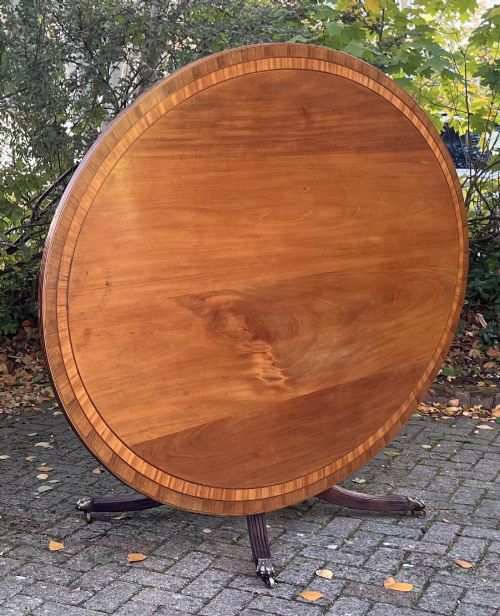
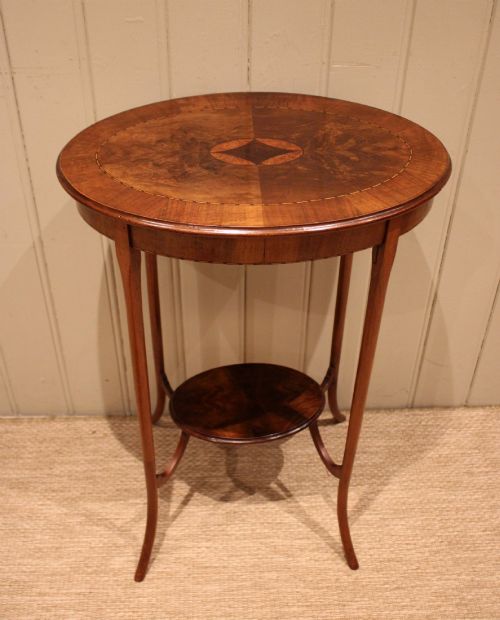
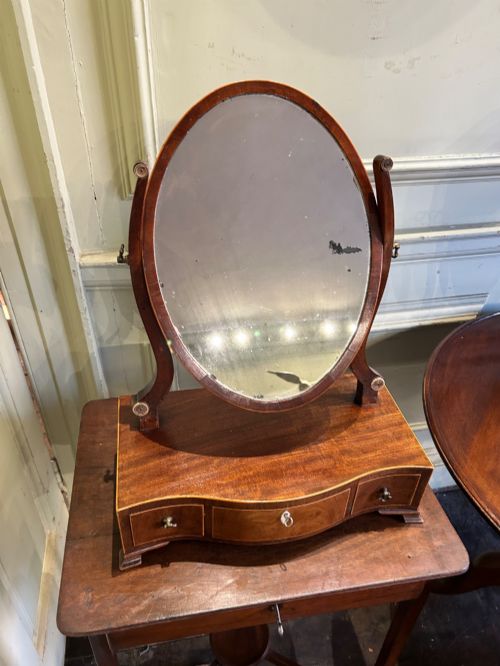
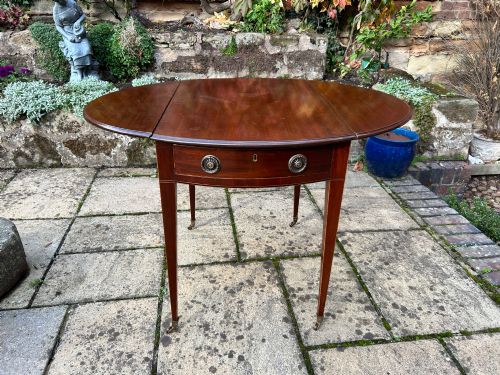
Oval Inlay Table
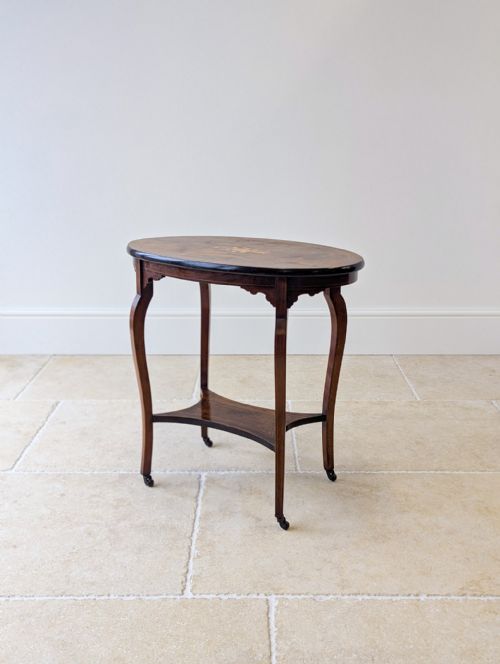
When you search for an oval inlay table, you meet a surface shaped by curve and line, created to hold lamps, tea or books in a formal room.
Oval Inlay Table
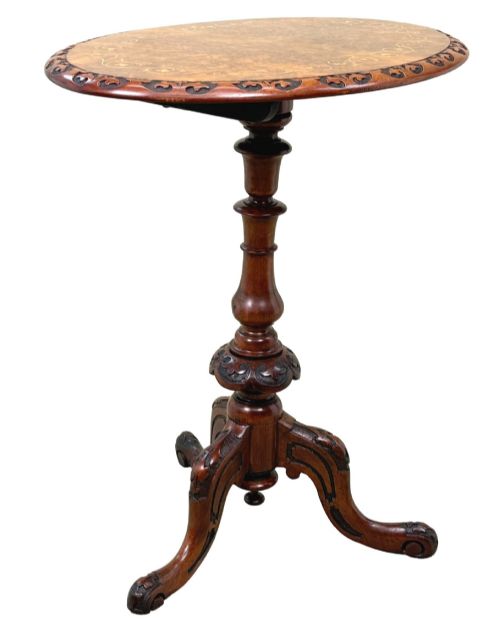
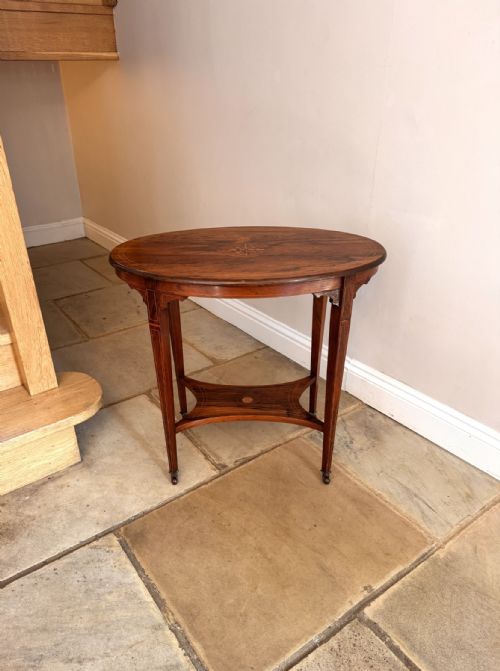
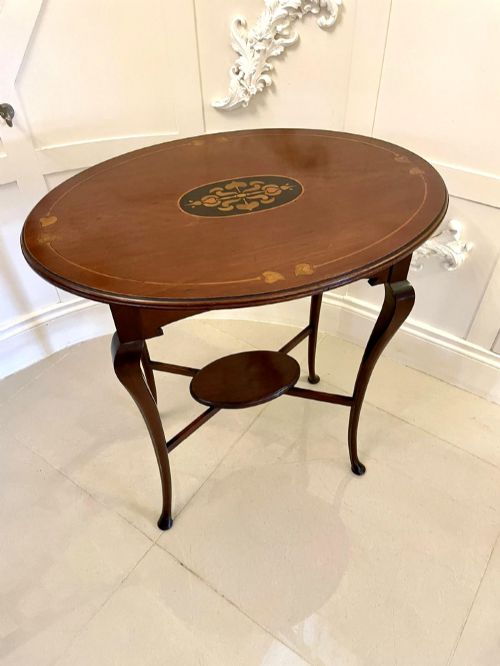
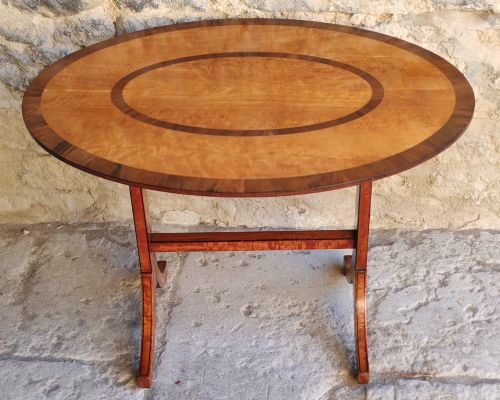
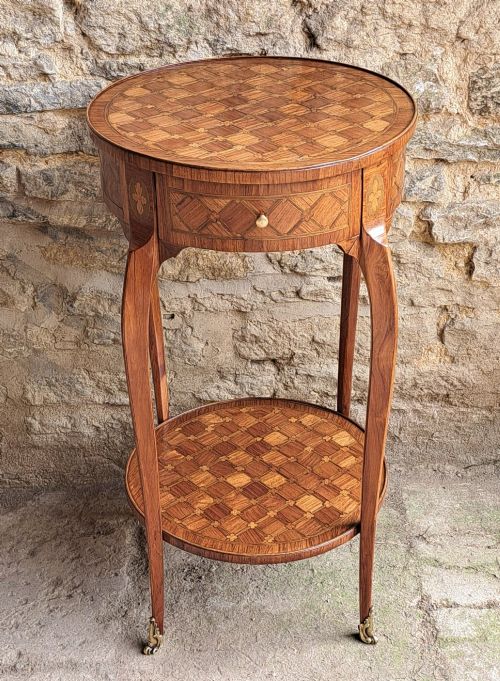
An oval inlay table brings a softened geometry to a room, trading sharp corners for gentle curves that suit the centre of a floor or the side of a seating arrangement. When you search for an oval inlay table, you encounter pieces spanning from the Georgian period through the Victorian era and Edwardian years into the early twentieth century.
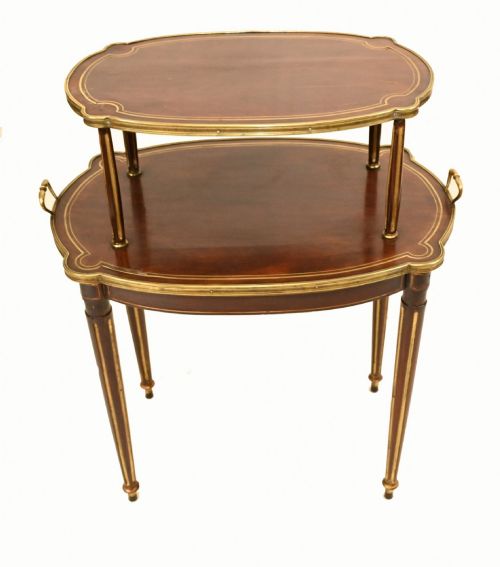
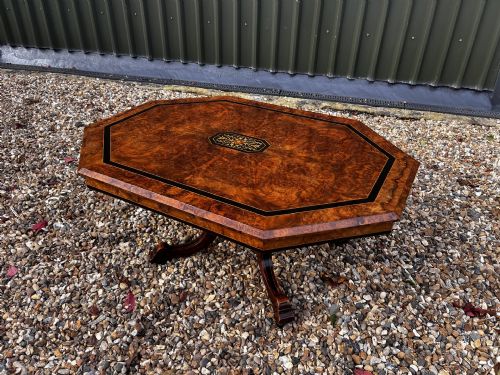
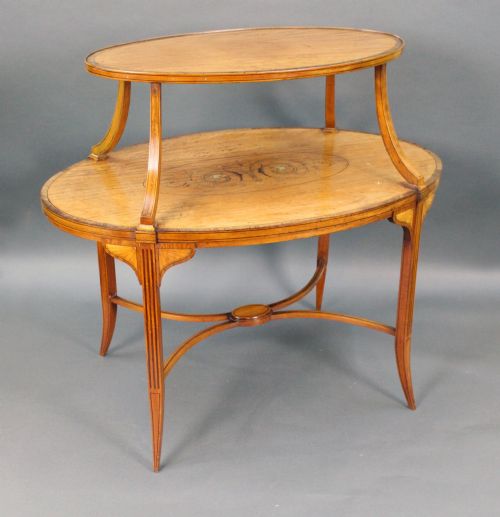
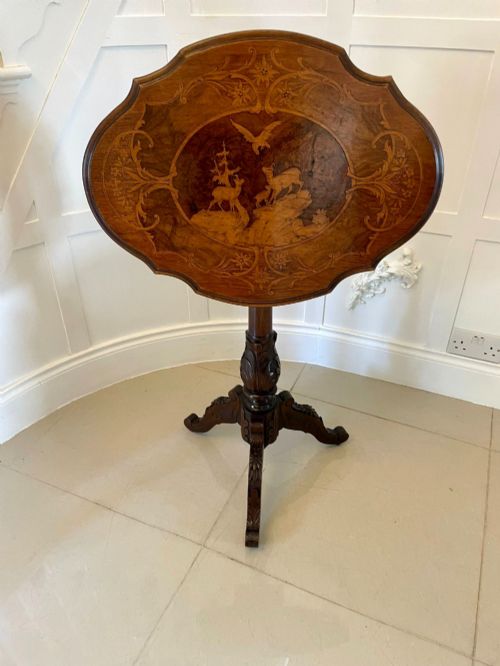
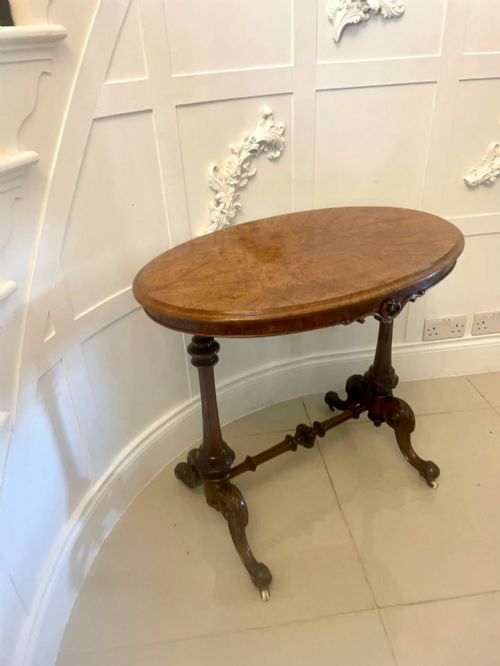
The forms vary widely across these periods, moving from drop-leaf pembroke tables and tilt-top loo tables to occasional lamp tables, coffee tables, and large dining tables. Victorian burr walnut examples and Edwardian mahogany pieces dominate the selection, often featuring tier structures or crossbanded borders.
Origins stretch across British workshops and continental makers, incorporating French revival styles alongside domestic cabinet-making traditions. Each version serves a domestic function, whether acting as a central gathering point for dining or a compact surface beside an armchair.
How they were made
Cabinet-makers constructed these tables using solid timber frames paired with decorative veneers applied to stable secondary woods. Mahogany, walnut, and burr walnut provide the primary groundwork, offering rich grain patterns that catch the light.
The distinctive surface decoration relies on contrasting timbers such as satinwood, boxwood, and ebony, cut finely and fitted into routed channels to form geometric borders or floral marquetry. Brass fittings and ormolu mounts occasionally secure joints or edge tables from French revival workshops.
Oval Inlay Table Retail Price Guide 2026
Typical asking prices for oval inlay table among the pieces listed under this phrase on Sellingantiques today, from the lower quarter to the upper quarter. They describe what is for sale here now, not the wider market.
Several tables include hidden chess boards built directly into the marquetry top, ready for an unexpected match.
What varies in quality
The distinction between ordinary and exceptional tables rests in the crispness of the timber selection and the precision of the marquetry. Superior examples utilise carefully matched burr veneers and finely graded wood inlay that remains flush with the surrounding surface.
Construction methods also separate standard production from master craftsmanship, visible in the stability of pedestal bases, the turning of legs, and the neatness of internal joints. Tables that retain their original polished finish without excessive restoration display the integrity of the initial making.
The Oval Inlay Table Glossary
- Inlay
- A technique where pieces of contrasting wood, such as boxwood or satinwood, are fitted into recessed spaces in a timber surface to create patterns. This decorative method defines the visual character of the tabletop.
- Crossbanding
- A border veneer applied around the edge of a table top where the grain runs perpendicular to the central panel. This frames the primary timber and adds a neat geometric boundary.
- Pembroke table
- A small rectangular or oval table with hinged drop-leaves on opposing sides. It stands on four legs and often includes a single drawer.
- Marquetry
- An elaborate form of inlay assembling varied wood veneers to picture floral, scroll or architectural designs. It covers the surface in decorative detail rather than simple geometric lines.
- Tilt-top table
- A table designed with a mechanism allowing the top to pivot to a vertical position when not in use. This saves floor space in smaller rooms.
Oval Inlay Table: Frequently Asked Questions
Where should I place an oval inlay table?
An oval inlay table sits comfortably in the middle of a drawing room as a centre table or beside a sofa as a lamp table. The curved edge softens the layout of a room containing rectangular architecture.
Smaller occasional versions fit easily into corners or hallways, while larger dining variants anchor a principal dining space with traditional presence.
How do I care for a veneered table top?
Keep wooden tables away from direct heat sources and strong sunlight to prevent the timber veneers from drying out or fading. Use coasters and mats to protect the polished surface from moisture and heat.
Dust the surface regularly with a soft, dry cloth and apply a quality wax sparingly to maintain the natural sheen of the wood.
What distinguishes Edwardian tables from Victorian ones?
Victorian tables frequently employ heavy burr walnut and rich marquetry, often built with robust pedestal supports or substantial turned legs. The overall weight and dark tones reflect the formal aesthetic of the nineteenth century.
Edwardian pieces tend to use lighter mahogany and satinwood timbers, favouring Sheraton Revival influences with slender tapered legs and delicate boxwood stringing.
Can I use an antique table for daily dining?
Tables designed specifically as dining variants accommodate daily meals quite naturally when treated with reasonable care. Occasional or lamp tables, however, feature lighter frames and smaller surface areas unsuited to heavy loads.
Check the stability of the legs and any drop-leaf mechanisms before utilising a lighter piece for regular daily tasks.