



Oval Inlaid Pedestal Table
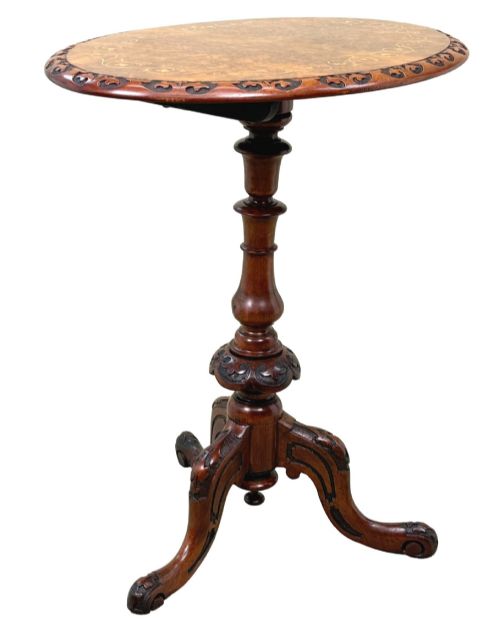
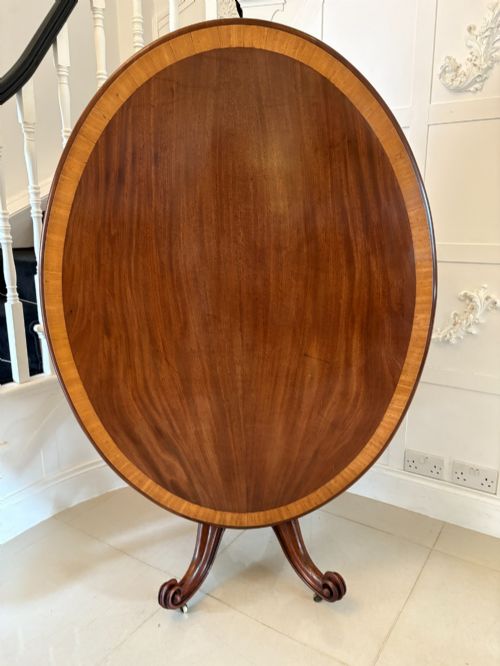
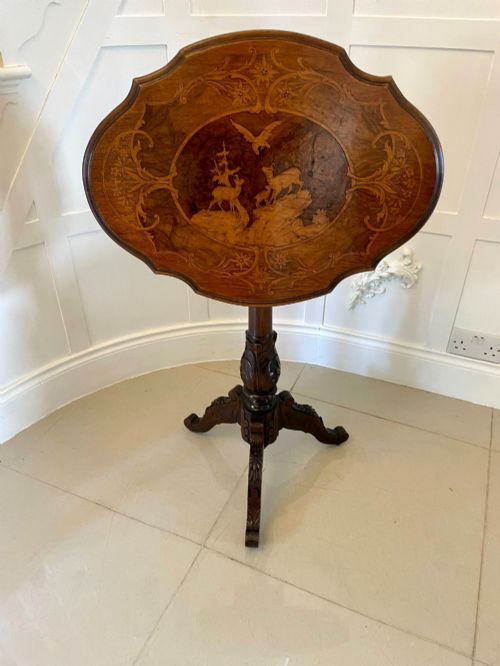
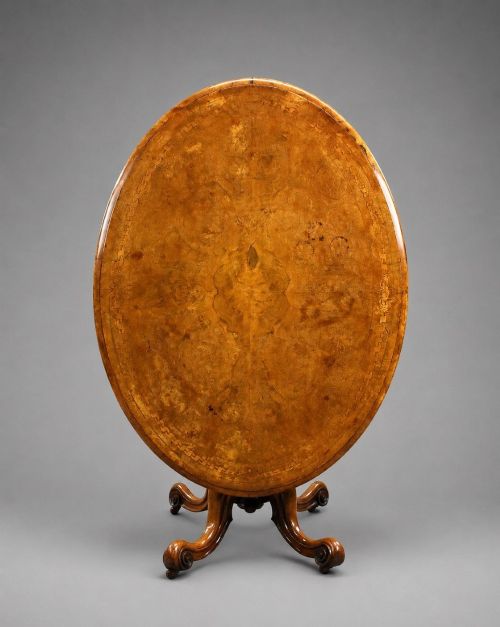
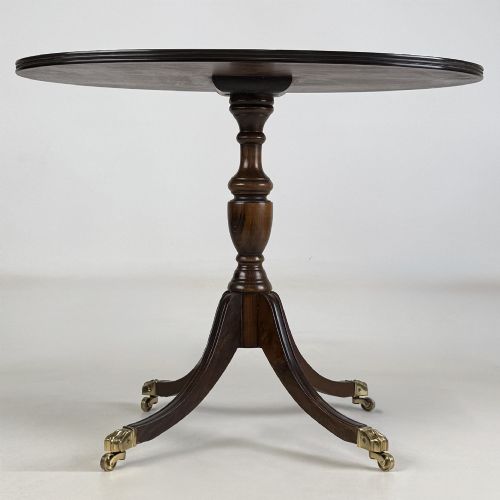
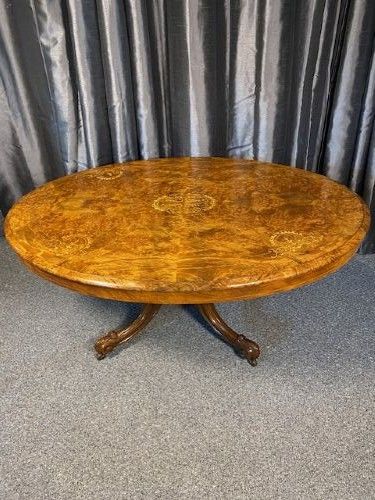
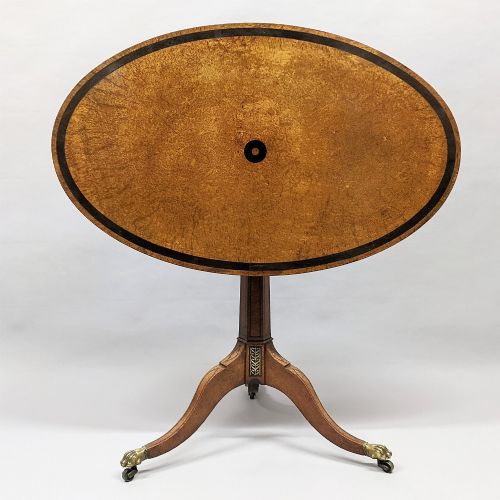
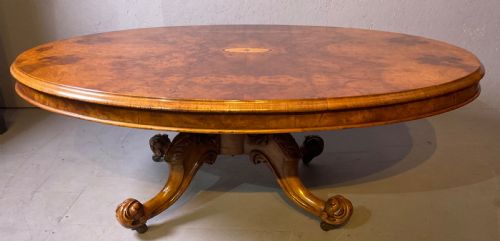
These oval inlaid pedestal table examples unite Victorian burr walnut timber and delicate marquetry in a single freestanding form.
Oval Inlaid Pedestal Table
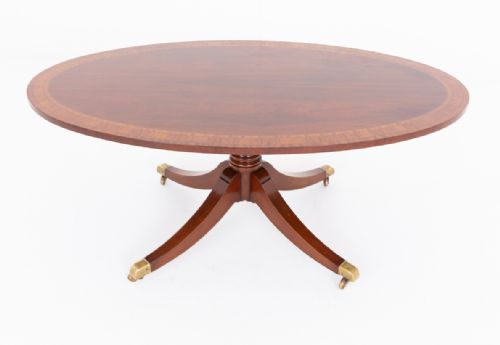
The assortment spans diverse domestic functions, including centre tables, occasional tables, breakfast tables and coffee tables adapted from earlier forms. Makers of the nineteenth and early twentieth centuries designed these pieces to stand freely in principal reception rooms as displays of technical skill and refined taste.
How they were made
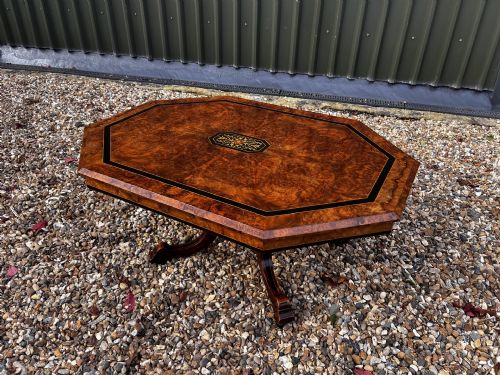
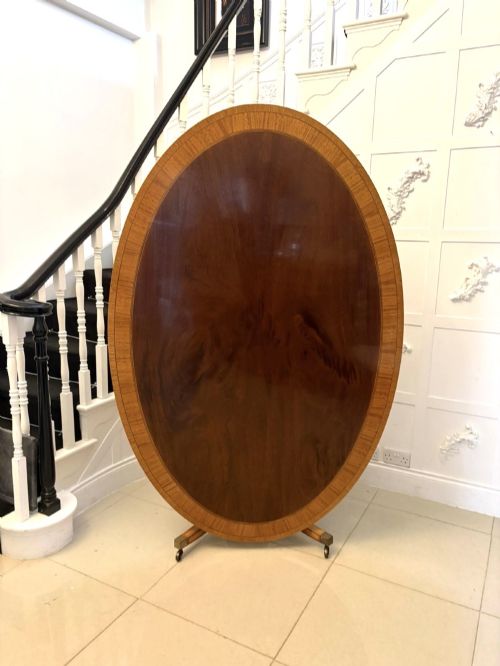
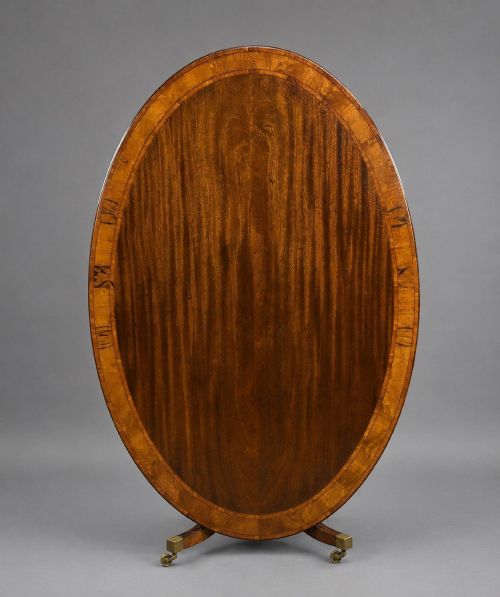
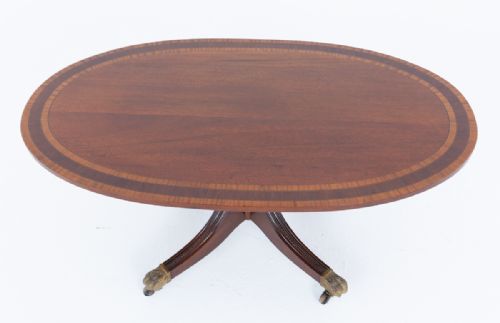
Cabinetmakers utilised rich timber veneers such as burr walnut, mahogany, amboyna and kingswood applied over sturdy secondary woods to construct the oval tops. The complex grain patterns create a striking visual texture that frames the central decorative motifs.
Detailed ornamentation relies on contrasting inlay techniques, incorporating boxwood, ebony and satinwood strips or elaborate marquetry panels. Central pedestals frequently feature hand-carved tripod or basket bases designed to distribute weight evenly beneath the heavy top.
Oval Inlaid Pedestal Table Retail Price Guide 2026
Typical asking prices for oval inlaid pedestal table among the pieces listed under this phrase on Sellingantiques today, from the lower quarter to the upper quarter. They describe what is for sale here now, not the wider market.
Listings feature woods including walnut, mahogany, satinwood and amboyna alongside intricate boxwood and marquetry inlay.
What varies in quality
The calibre of an oval inlaid pedestal table rests upon the choice of timber and the precision of the veneer work. Superior examples display deeply figured burr walnut and seamlessly integrated marquetry that remains flat and stable across the entire surface.
Structural execution also dictates worth, separating standard production pieces from exhibition-grade works with finely hand-carved pedestal bases and substantial brass mounts. The alignment of the tilt-top mechanism and the crispness of the boxwood stringing reveal the original maker's investment of time.
Gillows·Jackson and Graham
The Oval Inlaid Pedestal Table Glossary
- Burr walnut
- A prized timber harvested from walnut tree growths, featuring swirling, organic knot patterns that provide rich visual depth to table tops.
- Marquetry
- The art of forming decorative patterns using thin veneers of different coloured woods, applied directly to the surface of the furniture.
- Tilt-top
- A hinged mechanism allowing the table top to pivot vertically into an upright position when not in use, originally designed to save space.
- Pedestal table
- A table supported by a single central column rising from a stable foot, permitting unhindered seating around the perimeter.
- Stringing
- Thin lines of contrasting wood inlay used to outline geometric borders and panels on cabinet furniture.
Oval Inlaid Pedestal Table: Frequently Asked Questions
How do I care for a burr walnut top?
Keep the wood away from direct sunlight and radiators to prevent the delicate walnut veneers from drying out or splitting. Polish the surface occasionally with traditional beeswax to maintain the natural sheen.
Avoid placing wet glasses or hot plates directly onto the polished timber. Use protective mats to safeguard the antique finish from rings and heat damage.
Where should I place an oval pedestal table?
These pieces suit central placement in a drawing room or living space where the patterned top remains visible from all angles. The curved outline helps soften the hard geometric lines of surrounding upholstery.
Ensure adequate walking space around the perimeter since the central column and base extend beneath the top. A freestanding layout highlights the craftsmanship of the pedestal support.
How can I tell Victorian from Edwardian pieces?
Victorian examples generally feature heavier burr walnut timbers, rich darker patination and more substantial hand-carved pedestal bases. Marquetry on these pieces often incorporates dense floral arrangements and complex geometric borders.
Edwardian interpretations tend to utilise lighter satinwood or mahogany frames with refined Sheraton Revival influences. The overall proportions frequently appear more slender and restrained compared to nineteenth-century predecessors.
What is a tilt-top mechanism used for?
The tilting function originally allowed large tables to stand flat against a wall when not in use, freeing up valuable floor space in nineteenth-century drawing rooms. This clever engineering also simplified transport between rooms.
Modern owners generally keep the top locked flat for daily use as a coffee or centre table. The visible brass latch beneath the surface remains an authentic marker of period construction.