



Oval Inlaid End Table
An oval inlaid end table brings delicate geometry and timber contrast to a corner, and these pieces offer refined surface detail for a sitting room.
Oval Inlaid End Table
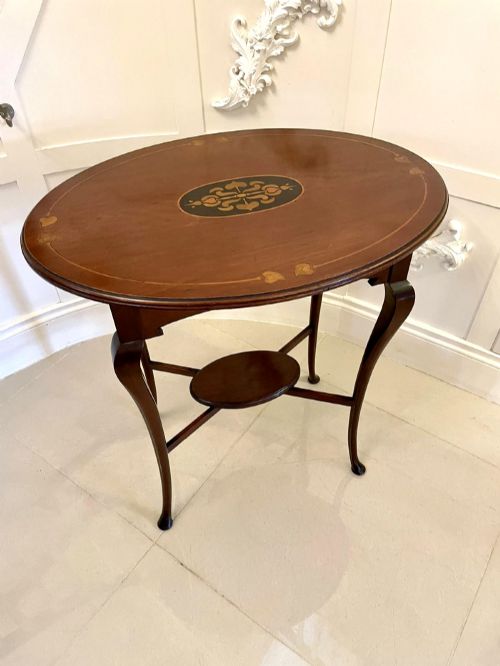
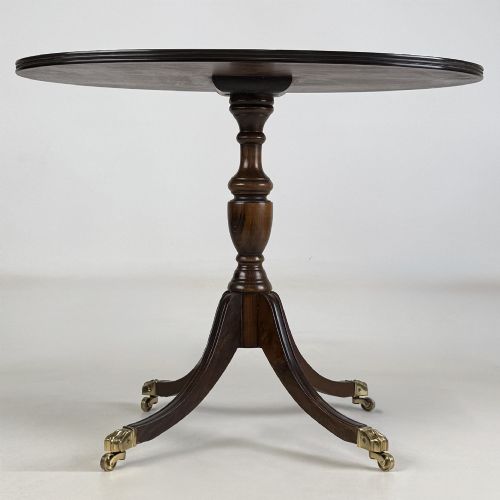
An oval inlaid end table is a compact surface designed for lamps, books or general display beside seating. Buyers searching for an oval inlaid end table will encounter pieces primarily from the Georgian, Victorian and Edwardian eras, alongside Sheraton Revival interpretations.
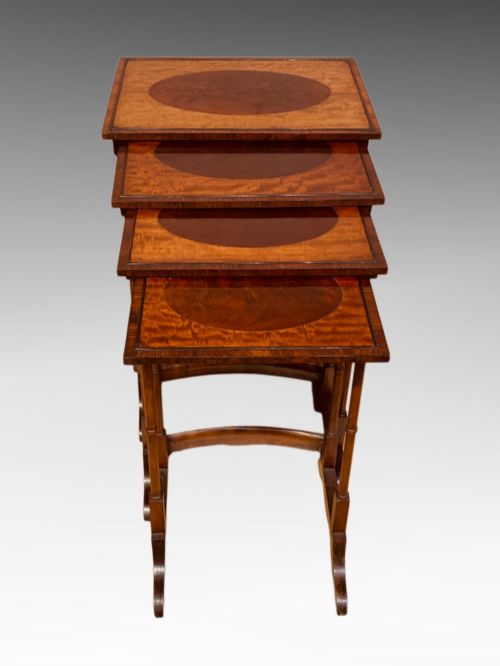
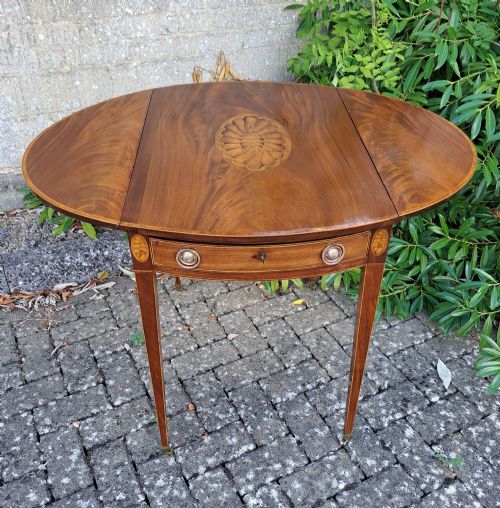
The dominant form on this page is the occasional or side table in mahogany, often featuring contrasting wood inlays and slender tapering legs. Pembroke tables with drop leaves and nested table sets also appear under this description.
Origins span British workshops of the eighteenth and nineteenth centuries, alongside continental European pieces and later revival pieces. Each version serves the practical function of a small surface while introducing decorative timber patterns to a room.
How they were made
Cabinet makers built these tables using solid timbers such as mahogany and satinwood, often applying fine wood veneers to tabletops. Boxwood and ebony stringing lines were frequently inlaid into channels to outline the oval borders.
Marquetry and parquetry techniques created pictorial or geometric motifs on the surfaces using diverse coloured woods. Brass hardware, such as hinges on pembroke drops, completed the structural assembly.
Several tables include drop leaves designed originally to hide breakfast crumbs before folding down discreetly against the frame.
What varies in quality
Quality rests in the crispness of the timber inlay and the precision of the cabinet work joining the frame to the legs. Finer examples display intricate marquetry with tightly fitted contrasting woods rather than simple painted lines.
The choice of primary timber and the grain figure of the mahogany veneer dictate the visual depth of the top. Stable leg joinery and balanced proportions distinguish superior tables from standard production pieces.
The Oval Inlaid End Table Glossary
- Inlay
- A technique where pieces of contrasting timber are fitted into recessed spaces in a solid wood or veneered surface. This creates decorative patterns flush with the surrounding top.
- Pembroke table
- A small rectangular or oval table featuring two hinged drop leaves on opposite sides. Many include a single drawer and slender legs.
- Marquetry
- An elaborate form of inlay assembling various wood veneers into pictorial or floral designs. It requires high skill to cut and fit the components tightly.
- Satinwood
- A lustrous, yellowish timber native to India and Sri Lanka used extensively for contrasting banding and full veneering on late period furniture.
- Sheraton Revival
- A late nineteenth-century design movement inspired by the neoclassical furniture of George Sheraton. It reinterprets classical proportions with delicate stringing and light woods.
Oval Inlaid End Table: Frequently Asked Questions
Where should I place an oval table?
These tables suit corners, beside armchairs or between sofas where a rectangular table feels too sharp. Their curved edges soften the circulation space in a crowded room.
Because they have a modest footprint, they work well in hallways or as lamp stands without dominating the floor area.
How do I care for the wood surface?
Dust regularly with a soft, dry cloth and avoid placing the timber in direct sunlight or near heat sources. Excessive dryness causes veneers to lift.
Apply a microcrystalline wax periodically to nourish the polish and protect the delicate inlay work from moisture.
What is the difference between inlay and marquetry?
Inlay typically involves inserting small strips of contrasting wood like boxwood or ebony into linear channels. It creates geometric borders around a tabletop.
Marquetry covers a larger area by piecing together multiple veneer segments to form floral or pictorial scenes across the entire surface.
How do I identify a Georgian piece?
Georgian tables feature heavier structural integrity, deeper mahogany tones, and hand-cut joinery without modern fasteners. Their proportions follow strict neoclassical rules.
Later Edwardian or Sheraton Revival copies often feel lighter, utilise machine-cut stringing, and display brighter, paler satinwood contrasts.