


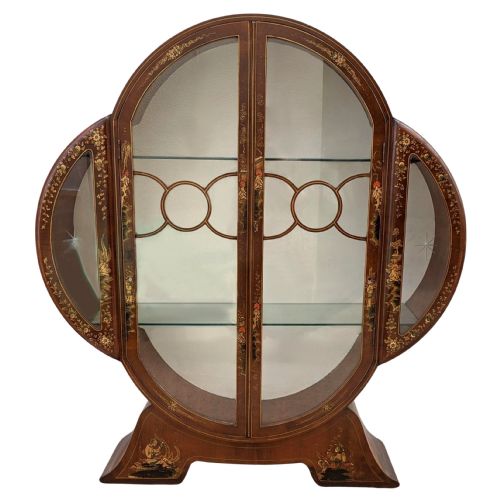


Oval Glazed Display Cabinet
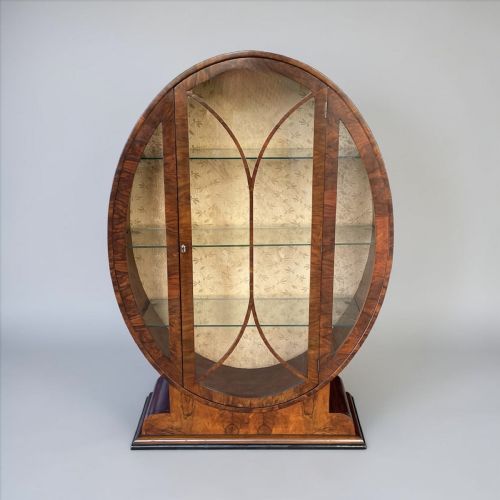
An oval glazed display cabinet brings curved elegance to a room while securely showing off small treasures or books.
Oval Glazed Display Cabinet
An oval glazed display cabinet brings curved glass and refined cabinetry together, serving as a focal point for precious objects in a home. The pieces found here span the Victorian, Edwardian, and Art Deco periods, alongside nineteenth-century examples and specific revivals.
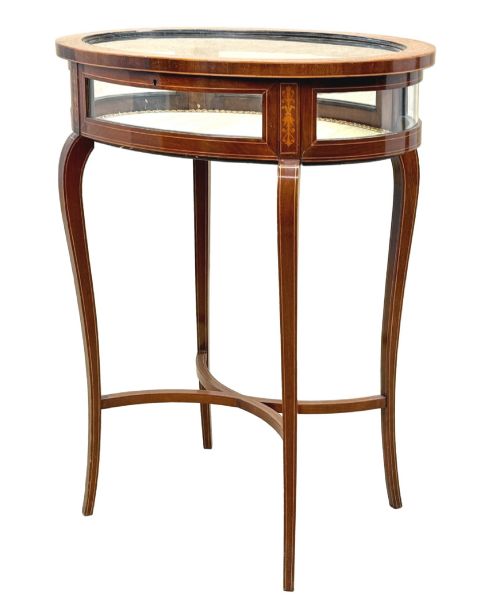
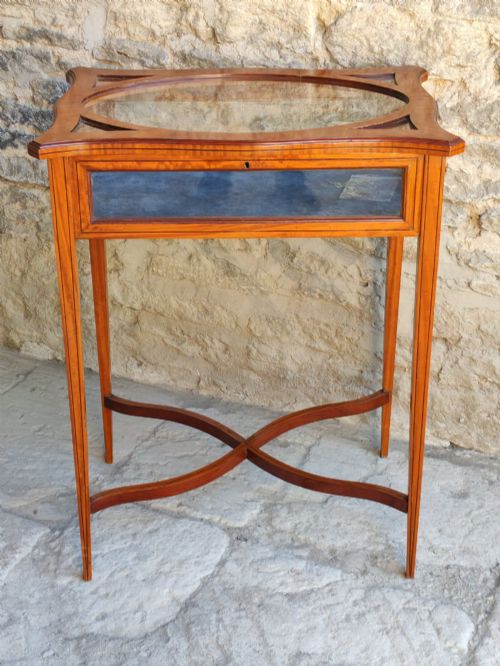
Forms range from standing vitrines and drinks cabinets to table-height bijouterie cabinets with glass tops for viewing items from above. Mahogany and walnut provide the primary timber structures, often enhanced by marquetry, inlay, or ormolu mounts.
How they were made
Cabinetmakers utilised dense hardwoods such as mahogany, walnut, and satinwood, frequently applying intricate marquetry patterns or brass and ormolu mounts to the exterior surfaces. Glass panels were carefully shaped to fit the curved frames, allowing clear visibility from multiple angles.
Interiors often feature fabric linings, including velvet or satin, to cushion displayed items and create a contrasting backdrop. Joinery techniques from the nineteenth and early twentieth centuries ensured sturdy construction despite the complex curved geometries.
Some Edwardian tables double as miniature display cases for pocket watches, ensuring your collection remains politely tick-tocking under glass.
What varies in quality
The refinement of the timber and the complexity of the decorative inlays distinguish standard pieces from superior examples. Finely cast ormolu mounts and delicate marquetry demonstrate a higher level of craftsmanship by the maker.
The precision of the curved glass work and the quality of the interior fabric lining also indicate the tier of production. Cabinets retaining original glass and intact structural timber represent the higher end of the range.
The Oval Glazed Display Cabinet Glossary
- Bijouterie table
- A glass-topped table designed specifically for displaying small ornaments, jewellery, or curiosities. These pieces often feature hinged lids for easy access to the interior.
- Ormolu
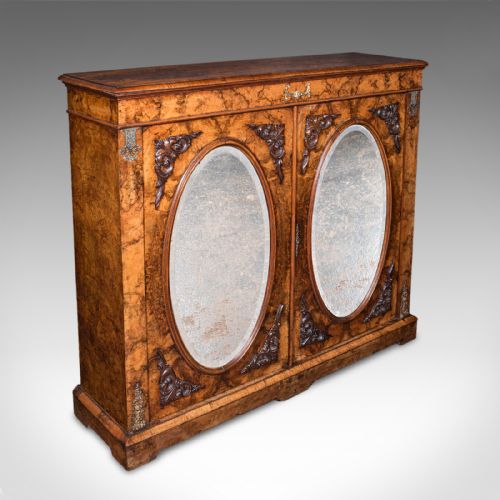
- Gilded bronze mounts applied to furniture for decorative effect. This technique was frequently utilised on French-influenced pieces to add metallic contrast to the timber.
- Marquetry
- Decorative wood veneers arranged in intricate patterns or pictorial designs on the surface of furniture. Craftsmen used various coloured woods to achieve tonal depth.
- Pier cabinet
- A piece of furniture designed to fit against a narrow wall space between windows. These cabinets often incorporate mirrored backs and glass doors.
- Vitrine
- A glass-fronted cabinet used for displaying fine porcelain or objects of vertu. The term derives from the French word for glass.
Oval Glazed Display Cabinet: Frequently Asked Questions
What fits inside an oval glazed display cabinet?
These cabinets suit small collections, including porcelain figures, glassware, jewellery, and bound books. The glass panels keep dust away while maintaining visibility.
Table-height bijouterie versions work particularly well for flat items or pieces meant to be viewed from above.
How do I clean the glass safely?
Use a soft microfiber cloth and a mild glass cleaner sprayed onto the cloth rather than directly onto the cabinet. This prevents moisture from seeping into fragile wooden frames or damaging old fabric linings.
Take care around delicate ormolu mounts and inlaid timber edges during cleaning.
Can these cabinets support heavy books?
Standing bookcase and cabinet variants handle books and heavier items, provided the internal wooden shelves remain sturdy. Bijouterie tables and delicate vitrines are meant for lighter decorative objects rather than heavy volumes.
Check the internal construction and shelf supports before loading heavy collections.
How do I distinguish Edwardian from Victorian pieces?
Victorian cabinets often display heavier proportions, darker walnut or mahogany timbers, and rich Aesthetic Movement or revival details. Edwardian examples tend to feature lighter satinwood, finer marquetry inlay, and a more delicate overall aesthetic.
Construction methods and regional styling clues also help determine the specific era.