



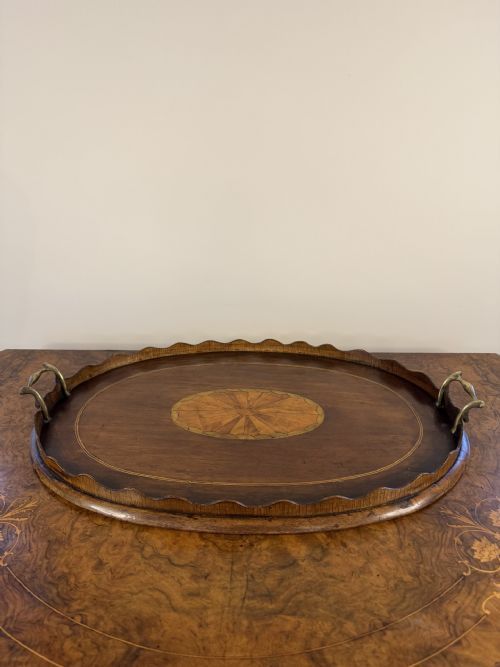


Oval Gallery Tray
An oval gallery tray combines a raised perimeter with curved sides, offering a practical way to serve drinks or display objects with security.
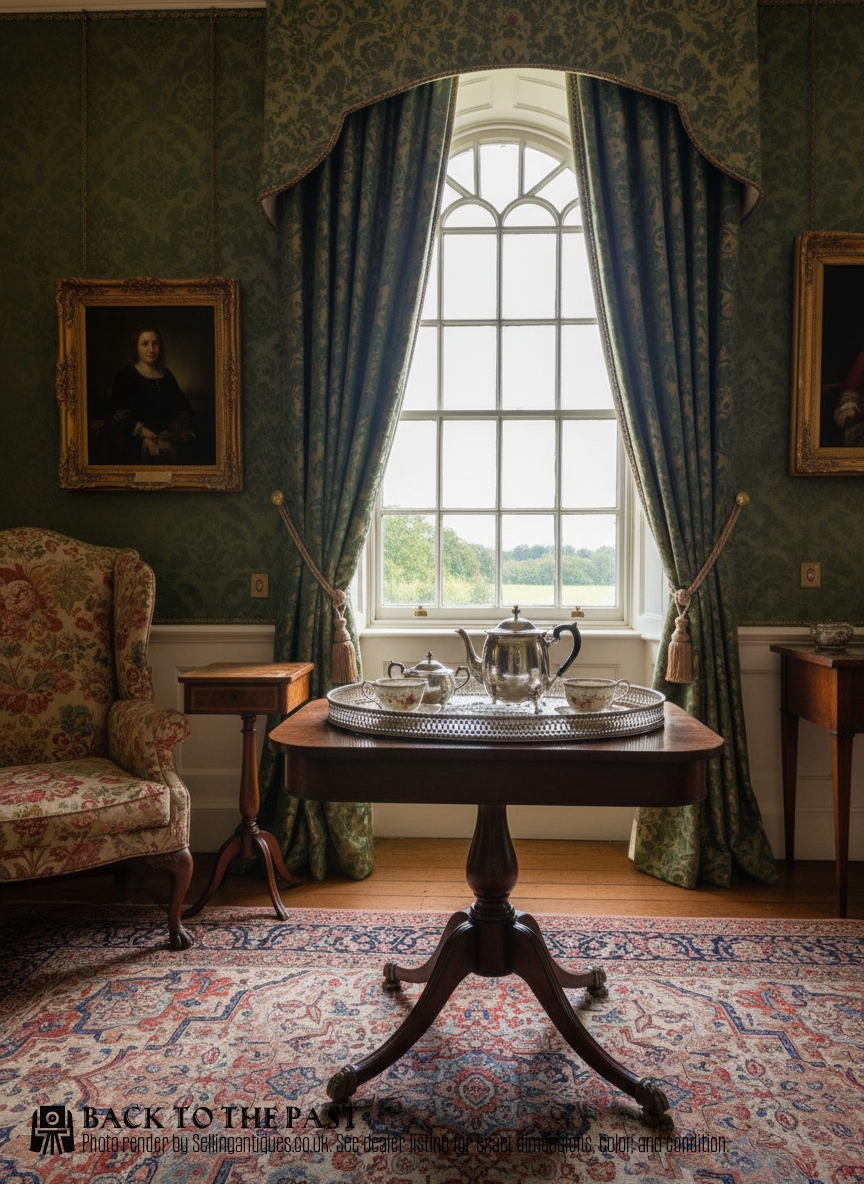
Oval Gallery Tray
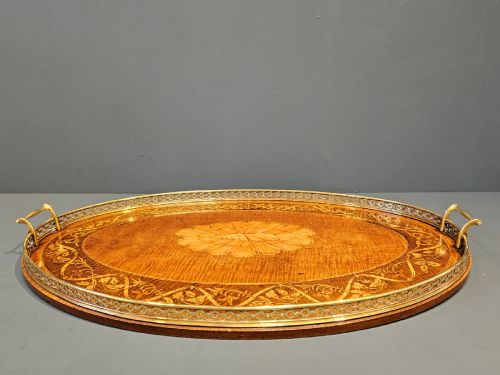
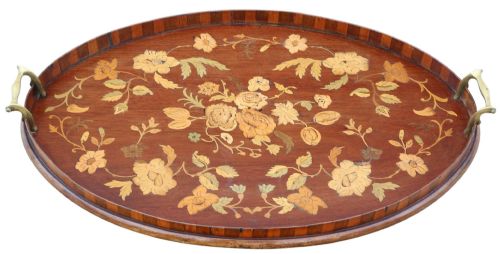
An oval gallery tray is a serving piece or display surface defined by its curved perimeter and raised edge, designed to keep items secure during transit or presentation. When you search for an oval gallery tray, you encounter examples spanning from the Georgian period through the Edwardian era and into the interwar period.
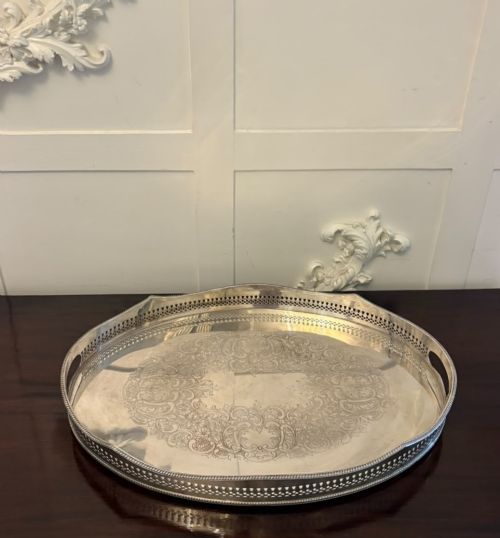
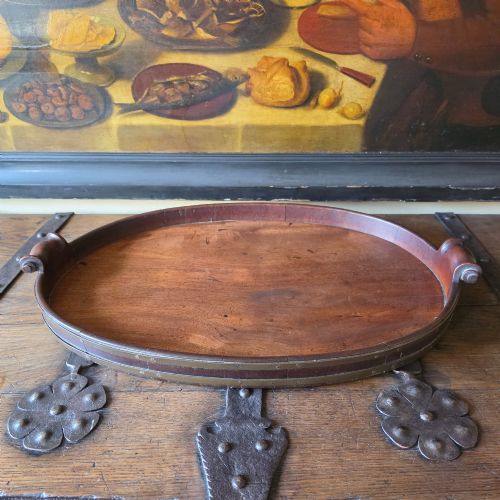
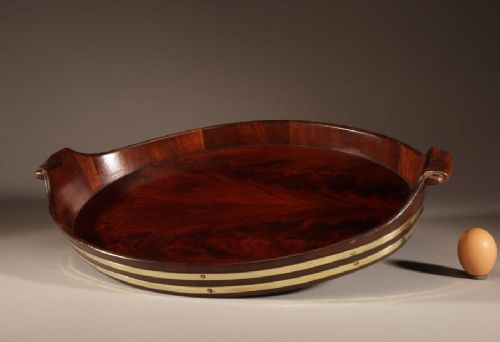
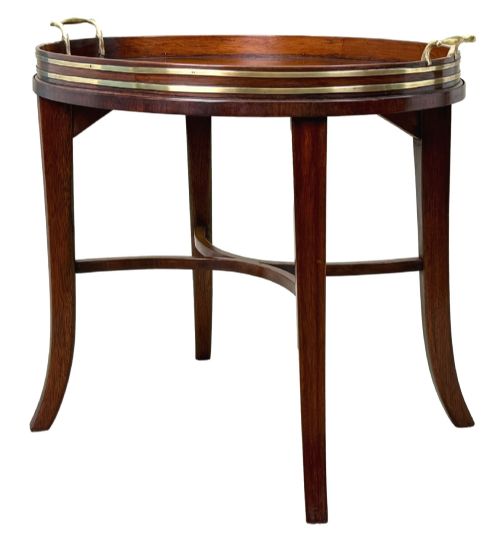
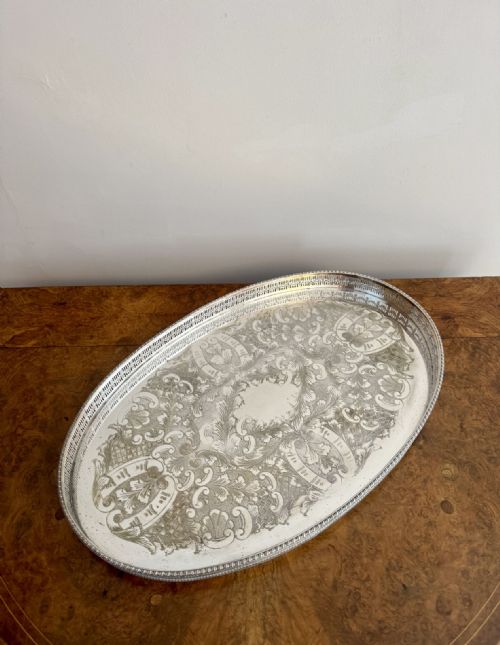
The wooden versions frequently appear in mahogany, oak, or satinwood, often decorated with inlay or brass boundaries, whilst metal iterations utilise silver plate, electroplated nickel silver, or solid silver. Many rest upon stands or serve as tops for occasional and coffee tables, shifting their function from portable service to permanent furniture.
How they were made
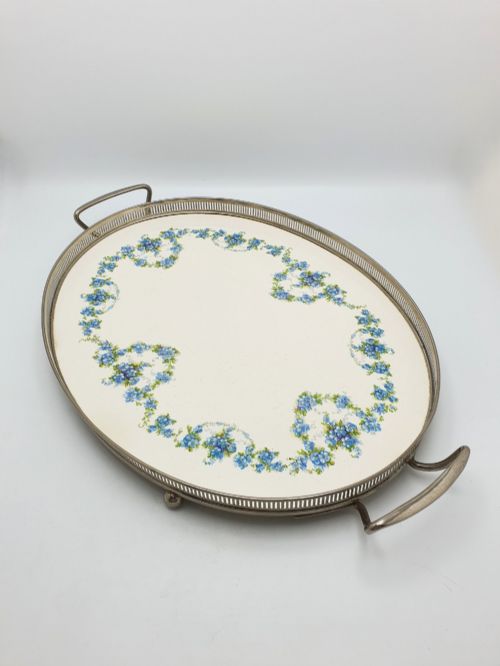
Cabinetmakers constructed wooden trays using timbers like mahogany, oak, and satinwood, frequently employing fine inlay work and coopered construction to achieve the curved shape. Metal trays relied on silver plating over base metals, nickel silver, or sterling silver, paired with pierced or ball and rail brass galleries.
Makers integrated handles directly into the metal galleries or wooden rims, securing the raised borders firmly to the flat bases to withstand the weight of decanters and tea services.
Some trays double as miniature architecture, enclosing tiny balustrades that look like balconies built for miniature royalty.
What varies in quality
The calibre of an oval gallery tray rests on the crispness of its woodwork, the precision of its inlay, and the structural integrity of its raised border. Fine mahogany and satinwood examples display careful grain selection and deliberate marquetry, whereas lesser pieces rely on simpler construction.
In metalwork, the thickness of the silver plate over the base metal determines longevity, and the delicacy of pierced scrolls or engraved details distinguishes workshop production from standard commercial manufacturing.
John Grinsell·Mappin & Webb
The Oval Gallery Tray Glossary
- Gallery
- A raised border or pierced railing running around the perimeter of a tray to prevent items from sliding off. These galleries appear in brass, silver plate, or wood.
- Coopered
- Constructed from narrow vertical staves of wood joined tightly together to form a curved shape, often seen in round or oval vessels.
- EPNS
- Electroplated Nickel Silver, a composite material where a layer of silver is deposited onto a nickel silver base via electrolysis.
- Inlay
- A technique where pieces of contrasting timber, such as satinwood or lighter veneers, are inserted into recesses within a primary wood base to create decorative patterns.
- Sheraton Revival
- A late nineteenth and early twentieth century design movement that reinterpreted the light, neoclassical furniture styles associated with the eighteenth-century designer Thomas Sheraton.
Oval Gallery Tray: Frequently Asked Questions
What were oval gallery trays used for?
These trays served primarily for carrying tea services, decanters, and glassware across rooms without risking spills. The raised gallery kept bottles and cups secure during movement.
Over time, many transitioned into static display pieces or were placed upon stands to function as coffee tables and occasional tables in reception rooms.
How do I date an oval gallery tray?
Dating relies on combining the choice of materials with stylistic cues like inlay motifs and gallery construction. Georgian and George III pieces typically feature dense mahogany and fine hand-cut dovetails or inlay.
Edwardian and later iterations frequently utilise silver plate, oak, and machine-rolled pierced galleries, reflecting the manufacturing shifts of the early twentieth century.
Are wooden or silver plated trays better?
Neither material is superior; they simply served different domestic roles. Wooden trays in mahogany or satinwood provided warmth and intricate marquetry for drawing rooms.
Silver plated and brass-galleried trays offered a gleaming surface better suited to reflecting candlelight during evening entertaining and formal drinks service.
Can I use an antique tray as a coffee table?
Many examples are well suited to serving as coffee tables, particularly those originally made with dedicated stands or sturdier oak and mahogany bases. Their raised edges help contain books, magazines, and decorative objects safely.
When using a portable tray on a separate base, ensure the fit is stable so the surface does not wobble during daily use.