


Oval Brass Framed Painting
An oval brass framed painting brings intimate portraiture into a room, offering small-scale likenesses set within metal borders.
Oval Brass Framed Painting
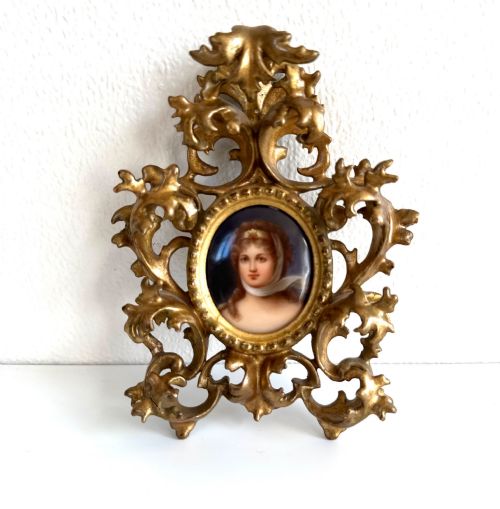
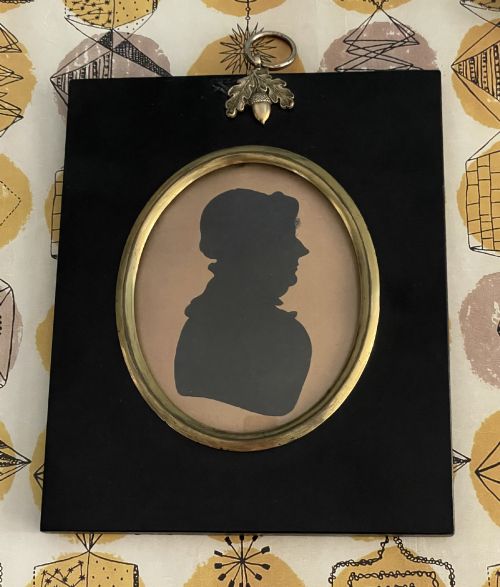
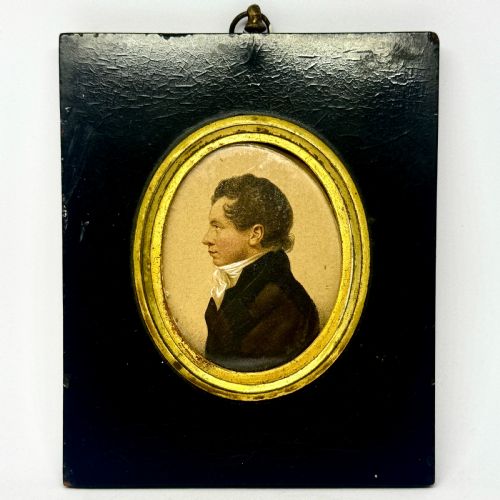
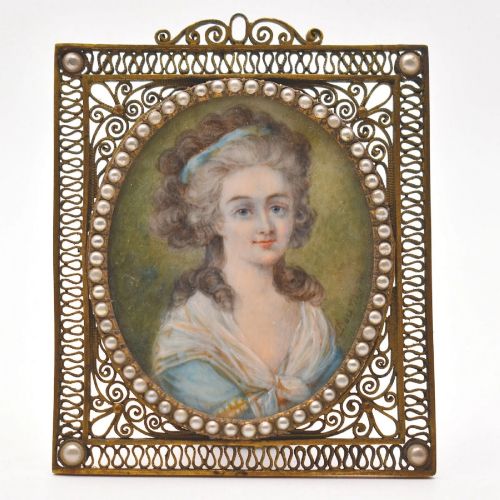
An oval brass framed painting encompasses miniature portraits, silhouettes, and small plaques produced across the eighteenth, nineteenth, and early twentieth centuries. These works present subjects ranging from Georgian gentlemen and Regency ladies to Victorian figures and Art Deco studies.
The format relies on compact dimensions designed for wall display or tabletop placement on stands. Buyers encounter hand-painted watercolours, enamels, and porcelain plaques secured within protective glass and metal surrounds.
Originating primarily from British and continental European makers, these pieces reflect changing fashions in portraiture from formal profiles to relaxed studies. The selection spans neoclassical silhouettists, academic painters, and twentieth-century miniaturists working within traditional bounds.
How they were made
The construction combines fine media on paper, ivory, card, or plaster with cast or spun metal housings. Artisans painted delicate watercolours or oils using fine brushes, occasionally incorporating seed pearls or gilt detailing.
Frames utilise brass, gilt metal, and ebonised wood to enclose convex or flat glass that protects the fragile painted surface. Backings often incorporate wood or card supports alongside hanging loops or hinged metal stands.
Listings feature works spanning the eighteenth century through to the nineteen-forties, utilising watercolour, enamel, porcelain, and ivory.
What varies in quality
Execution of the painted likeness determines the primary division in standard, distinguishing subtle facial modeling and hand-mixed pigment from stiff or hasty work. The crispness of silhouette profiles and the delicacy of brushwork indicate the hand of a skilled miniaturist.
Materials contribute significantly to distinction, where heavy cast brass surrounds, genuine ivory or enamel grounds, and intact original glass elevate a piece. Evidence of signed attribution or notable provenance adds further weight to an example.
James Gillespie·John Miers·Susie Lassam RMS RA·George Atkinson·Archibald Skirving·Jeremiah Steele
The Oval Brass Framed Painting Glossary
- Miniature portrait
- A small-scale painting capturing a likeness, typically executed on ivory, vellum, card, or paper. These works demand extreme precision and were often worn as jewellery or kept in private spaces.
- Silhouette
- A profile portrait filled in with a solid dark colour, most commonly black, derived from shadow tracing or cut paper. Eighteenth and nineteenth-century practitioners developed refined methods using plaster or card.
- Ormolu
- Gilt bronze or brass mounts applied to decorative objects and frames. The technique involves a mercury-gilding process that produces a durable golden finish on the metal base.
- Gilt metal
- Base metal treated with a gold wash, leaf, or plating to simulate solid gold. It appears frequently on frames and stands surrounding nineteenth-century works.
Oval Brass Framed Painting: Frequently Asked Questions
How should I hang an oval brass framed painting?
These pieces suit small wall spaces, narrow alcoves, or gallery arrangements alongside larger works. Utilise picture hooks suited to the weight of the metal frame and glass.
Keep them away from direct sunlight to protect delicate watercolours and paper grounds from fading over time.
Were these portraits meant to be worn?
While some smaller miniatures functioned as lockets or brooches, the examples found here are generally framed for wall display or tabletop stands. Their dimensions served domestic interior decoration rather than personal adornment.
Cabinet miniatures remained popular among collectors who stored them in specialised display cases or mounted them on drawing-room walls.
How do I identify a Georgian piece?
Georgian examples often feature fine watercolour on ivory, distinct silhouettes on plaster, or profile studies of gentlemen and ladies in period attire. The frames tend toward simple brass rings or oval mounts with small suspension loops.
Examining the backing paper, handwriting on reverse labels, and costume details helps confirm the eighteenth or early nineteenth-century origin.
What maintenance do these paintings require?
Keep the pieces in stable environments away from extreme humidity and direct heat sources. Dust the brass frames gently with a dry cloth without applying harsh metal cleaners.
Avoid opening the sealed frames, as exposure to modern air can damage fragile painted surfaces and ivory grounds inside.