




Oval Blue White Platter
These oval blue white platter selections offer large-scale ceramic serving dishes shaped for historic dining tables, finished in cobalt pigments and transfer prints.
Oval Blue White Platter
An oval blue white platter provides a wide ceramic surface designed for presenting large joints of meat or sharing portions at the table. These serving pieces span the eighteenth, nineteenth, Victorian, and Georgian eras, reflecting shifting domestic dining habits across British households.
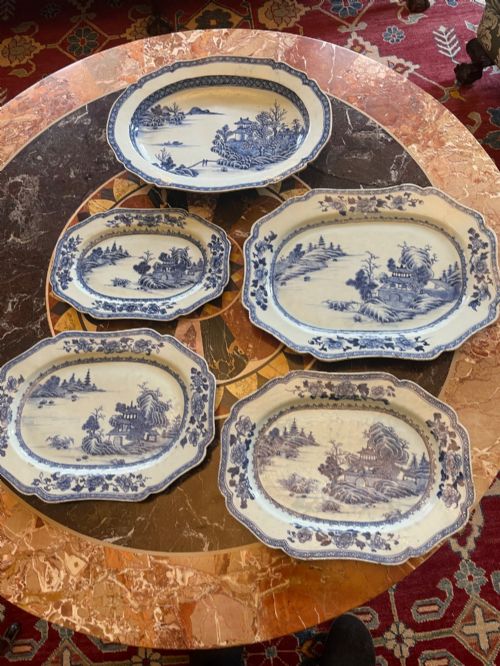
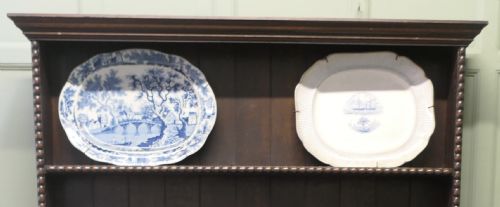
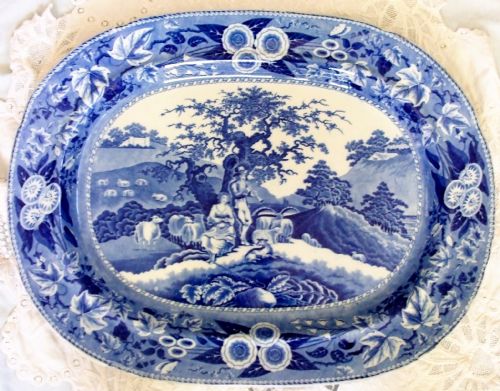
Buyers encounter earthenware, ironstone, and porcelain varieties, ranging from sturdy meat platters to large chargers and plates complete with drainer inserts. Styles move between transfer printed patterns like the Piping Shepherd or zebra designs and handpainted Chinese Export and Nanking porcelain traditions.
Most examples originate from nineteenth-century Staffordshire potteries or earlier Chinese export kilns, carrying cobalt blue pigment beneath clear glazes. Their oval outlines remain practical for modern sideboards while anchoring traditional tables with recognizable nineteenth-century motifs.
Materials and Construction
Potters shaped these large serving dishes from earthenware, ironstone, or porcelain bodies before applying cobalt pigment by hand or transfer print. The porous clay forms were fired at high temperatures to ensure stability under heavy joints of meat.
A glossy vitreous glaze sealed the surface, often enhanced with blue and white transfer printing or handpainted polychrome accents and gold leaf details. Some substantial ironstone versions incorporated accompanying ceramic strainers to catch cooking juices during service.
Oval Blue White Platter Retail Price Guide 2026
Typical asking prices for oval blue white platter among the pieces listed under this phrase on Sellingantiques today, from the lower quarter to the upper quarter. They describe what is for sale here now, not the wider market.
Several platters depict pastoral scenes featuring piping shepherds and zebra patterns, proving nineteenth-century diners enjoyed exotic beasts alongside their Sunday roasts.
Assessing Quality and Execution
Quality rests in the crispness of the cobalt transfer print and the stability of the heavy earthenware or ironstone body. Finer examples display deep, uniform blues without blurring, alongside well-potted rims that resist warping during kiln firings.
The sophistication of the pattern distinguishes standard utilitarian meat platters from superior porcelain pieces like Chinese Nanking imports or decorated Derby serving dishes. Glaze consistency and the careful integration of draining inserts also separate robust utility wares from finer cabinet specimens.
The Oval Blue White Platter Glossary
- Transfer print
- A decorative technique where an engraved copper plate applies ink onto tissue paper, which is then pressed onto the ceramic body before glazing. This method allowed intricate scenes like the Piping Shepherd or Chinese Garden to be reproduced consistently.
- Ironstone
- A dense, durable type of earthenware patented in the nineteenth century to withstand heavy kitchen and dining use. It provides a robust alternative to softer earthenwares while maintaining a bright white ceramic ground.
- Charger
- A large decorative plate or platter used traditionally as a base for other courses or for serving shared food items. These pieces command significant visual weight on dining surfaces.
- Cobalt pigment
- A metallic oxide used under the glaze to produce a stable, vibrant blue colour that survives high-temperature kiln firings without fading. It defines the primary palette of these nineteenth-century ceramics.
- Porcelain
- A fine, vitreous ceramic fired at high temperatures until semi-vitrified and translucent. Unlike porous earthenware, true porcelain rings when struck and absorbs no moisture.
Oval Blue White Platter: Frequently Asked Questions
How were these large platters used?
These large ceramic vessels served roast meats and main courses at historic dining tables, often featuring shallow wells to collect juices. Some heavy ironstone variations included fitted strainers to keep joints elevated above resting liquids during carving.
Their generous oval proportions made them central serving pieces for large households, transitioning easily from kitchen preparation to the dining sideboard.
How do I date an antique platter?
Dating relies on examining the ceramic body, glaze characteristics, and the style of the blue and white transfer print or handpainted motif. Heavier ironstone bodies typically point toward the nineteenth century, whilst thinner porcelain and specific cobalt tones indicate Georgian or eighteenth-century origins.
Maker marks, where present on the reverse, provide specific clues, though many utilitarian meat dishes carry only pattern names or indistinct potters' stamps.
Can I use these platters for serving food?
Most antique earthenware and ironstone pieces remain entirely functional for serving dry foods, provided they lack active structural cracks. Hand washing in warm water preserves the historic glaze and prevents moisture ingress through any microscopic crazing.
Avoiding dishwashers and harsh detergents ensures the cobalt pigment and nineteenth-century transfer prints stay stable for continued domestic use.
What is the difference between earthenware and ironstone?
Earthenware is a porous, lower-fired ceramic body that requires a complete glaze barrier to remain waterproof. Ironstone is a heavily refined, denser stoneware variant developed in the nineteenth century to resist chipping and heavy wear.
Platters made from ironstone feel noticeably heavier and sound more resonant when tapped compared to standard soft-paste earthenwares.