



Oval Blue Serving Dish
An oval blue serving dish brings nineteenth-century transfer printing and hand-painted cobalt to the table with enduring everyday utility.
Oval Blue Serving Dish
An oval blue serving dish encompasses large meat platters, decorative trays, and deep serving plates produced across the eighteenth and nineteenth centuries. The majority of pieces appearing here take the form of blue and white transfer-printed earthenware or porcelain serving platters.
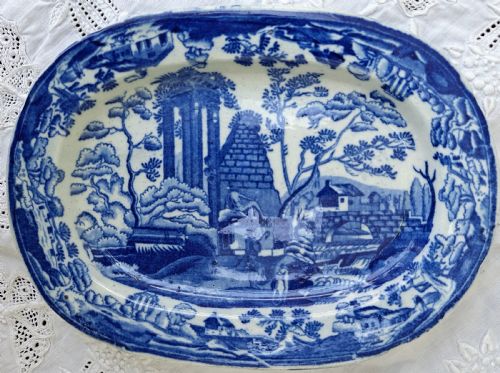
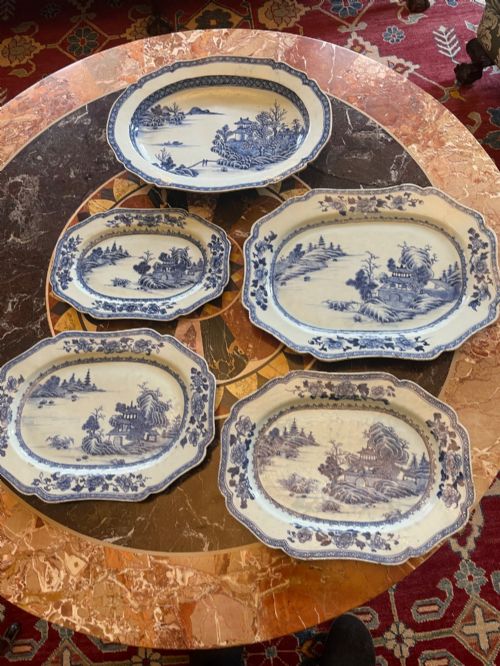
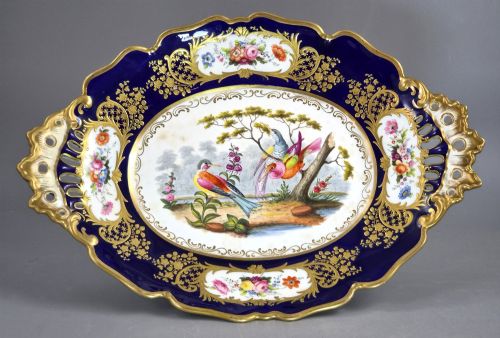
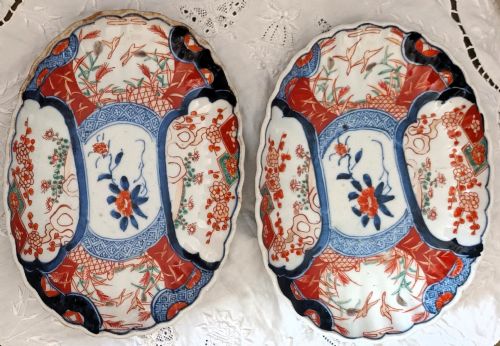
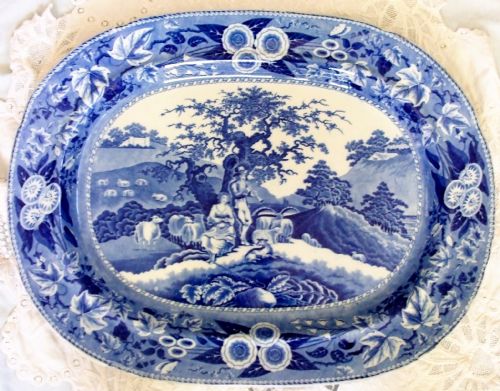
Makers from Georgian Staffordshire to Victorian England utilised cobalt pigment underglaze to render classical ruins, pastoral shepherds, and exotic birds. Alongside British earthenware, buyers encounter Chinese Export porcelain and Japanese Meiji period Imari wares sharing the same oval format.
These items were originally designed for domestic dining and family feasts, offering robust capacity for joints of meat and vegetable courses. Today, collectors utilise them for centrepiece display or functional service on modern dining tables.
How they were made
Potters shaped earthenware and porcelain bodies into oval moulds before applying cobalt pigment by hand or through copperplate transfer printing. This transfer method allowed intricate scenes like Chinese gardens and classical ruins to be repeated cleanly across large meat platters.
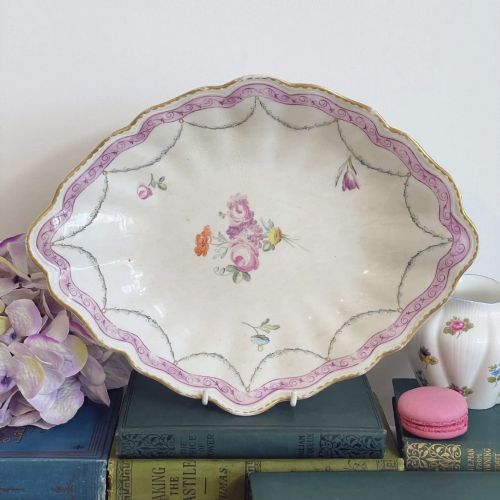
Glaze was applied over the pigment to seal the surface before high-temperature firing in kilns, sometimes supplemented by gold leaf or gilding on finer porcelain bodies. Enamel highlights occasionally augmented the cobalt base, creating contrast on polychrome floral dishes.
Oval Blue Serving Dish Retail Price Guide 2026
Typical asking prices for oval blue serving dish among the pieces listed under this phrase on Sellingantiques today, from the lower quarter to the upper quarter. They describe what is for sale here now, not the wider market.
Pastoral shepherds blow pipes across nineteenth-century pottery while rustic zebras wander through unexpected Georgian pastures.
What varies in quality
Quality rests primarily in the crispness of the transfer print and the depth of the cobalt pigment against the white ceramic ground. Superior examples display sharp definition in complex borders and pictorial centres without blurring or running in the glaze.
The weight and refinement of the ceramic body also separate standard utility platters from exhibition porcelain. Finer pieces demonstrate skilful hand-painting, well-balanced oval proportions, and careful kiln placement that minimises warping.
Thomas Lakin·Coalport·Samson, Paris·Royal Crown Derby
The Oval Blue Serving Dish Glossary
- Transfer printing
- A decoration technique where an engraved copper plate transfers a design onto tissue paper, which is then stamped onto the unglazed ceramic body. This innovation allowed intricate patterns to be produced efficiently in large quantities.
- Cobalt pigment
- A metallic oxide used under the glaze to produce deep blue tones that withstand high kiln temperatures without fading. It forms the defining colour foundation for traditional blue and white ceramics.
- Meat platter
- A large, sturdy oval serving dish featuring a recessed well or channel to catch juices from roasted joints. These heavy earthenware pieces were essential for large dining tables.
- Imari porcelain
- A style of Japanese export porcelain characterised by a palette of underglaze blue, iron red, and gilt highlights. Pieces often feature dense floral and panelled motifs.
- Bleu céleste
- A bright turquoise or sky-blue enamel ground colour used on European porcelain. Factories like Samson utilised this distinctive hue to emulate prized eighteenth-century French palettes.
Oval Blue Serving Dish: Frequently Asked Questions
What were oval blue serving dishes used for?
These dishes served central functions at historical dining tables, carrying large joints of meat, roasted poultry, or piled vegetables for communal family meals. Their generous oval proportions accommodated substantial food portions while presenting intricate patterns to diners.
Over time, many of these durable platters transitioned from active dining rooms to decorative display roles on walls, dressers, and sideboards. Modern owners continue to use them for serving large gatherings or as decorative centrepieces.
How do I tell Georgian pieces from Victorian ones?
Georgian serving dishes often feature romanticised transfer scenes such as classical ruins, pastoral shepherds, or exotic Chinese landscapes rendered in deep, fluid cobalt. The earthenware bodies of this period can feel slightly heavier and show minor kiln stilt marks on the reverse.
Victorian meat platters typically display crisper, more mechanically uniform transfer printing alongside denser border patterns influenced by Gothic or Rococo revival styles. Examining the glaze quality and any impressed potters' marks provides further chronological clarity.
Are these dishes safe for everyday use?
Most antique earthenware and porcelain platters remain structurally sound for serving dry foods, cold meats, or bread at modern dining tables. However, historic glazes can be sensitive to aggressive detergents and thermal shock from microwaves.
Hand washing in warm soapy water preserves the stability of the glaze and prevents potential fading of delicate overglaze gilding. Treating these items with care ensures their transfer-printed surfaces survive for future generations.
What is Chinese Export porcelain?
Chinese Export porcelain refers to ceramics manufactured in China specifically for Western markets from the seventeenth through the nineteenth centuries. These wares combined traditional Chinese potting skills with European shapes and pictorial preferences.
Pieces arriving in Britain often featured blue and white garden scenes or Nanking patterns that heavily influenced domestic English pottery designs. Collectors value them for their fine porcelain bodies and historical trade significance.