


18th Century Transferware
These 18th century transferware pieces are early printed ceramics bringing delicate blue and white scenes to the table.
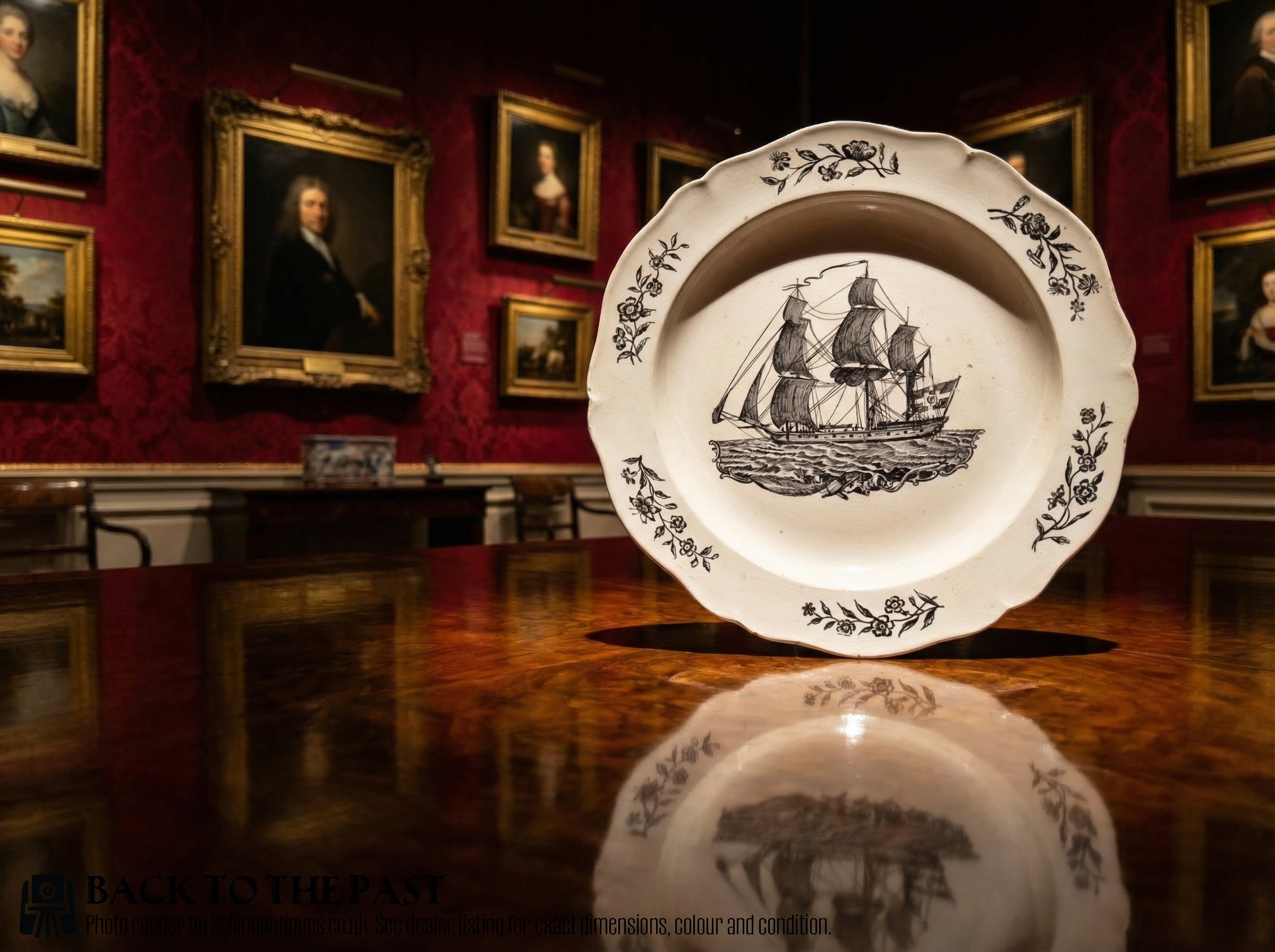
18th Century Transferware
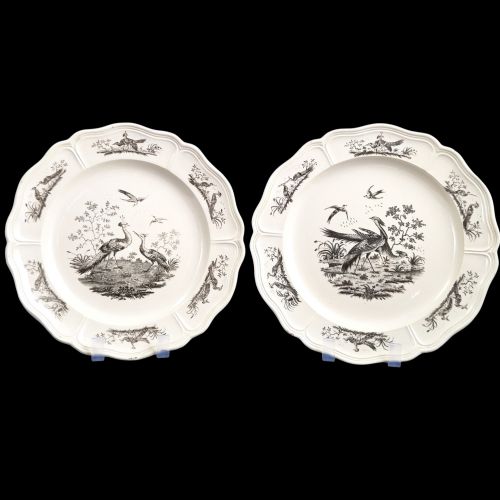
When you search for 18th century transferware, you are looking at early British ceramics decorated using printed paper pulls rather than hand-painted brushwork. These pieces include tea ware, pickle dishes, chargers, spoon trays, and bread stands from English potteries.
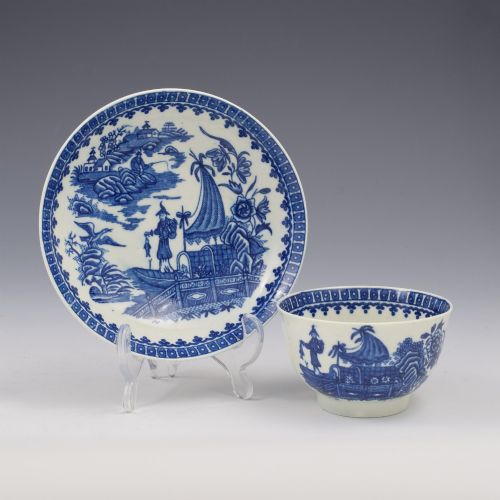
The versions you are most likely to meet on this page hail from the 18th Century and Georgian periods, showcasing early blue and white designs such as the Fisherman pattern, Willow pattern, and Buffalo pattern. Forms range from small leaf-shaped pickle dishes to large chargers and tea bowls.
Originating from English factories like Caughley, Worcester, and Liverpool Herculaneum, these ceramics capture the early technical shift from hand-painted blue and white to mechanically transferred copperplate printing. They represent the foundational years of British printed pottery.
How they were made
Makers utilised soft-paste porcelain, earthenware, pearlware, and soapstone as the foundational bodies for these printed items. Potters shaped these ceramic materials into delicate tableware, tea ware, and decorative plates before applying the initial biscuit firing.
Decoration relied on underglaze cobalt blue transferred from engraved copper plates onto the ceramic surface using tissue paper. A transparent glaze was then applied over the printed design before a final high-temperature kiln firing fused the pigment permanently.
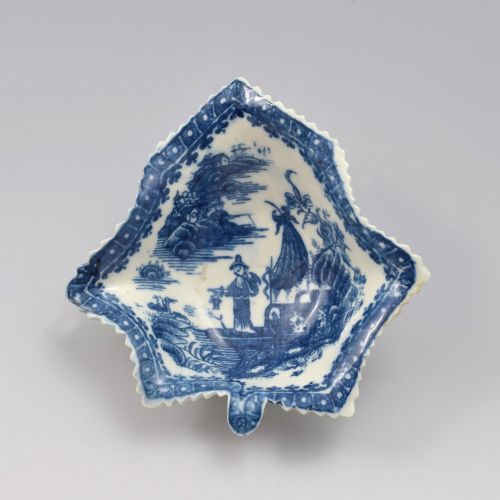
Dine like a Georgian aristocrat by serving your pickles from a delicate blue and white leaf-shaped porcelain dish.
What varies in quality
The clarity of the underglaze cobalt blue print separates finer examples from blurred or smudged transfers, reflecting the skill of the engraver and the printer. Crisp lines in intricate motifs like the Fisherman pattern indicate superior execution at the copperplate stage.
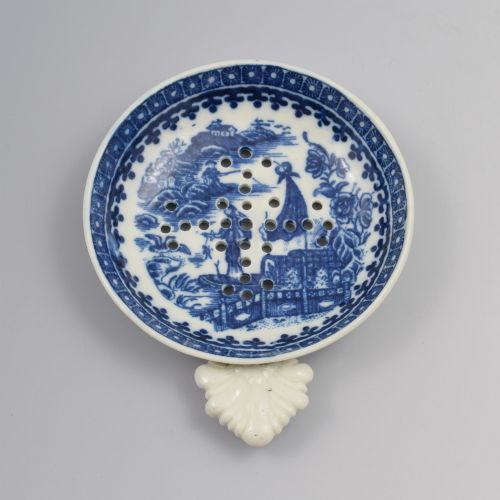
Body selection and glaze smoothness also define the standard of the piece, with refined soft-paste porcelain and smooth pearlware achieving a more even finish than coarser earthenware. The precision of the potting, particularly in delicate items like egg drainers and leaf dishes, marks the distinction.
Caughley Porcelain·Liverpool Herculaneum
The 18th Century Transferware Glossary
- Transferware
- Ceramics decorated by pulling an engraved copperplate design onto tissue paper and transferring it to the unglazed or bisque ceramic body.
- Pearlware
- An refined earthenware introduced in the late 18th century featuring a thin glaze with a faint bluish tint to mimic Chinese porcelain.
- Underglaze
- Pigment applied to the ceramic body before the glaze is applied and fired, protecting the design beneath a glassy layer.
- Soft-paste porcelain
- A ceramic composition containing glass frit and white clay, fired at lower temperatures than true hard-paste porcelain.
- Pickle dish
- A small, often leaf-shaped tableware vessel used in the 18th century for serving small condiments or pickles at the dining table.
18th Century Transferware: Frequently Asked Questions
What is 18th century transferware?
These pieces are early British ceramics decorated by printing engraved copperplate designs onto the clay body using cobalt blue pigment.
They encompass tea wares, tableware, and decorative dishes produced during the Georgian era by notable English potteries.
How were these items used originally?
They served functional roles on the dining and tea tables of the Georgian period, holding food, tea, or condiments.
Items like spoon trays, egg drainers, and bread stands catered to specific dining rituals of wealthy households.
How do I identify a Caughley piece?
Caughley ceramics from this era frequently feature specific printed motifs such as the Fisherman pattern or the Willow pattern in underglaze cobalt blue.
They often appear on soft-paste porcelain bodies fashioned into delicate tableware forms like leaf dishes and tea bowls.
What is pearlware?
Pearlware is a refined earthenware body developed in late 18th century England to provide a wheter surface for blue and white printing.
Potters applied a glaze with a subtle blue tint that pooled in crevices, enhancing the bright appearance of the transfer print.