

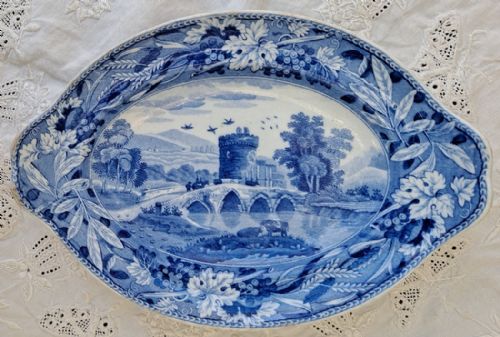
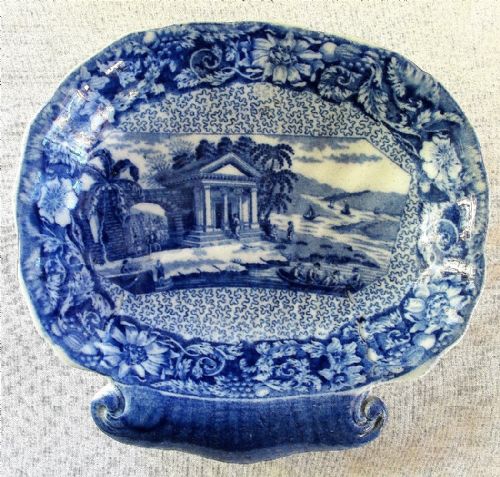
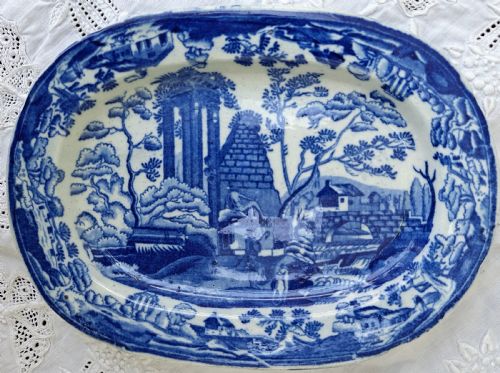
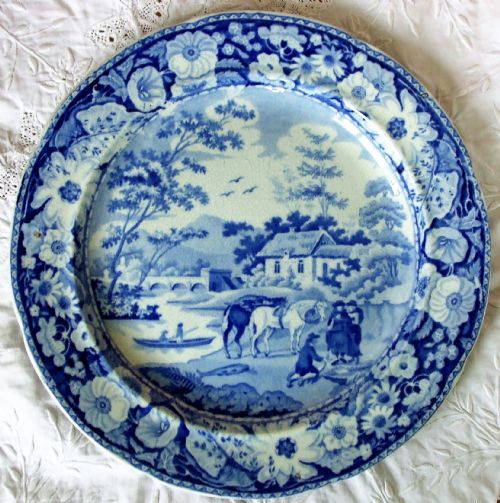



Cobalt Blue Pearlware Dish
These robust cobalt blue pearlware dish examples bring rich transfer-printed scenes to the table, prized for their deep blue pigment and distinctively bluish glaze.
Cobalt Blue Pearlware Dish
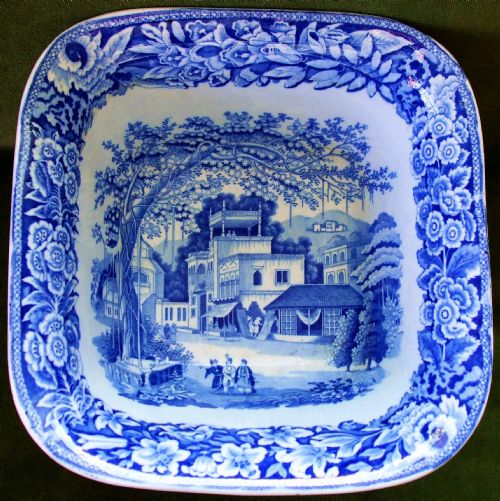
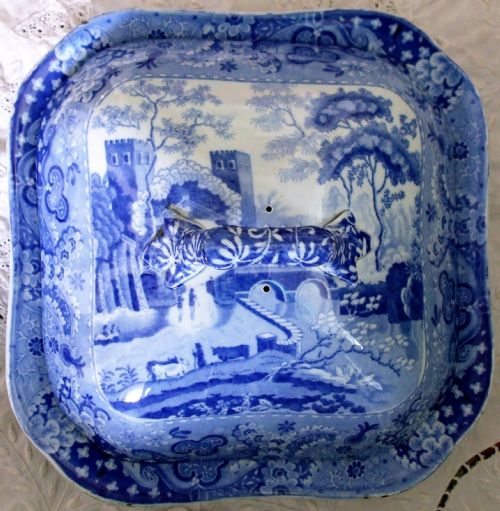
A cobalt blue pearlware dish is a ceramic serving piece or plate produced during the Georgian era and the early nineteenth century. These items showcase intricate blue and white transfer-printed designs ranging from pastoral landscapes and exotic wildlife to classical ruins.
The most common forms on this page include serving platters, decorative plates, and vegetable tureens, all sharing the characteristic blue palette applied beneath the glaze.
What varies in quality
Quality in a cobalt blue pearlware dish rests upon the clarity of the transfer print and the smoothness of the glaze application. Finer pieces display crisp lines in complex patterns like classical ruins or scenic landscapes without smudging or pooling of the cobalt pigment.
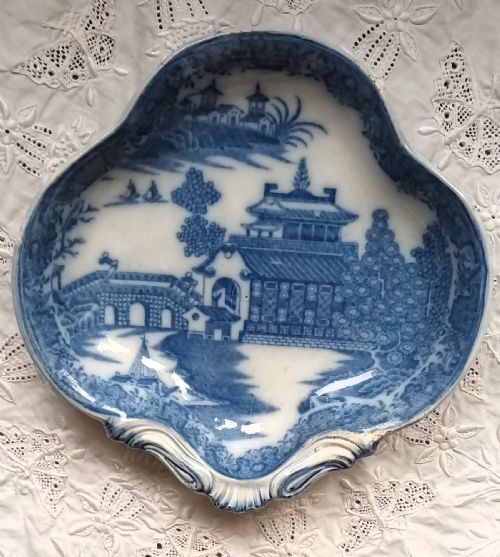
The sophistication of the moulded shape, whether pierced rims on serving platters or trefoil forms, distinguishes standard tableware from more ambitious pottery works.
Cobalt Blue Pearlware Dish Retail Price Guide 2026
Typical asking prices for cobalt blue pearlware dish among the pieces listed under this phrase on Sellingantiques today, from the lower quarter to the upper quarter. They describe what is for sale here now, not the wider market.
All listed items combine earthenware bodies with cobalt pigment under a lead glaze, dating exclusively from the Georgian era and the nineteenth century.
Thomas Lakin·William Adams·J. & R. Riley·J. & R. Clews·Stubbs·Brameld & Co.·John Rogers & Son·John Davenport
The Cobalt Blue Pearlware Dish Glossary
- Pearlware
- A refined earthenware developed by British potters to rival Chinese porcelain, featuring a glaze with a subtle bluish tint. This specific glaze formulation defines the group.
- Transfer printing
- A decoration technique where an engraved copper plate transfers a design onto tissue paper, which is then stamped onto the unglazed ceramic surface. This method allowed for intricate pictorial scenes on everyday pottery.
- Tureen
- A deep covered serving vessel used for soups or vegetables at the dining table. These large holloware pieces often match smaller plates and platters within a service.
- Chinoiserie
- A European artistic style reflecting Chinese motifs and imaginary oriental landscapes. This theme appears frequently in early transfer-printed patterns.
Cobalt Blue Pearlware Dish: Frequently Asked Questions
What is pearlware?
Pearlware is a refined earthenware body developed in the late eighteenth century as an improvement over creamware. Its characteristic bluish glaze gives these dishes their distinct appearance.
Potters used cobalt oxide in the glaze mixture to neutralize the natural yellow tone of the fired clay, resulting in a paler, whiter surface that resembled porcelain.
How are these dishes decorated?
These ceramics utilise transfer printing, a technique where an engraved metal plate impresses ink onto paper. The paper transfers the pattern onto the biscuity earthenware.
After the transfer of scenes like classical ruins or wildlife, the pottery receives a transparent lead glaze and goes back into the kiln for a final high-temperature firing.
Can I use these for dining?
While these antique pieces remain structurally sound for serving dry foods, modern dishwashers and microwaves can damage the historic lead glaze and earthenware body. Hand washing protects the integrity of the ceramic.
Most collectors prefer to display large platters and plates on walls or dressers to preserve the transfer-printed surface from everyday wear and tear.
How do I identify the period?
The combination of the pearlware glaze, earthenware body, and early nineteenth-century transfer-printed subjects points directly to the Georgian era. Maker marks on the reverse often help narrow down the production decade.
Stylistic cues such as Chinoiserie motifs or named topographical views also serve as helpful indicators for dating individual pieces.