


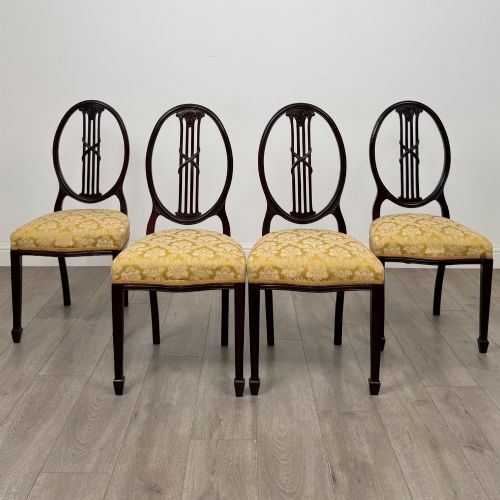
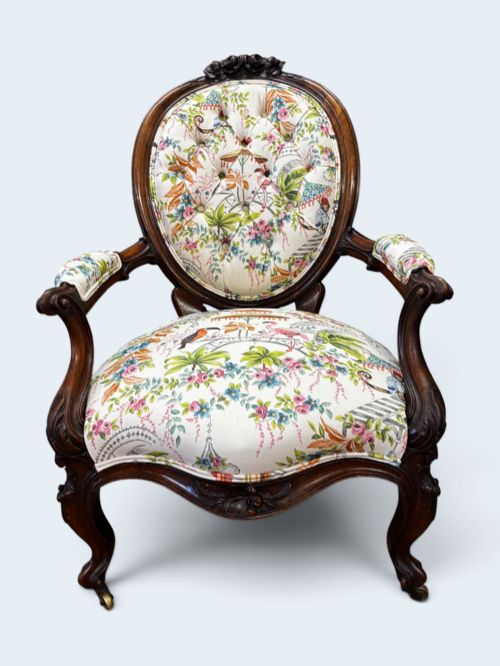
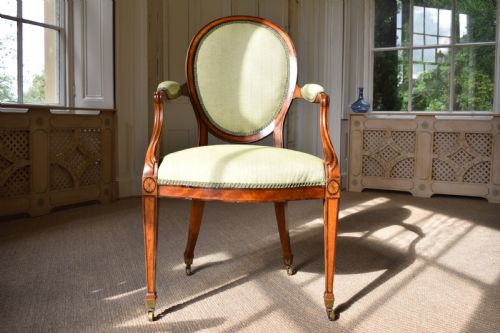
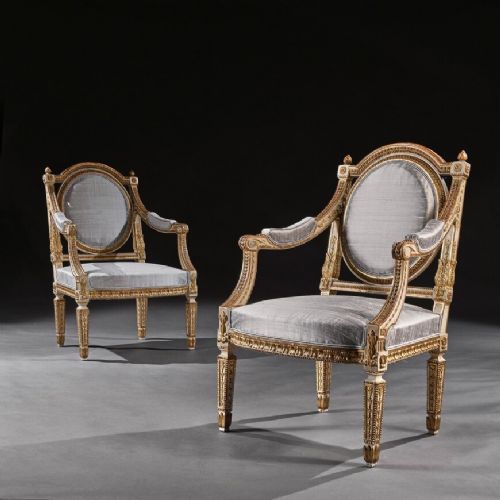
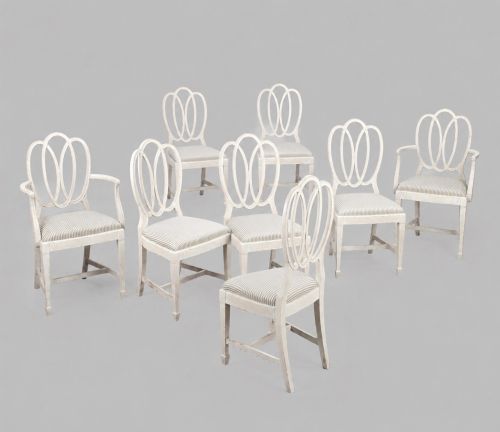
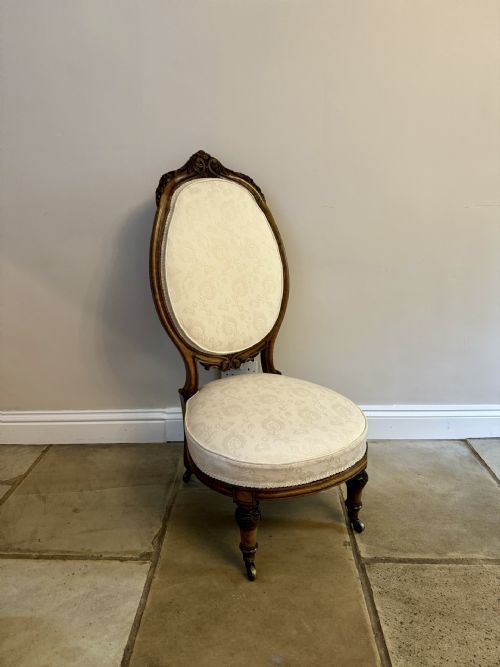
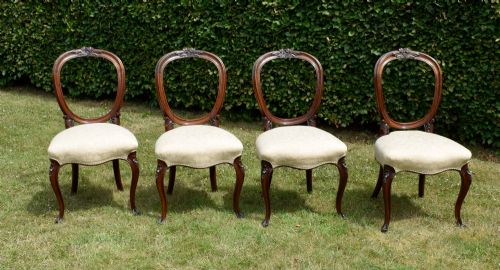
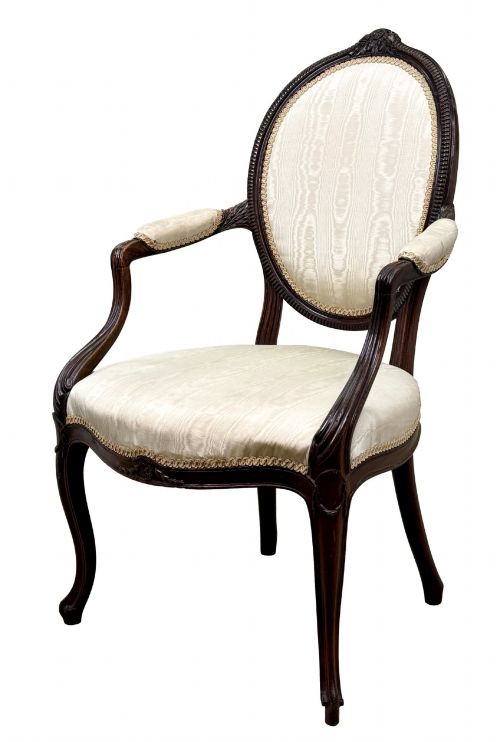


Oval Back Upholstered Chairs
These oval back upholstered chairs bring neoclassical proportion and comfortable seating to any room through centuries of refined craftsmanship.
Oval Back Upholstered Chairs
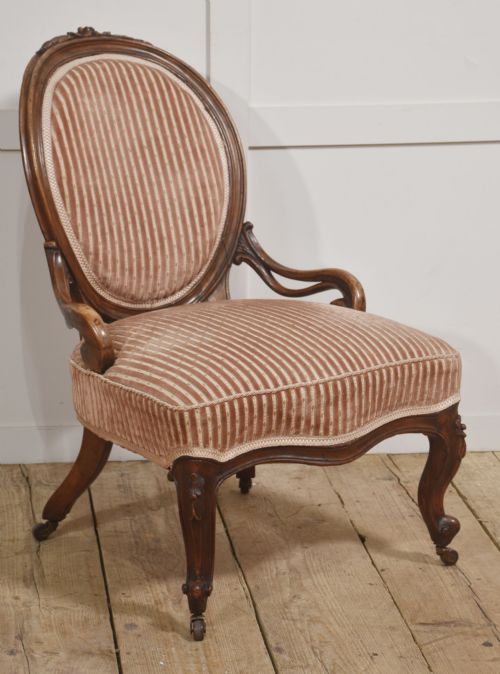
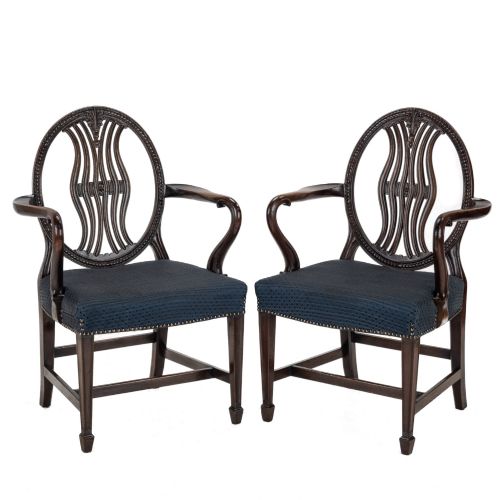
Oval back upholstered chairs combine distinct curved wooden frames with padded seating surfaces designed for drawing rooms, dining spaces, and formal parlours. When searching for oval back upholstered chairs, buyers encounter pieces ranging from eighteenth-century George III models to later Victorian and Edwardian revivals.
The selection on this page includes armchairs, side chairs, nursing chairs, and larger salon suites spanning the nineteenth and early twentieth centuries. French influences appear frequently alongside English mahogany and walnut framing.
Materials and construction
Makers shaped these frames from solid timbers including mahogany, walnut, and satinwood, alongside gilded or painted wood surfaces. Traditional joinery secures the curved backrests while brass and hand-carved detailing accent the structural woodwork.
Upholstery relies on traditional textile coverings such as silk fabric, damask, wool work, and velvet fastened directly to the shaped wooden frames. Open armchairs and fully upholstered forms utilise internal padding to support the curved back design.
Listings feature items from the eighteenth, nineteenth, and twentieth centuries, including Victorian, Edwardian, and George III periods.
Judging quality in oval back upholstered chairs
The standard of carving on the wooden show frame dictates much of the visual distinction between pieces. Crisp detailing in giltwood or carved walnut separates finer workshop output from simpler production.
The choice and execution of the upholstery textile also influence the overall standard. Original needlepoint panels or high-grade silk damask reflect the original investment in the seating.
The Oval Back Upholstered Chairs Glossary
- Bergère
- An enclosed upholstered armchair with wooden framing and a stuffed seat, originating in France. These chairs often feature upholstered sides alongside the oval back.
- Giltwood
- Timber treated with gold leaf or gilt preparation to create a luminous decorative surface. This finish appears frequently on frames influenced by French royal styles.
- Hepplewhite
- A light, elegant furniture style named after cabinetmaker George Hepplewhite, characterised by shield and oval back designs in mahogany. Pieces from this tradition emphasise tapered legs and subtle carving.
- Nursing chair
- A low-seated chair designed for comfort, typically featuring an upholstered oval back and generous padding. These pieces were historically used in bedrooms and nurseries.
- Salon suite
- A matching set of seating furniture, including armchairs, side chairs, and sofas, intended for formal reception rooms. These suites share uniform wood framing and textile upholstery.
Oval Back Upholstered Chairs: Frequently Asked Questions
Where should I place an oval back chair?
These chairs suit formal sitting rooms, bedrooms, and hallways where their curved silhouettes stand out against flat walls. They function well as individual accent pieces or paired alongside matching side tables.
In dining spaces, sets of oval back chairs provide formal seating around mahogany or walnut tables. Their upholstered backs ensure comfort during extended seating.
How do I identify a French style chair?
French style chairs typically display carved giltwood, painted finishes, or elaborate floral motifs upon the wooden frame. Cabriole legs and exposed show frames are common indicators of this design lineage.
English interpretations tend to utilise mahogany or walnut with straighter tapered legs. Comparing the wood choice and carved ornamentation helps distinguish regional origins.
What is the difference between an armchair and a side chair?
Armchairs feature structural elbow rests integrated into the wooden frame, providing additional support for the sitter. They occupy more floor space and usually serve as principal seating within a room. N Side chairs lack arms and possess a narrower profile designed to fit easily around dining tables or against perimeter walls. Both variants share the characteristic oval backrest shape.
How do I care for antique upholstery?
Protect delicate textiles such as silk damask, velvet, and wool work from direct sunlight to prevent fading of the fibres. Regular gentle vacuuming with a soft brush attachment removes surface dust without damaging the weave.
Inspect the wooden frame periodically to ensure the joinery remains stable. Professional conservation is recommended for restoring antique textiles or delicate giltwood finishes.