
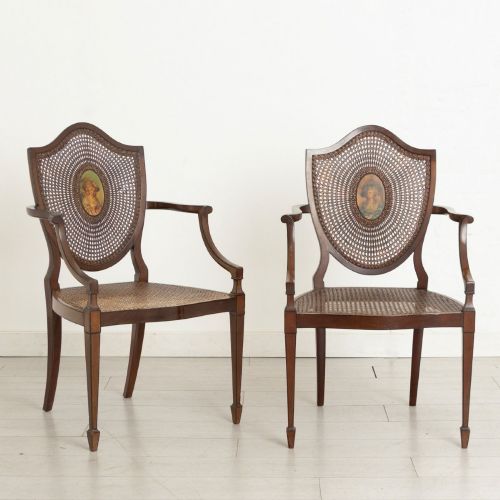


Vintage Painted Dining Chair
A vintage painted dining chair brings character to a room through weathered pigment and traditional timber framing.
Vintage Painted Dining Chair
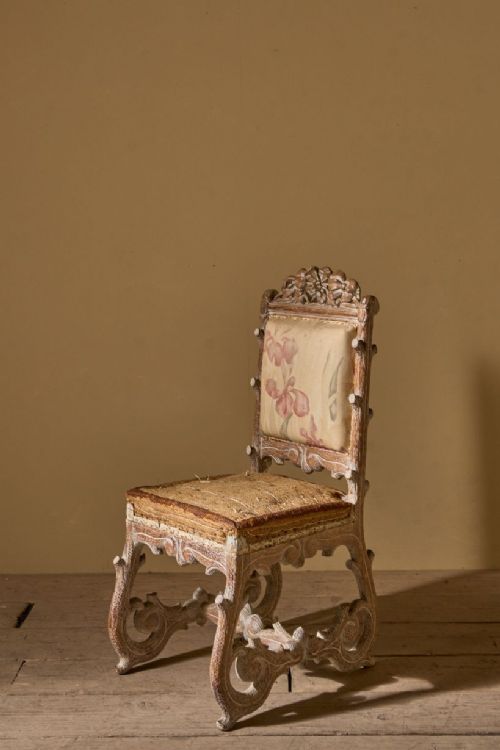
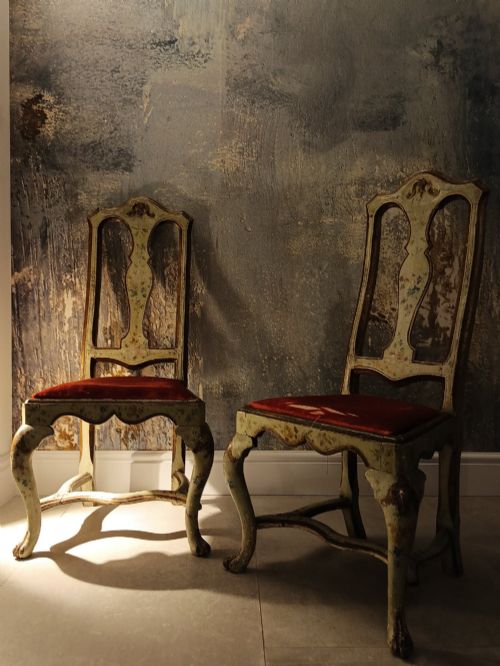
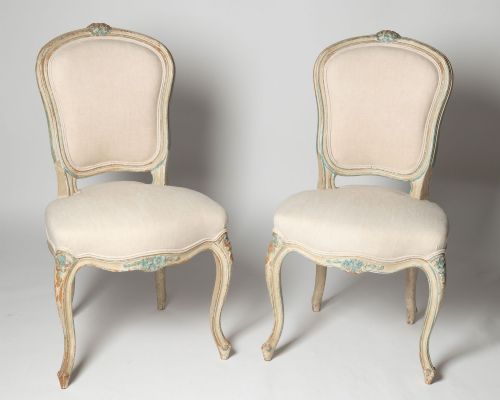
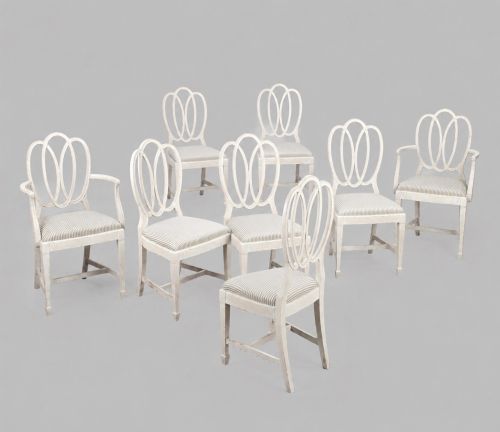
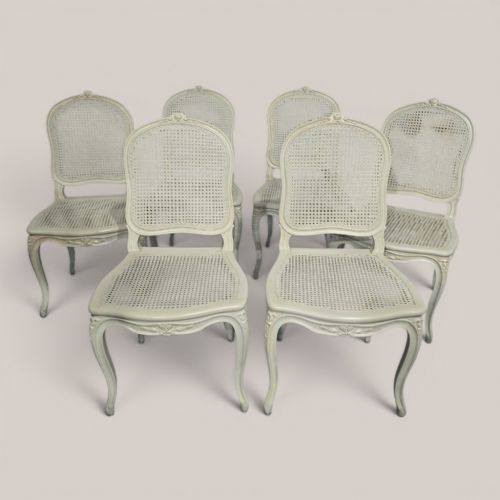
A vintage painted dining chair is typically encountered as a matched set or pair, drawing on styles ranging from rustic country to formal French neoclassical and regency models. These pieces span the eighteenth, nineteenth, and early twentieth centuries, reflecting diverse regional aesthetics from British Windsor forms to continental provincial workshops.
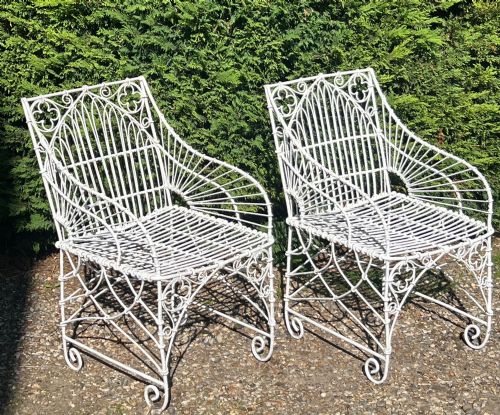
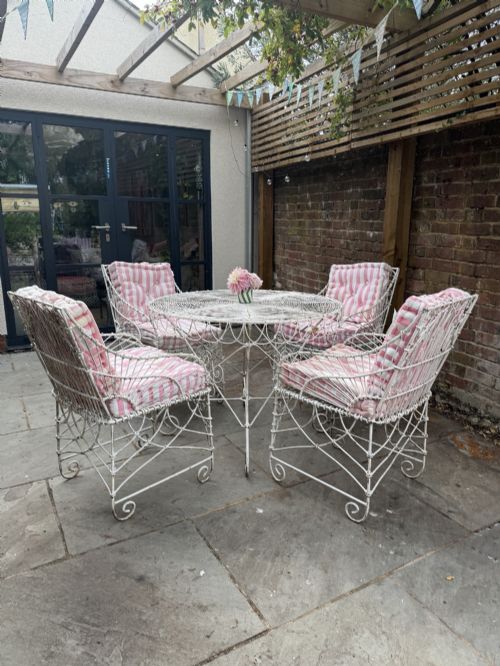
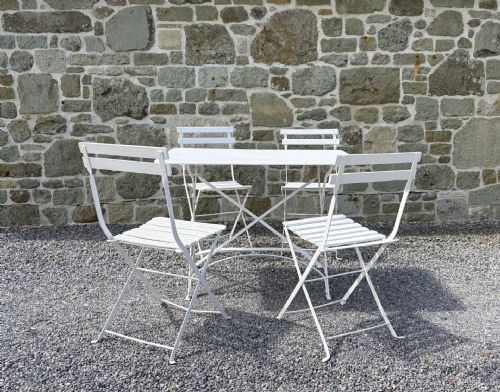
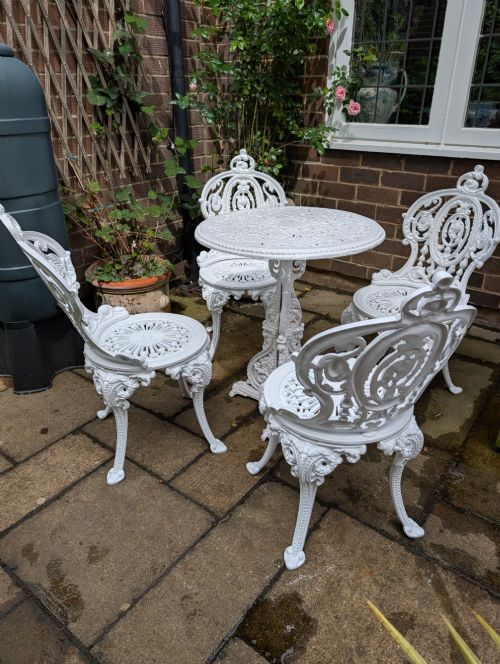
Buyers seeking this phrase encounter formats that include side chairs, armchairs, and bergere dining chairs alongside garden dining sets. Frames often incorporate cane, rush, or upholstered seats paired with wooden or iron structures.
The aesthetic appeal relies heavily on surface treatments, whether showing layers of original scumble paint, ebonised finishes, or later decorative layers applied over oak, pine, and bamboo.
How they were made
Makers constructed these frames using traditional joinery in timbers such as oak, pine, and mahogany, frequently integrating natural seating materials like cane, rush, or woven textile.
Surface decoration involved the application of paint, lacquer, or specialised finishes such as scumble glazes, often built up in multiple layers over decades of use.
Current selections feature pieces spanning from the 18th century through the 1930s, utilising paint, iron, cane, and rush.
What varies in quality
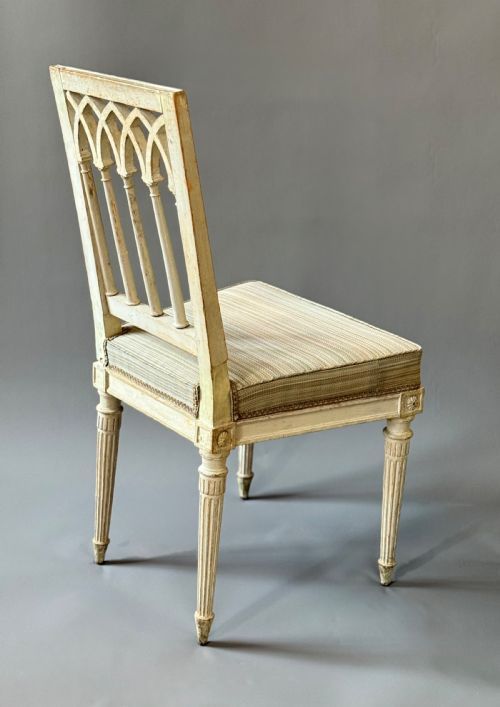
The integrity of the underlying timber frame and the survival of original decorative paint layers separate utilitarian seating from finer artistic examples. Carved details on styles like the Louis XVI medallion or Gothic revival models indicate greater workshop ambition.
Coherence within a set determines its utility for a dining room, as matched groups maintain uniform patination and structural stability across multiple chairs.
The Vintage Painted Dining Chair Glossary
- Scumble paint
- A translucent glaze dragged or mottled over a lighter base colour to simulate the grain of more expensive timber. This technique was popular in nineteenth-century provincial workshops.
- Faux bamboo
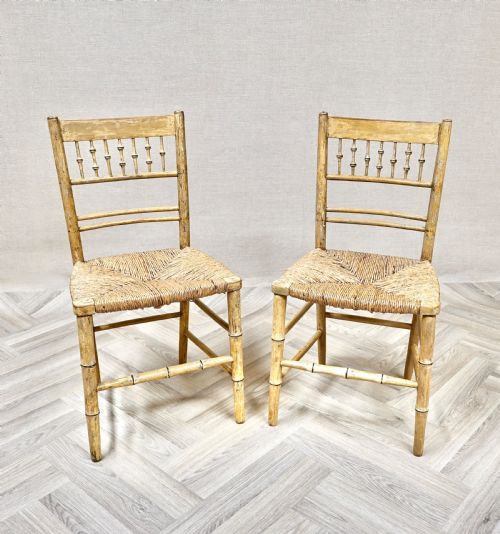
- Wood turned and carved to imitate natural bamboo stalks. Makers utilised this exotic motif during the regency and nineteenth-century periods.
- Bergere
- An enclosed upholstered armchair with a wooden frame and exposed cane panels on the back and sides. French examples frequently appear in dining and salon settings.
- Rush
- Dried marsh grass twisted into cord and woven tightly to form traditional seat pads. It provides a resilient and textured surface on rustic and country chairs.
- Ebonisation
- A chemical or pigment treatment applied to timber to imitate costly ebony. This dark finish appears frequently on nineteenth-century seating.
Vintage Painted Dining Chair: Frequently Asked Questions
How do I clean a painted chair?
Dust the surface regularly with a soft, dry cloth to prevent accumulation in carved crevices and joints. Avoid harsh chemical cleaners that might strip historic paint layers or compromise the original scumble finish.
Test any mild cleaning solution on an inconspicuous underside area before applying it more broadly. Preserving the integrity of the aged surface remains paramount for maintaining character.
Are these chairs suitable for daily dining?
Many sturdy nineteenth and twentieth-century examples serve well for regular use around a dining table. Checking the stability of joints and seat supports ensures they withstand everyday seating demands.
Lighter frames or pieces with delicate cane panels require more mindful handling. Pairing antique seating with a sturdy table creates a functional and visually rich dining space.
What is scumble paint?
Scumble paint involves applying a translucent topcoat over a paler base and manipulating it with combs or rags. This historic technique created faux wood grains or mottled decorative effects.
Original scumble finishes provide strong evidence of a piece's age and workshop origin. Collectors prize surviving examples with honest patination and minimal modern overpainting.
How can I match mismatched chairs?
Embrace eclectic grouping by uniting chairs through a shared paint palette or similar regional style. Combining different nineteenth-century farmhouse or provincial models around a single table adds historical depth.
Pay attention to seat heights to ensure everyone sits at a comfortable level relative to the table surface. Common materials like rush or cane also help tie disparate frames together visually.