






Ottoman Woven Rug
An ottoman woven rug brings centuries of Anatolian and Balkan textile tradition directly to the floor.
Ottoman Woven Rug
An ottoman woven rug encompasses flatwoven kilims and knotted carpets originating from Turkey, the Balkans, and surrounding regions during the nineteenth and early twentieth centuries. These floor coverings and regional weavings display distinct geographic designs, ranging from village prayer rugs to large-scale carpets.
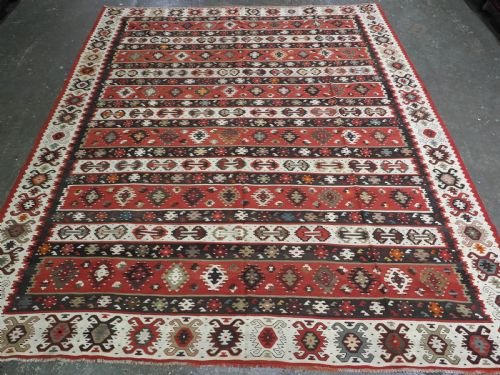
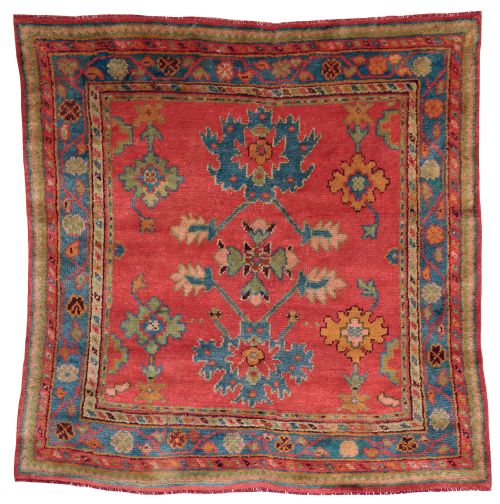
Buyers seeking an ottoman woven rug will encounter various traditional forms including Ghiordes, Ladik, Milas, and Kirsehir prayer rugs alongside larger Ushak and Sivas carpets. Regional village and tribal pieces such as Konya yastics, Sarkoy kilims, and Pirot kilims also appear frequently.
Dating primarily from the eighteen-hundreds up to nineteen-twenty, these textiles reflect specific cultural aesthetics like Balkan folk art, Ottoman Revival, and Anatolian tribal styles. Each piece preserves the distinct decorative vocabulary of its specific weaving centre or village workshop.
How they were made
Weavers constructed these textiles predominantly using wool, hand-spun wool, and angora wool for the pile and surface design, paired with cotton foundations for structural stability. The selection of natural fibres determined the weight, texture, and resilience of each individual carpet or flatweave.
Traditional dyeing techniques and hand-knotting or flatweaving methods defined the production process across Anatolian and Balkan workshops. Artisans utilised local materials to create resilient village rugs and finely detailed workshop carpets.
Early twentieth-century artisans occasionally replicated older Transylvanian prayer rugs with such enthusiasm that modern collectors still debate their exact provenance.
What varies in quality
Quality in these textiles rests upon the fineness of the weave, the clarity of the classic medallion or prayer design, and the depth of the natural colour palette. Tighter knots and precise structural execution distinguish workshop carpets from coarser village pieces.
The preservation of the original borders, pile height, and material integrity separates exceptional survivals from heavily restored examples. Superior artistic expression within regional styles elevates certain kilims and prayer rugs above standard production.
The Ottoman Woven Rug Glossary
- Kilim
- A flatwoven textile produced without a pile, commonly associated with Balkan and Anatolian traditions. These lightweight rugs feature sharp geometric patterns created by interlocking weft threads.
- Prayer rug
- A small carpet featuring a mihrab or arch design intended to indicate the direction of prayer. These pieces often originate from centres such as Ghiordes, Ladik, and Milas.
- Yastic
- A small Turkish cushion cover or short rug traditionally used on divans or floors. Early examples display concentrated tribal motifs unique to central Anatolia.
- Ushak
- A major Turkish carpet-producing region known for large-scale decorative carpets and rugs. These pieces typically exhibit expansive floral motifs and warm, muted colour palettes.
- Mihrab
- The arched niche depicted at one end of a prayer rug, symbolising the direction of Mecca. This architectural motif guides the primary composition of Anatolian prayer rugs.
Ottoman Woven Rug: Frequently Asked Questions
What is the difference between a kilim and a carpet?
Kilims are flatwoven textiles constructed without a pile, resulting in a lighter, thinner fabric with sharp geometric patterns. Carpets utilise a knotted pile over a foundation, offering a thicker texture and softer surface.
While kilims like those from Sarkoy and Pirot rely on slit-weave techniques, traditional Ushak and Sivas carpets use dense wool knots to build elaborate floral medallions.
How should I care for an antique rug?
Protect these textiles by placing them in low-traffic areas away from direct, harsh sunlight to preserve the natural wool fibres and dyes. Regular gentle vacuuming without a beater bar removes trapped dust without straining the cotton foundation.
Professional specialist cleaning is recommended for antique wool and angora pieces to maintain the structural integrity of the weave over time.
Where were these textiles made?
These pieces originated across the Ottoman Empire, encompassing various regions of Anatolia, Turkey, and the Balkans. Specific towns and villages developed distinct weaving traditions influenced by local tribal aesthetics and workshop practices.
Production centres ranged from major carpet hubs like Ushak and Sivas to smaller village communities in Ghiordes, Ladik, and Pirot.